Skip to content
(920) 655-2193|Serving Green Bay & Northeast Wisconsin
Rise & Grind Concrete
Get My Price
Concrete leveling · Pool decks

Pool Deck Leveling & Lifting

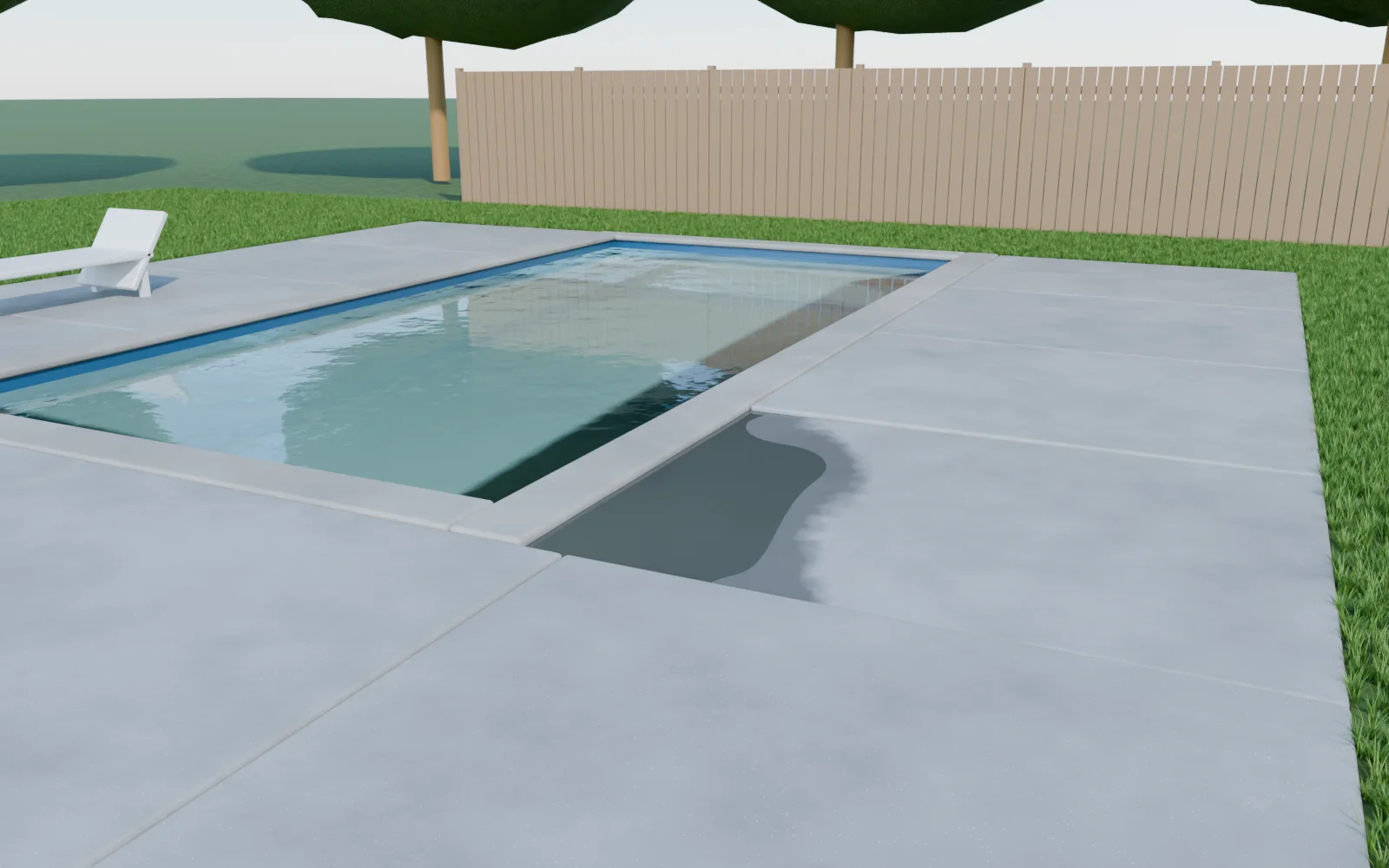
3D render: a pool deck section sunk at the coping, leaving a lip and sloping into the pool1″ lip, drains to the pool3D render
The short answer

A concrete pool deck sinks because it sits on the loose backfill around the pool shell, which settles for years and washes out where splash water runs into open joints. We lift the low sections with polyurethane foam through 5/8-inch holes kept clear of the coping, skimmer and plumbing, pitch the deck away from the pool again, then seal the joints. Most decks take a few hours.

By Rob Diederich, owner · Updated
Holes
5/8 in, clear of the coping
Typical job
2–6 sections
Time on site
A few hours
Warranty
5-year written warranty
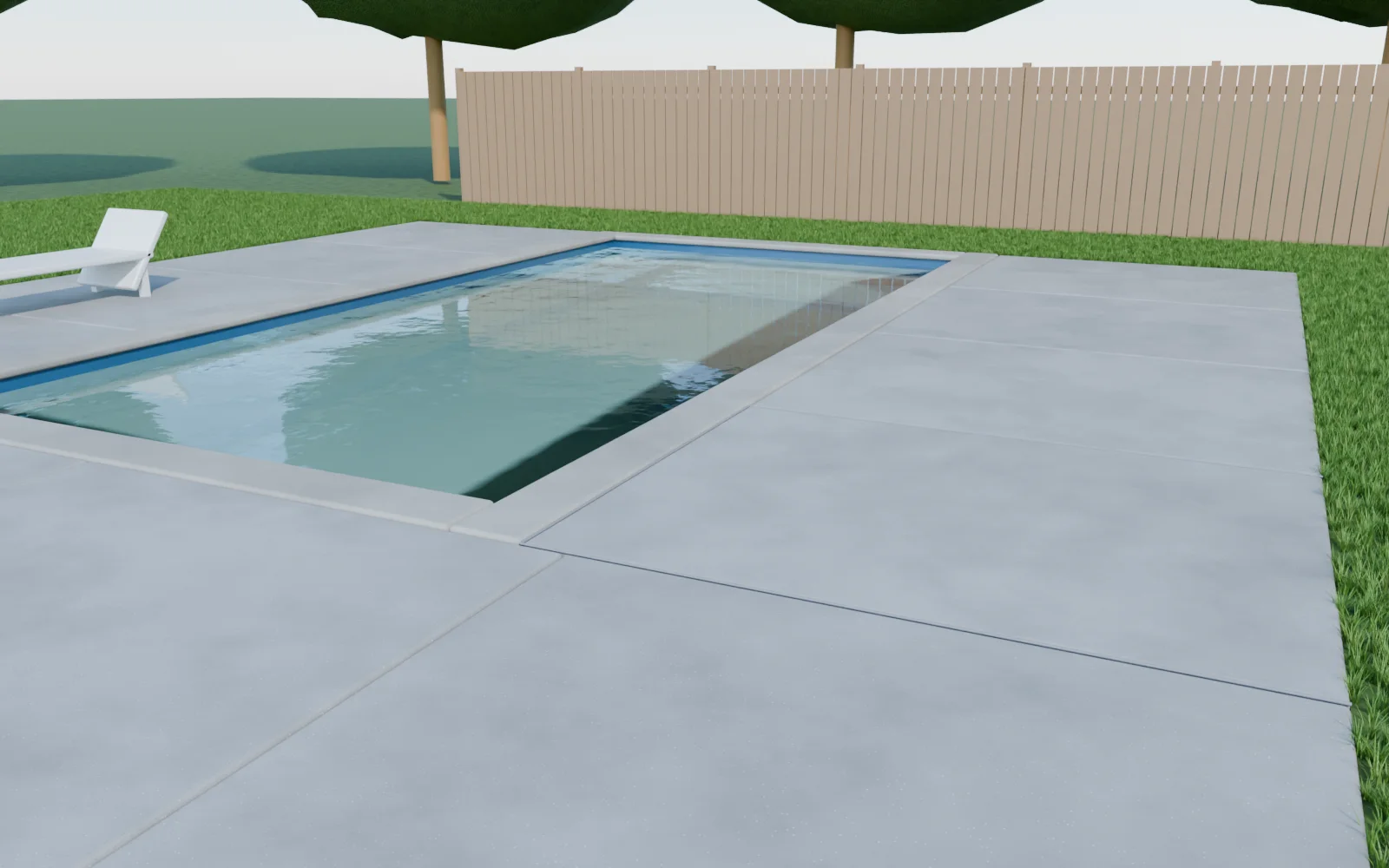
3D render of a pool deck section sunk at the coping and draining into the pool, before and after foam lifting — afterFlush, drains away
3D render of a pool deck section sunk at the coping and draining into the pool, before and after foam lifting — before1″ lip, drains to the pool
3D render
The low section rises flush with the coping and its neighbor and drains away from the pool again; the joints and the coping joint are sealed. Drag the slider.

Pool deck leveling at a glance

Why it sinksThe deck sits on the backfill placed around the pool shell, the loosest soil in the yard
TargetA gentle fall away from the pool edge, like the deck had when it was poured, so splash and rain run to the yard
Holes5/8 inch, kept back from the coping, the skimmer, the lights and the plumbing runs
LiftingShort shots, outer edge first, so the slab rotates up to the coping instead of pressing on the pool wall
Typical job2–6 sections
Time on siteA few hours
Then sealThe joints between deck sections and the flexible joint along the coping
PaversConcrete pavers around a pool are re-set by hand, not foam lifted

Signs your pool deck needs lifting

  • A lip at a joint on the walking path around the pool.
  • Water running back into the pool, or standing on the deck after rain.
  • The deck pulling away from the coping, with the flexible joint stretched or torn.
  • A section that rocks or sounds hollow when you walk on it.
  • A step down where the deck meets the patio or the lawn.
  • A crack through a section with one side lower than the other.

How to check a pool deck for sunken sections

  1. 1Bridge each joint on the walking pathLay a straight board on the higher section so it reaches over the lower one and measure under it. Go all the way around the path people walk, and write down every lip.
  2. 2Check the fallSet a level on the deck pointing away from the pool edge. The deck should fall away from the water. If the low end is toward the pool, that section has tipped.
  3. 3Run a hoseWater should run to the yard. Water that runs back over the coping has lost its fall, and water that disappears into a joint has an open path under the slab.
  4. 4Look at the coping jointA flexible joint that's stretched or torn means the deck has moved away from the pool edge or dropped beside it.
  5. 5Step and tapStep on the corners and tap with a hammer handle. A section that rocks, or sounds dull and hollow, has lost the fill under it.

Why pool decks sink

An inground pool is dug oversize, the shell goes in, and the gap around it is filled back in. The deck is poured on that fill, often within weeks. The fill keeps settling for years, and every summer thousands of gallons of splash-out, backwash and rain run into the deck joints and carry fine soil out from under the slabs.
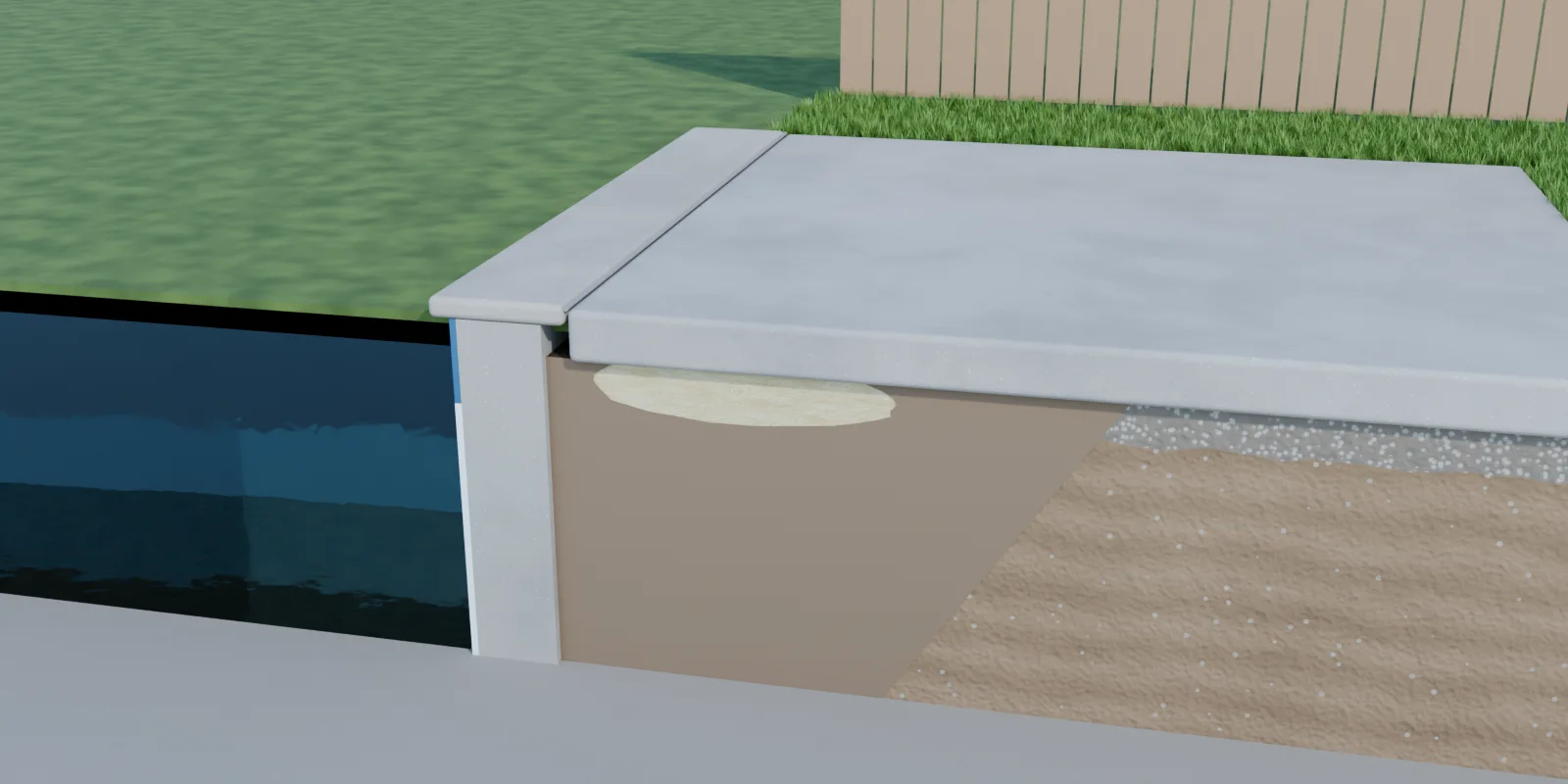
3D cutaway of a pool deck on the backfill around the pool shell: the section at the coping dropped into a hollow in the fill, then the hollow filled with foam and the deck back up to the coping — afterFoam-filled, up to the coping
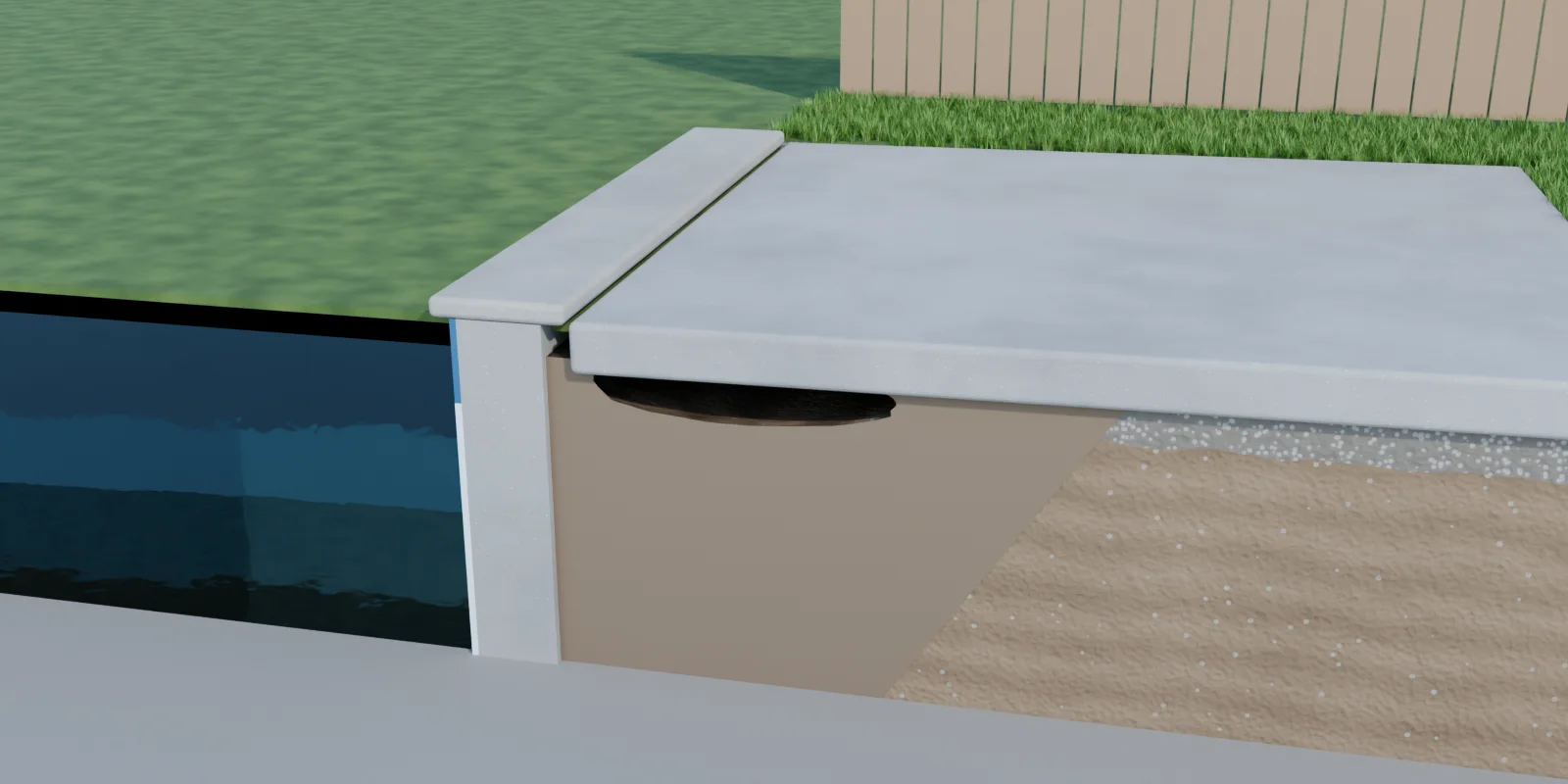
3D cutaway of a pool deck on the backfill around the pool shell: the section at the coping dropped into a hollow in the fill, then the hollow filled with foam and the deck back up to the coping — beforeHollow in the pool backfill
3D render
Under the deck: the fill around the pool shell settled and the section at the coping dropped. Foam fills the hollow in the fill and lifts the deck back to the coping, without pushing on the pool wall.
Backfill around the pool

An inground pool is dug oversize and the gap around the shell is filled back in. The deck is poured on that fill, which keeps settling for years after the pool goes in.

Fix: Foam fills the voids in the fill and supports the deck without adding weight to it.

Splash-out and open joints

Every summer, splash-out, backwash and rain run into open deck joints and carry fine soil out from under the slabs.

Fix: We re-seal the joints, including the flexible one along the coping.

Freeze-thaw

Clay-heavy Green Bay soil holds water. Every winter it freezes, swells and thaws softer, loosening the base a little more each year.

Fix: Sealed joints keep water out of the base, which is what freezes.

Lifting next to a pool: what's different

The pool wall is the one thing we don't want to push on. Before we drill, we map where the skimmer, returns, lights and plumbing run (tell us if you know), keep every hole well back from the coping, and lift from the outer edge in short, small shots while watching the slab. The foam fills the void under the deck and raises it in small steps instead of building pressure in one spot. The deck ends up flush at the coping and falling away from the water.

  1. 1Map the pool first, then set the lineWe note where the skimmer, returns, lights and plumbing run, mark the holes well back from the coping, and set a line that falls gently away from the pool edge.
  2. 2Drill 5/8″ holes, set the portsDime-sized holes go through the slab a few feet apart, kept off the edges and corners where concrete is weakest. A plastic injection port is tapped into each one.
  3. 3Inject from the outside edge inFoam fills the void under the low section first, then each short shot raises it. We start along the outer edge so the slab rotates up to the coping instead of pushing against the pool wall.
  4. 4Patch and seal, coping joint includedHoles are grouted flush and every joint is re-sealed, including the flexible joint along the coping. That's where splash water was getting into the backfill.

3D renders with the ground cut away, simplified to fewer holes than a real job. Most residential jobs take a few hours, and you can walk on the slab when we pack up.

What to tell us before we drill near a pool

  • Where the skimmer and return lines run, if you know. They often run under the deck, and we need their path before drilling. A photo of the equipment pad and each skimmer helps when you don't.
  • Where the lights are.
  • What kind of pool it is: concrete, vinyl liner or fiberglass. Liner and fiberglass walls are more flexible than a concrete shell, so the wall is the one thing we don't push on.
  • How the coping is built. Coping poured as part of the deck rises with it. Coping stones set on the pool wall stay put, and the deck is lifted flush to them.
  • Whether the deck is stamped or colored. Then the holes go in the pattern lines and the patches are tinted, as on any decorative slab.

The pool stays full for the lift. Doing it before you open or after you close keeps drilling dust out of the water.

When a pool deck can't be lifted

  • It's pavers. Pavers around a pool are lifted out and re-set by hand on a re-leveled base.
  • A root pushed a section up. A pool deck has to stay flat for furniture and drainage, so raising the neighbors to meet a hump isn't a fix. That section is ground or replaced.
  • A line under the deck is leaking. Foam would fill today's hollow and the water would dig a new one. Get the leak found and fixed first.
  • A section is in many small pieces or crumbling. That section is replaced; the ones around it can usually still be lifted.
  • It belongs to the pool. Steps inside the pool and coping set on the pool wall are part of the shell, not the deck.

Why lift a pool deck instead of replacing it?

Replacing a pool deck means breaking out concrete right beside a finished pool, protecting the coping and the liner from debris, and keeping the pool closed while new concrete cures. Lifting takes a few hours, nothing is hauled away, and you're swimming the same day.

Fraction
of what tearing out and pouring new concrete costs
Same day
Walk on it when we pack up, not days later.
No demo
No jackhammers, no dumpster, no torn-up lawn or landscaping.
5/8″ holes
Dime-sized and patched flush. No new slab that won't match.
Stays up
Foam adds almost no weight and doesn't wash out like soil.
Warranty
5-year re-lift warranty, in writing on your quote before you approve it.

Replacement timing is typical; a contractor's schedule and the weather can stretch it. New-concrete cure times from Concrete Network.

What pool deck leveling costs

Pool decks are priced by the section and the drop, with a job minimum. Decks with many small sections cost less per section than one big slab. See the leveling cost guide.

Pool deck jobTypical price
One small section$300–$600
Two to six low sections, 200–300 sq ft$800–$3,000
Bigger areas$4–$10 per sq ft
Job minimum$300
Sealing the joints between deck sections$5–$10 per foot
From our price sheet. A section over a big washout from splash water can run higher, and we'll say so from your photos.

Thinking about a coating too? A UV-stable outdoor floor coating runs $7–$10 per square foot with a $2,000 minimum, and it goes on after the lift, never before.

Lifting ballpark

Pick the job that looks like yours.

We price by the foam the job takes, $4–$10 per sq ft on average with a $300 minimum. Add the size and how far it dropped for a closer number; your photos make it a firm price.

1.What sank?
sq ft of low concreteA driveway section is about 100 sq ft; a sidewalk panel about 20.
3.How far did it drop? (at the lowest edge)

Stand a tape measure at the low edge and read the gap to the slab next to it.

4.How did it sink?
Ballpark

Pick a job or enter a size and the range appears here.

What moves it: how far it dropped, how many sections, what the slab is sitting on, and how close we can park. The cost guide explains each.

Get the firm number

Leave your name and mobile. We text you within 24 hours, and three photos make it a firm price, no site visit for most jobs.

By sending, you agree we can text or call you about this request. No spam. Privacy

Have photos now? Use the full photo form and skip the back-and-forth.

Price your pool deck from three photos
A wide shot of the deck, a tape measure at the lowest joint, and one along the coping. Firm price by text or email within 24 hours.
Get My Price

After a pool deck lift: keep splash and backwash out of the fill

Level pool deck, sealed joints, and a few dime-sized gray patches where the foam went in. The patches are close to concrete color and fade into older slabs within a season. We text you before-and-after photos before we leave.

Keeping it level means keeping water out from under it. Three things do most of the work: keep the joints and cracks sealed, backfill soil against any slab edge the lift left exposed, and keep downspouts discharging away from the concrete. Sealing is its own line on your quote; the rest is in what to do after your concrete is lifted.

  • Keep the coping joint and the deck joints sealed, and look them over before winter. Water that soaks into the fill in fall freezes, swells and thaws softer.
  • Send backwash and drain-down water well past the deck edge, to wherever your local rules allow pool water to go. Those dump a lot of water at once.
  • Backfill any deck edge the lift left standing above the lawn, so water runs off instead of under.
Questions

Common questions

Can you lift a pool deck without damaging the pool?

Yes, with care. We keep the holes back from the coping, skimmer, lights and plumbing, lift from the outside edge in small shots and watch the slab the whole time, so the foam fills the void under the deck instead of pushing on the pool wall. Tell us where your plumbing runs if you know; if you don't, we work from the equipment pad and skimmer locations.

Can you lift the concrete deck around an above-ground pool?

Yes, if it's a poured slab. We keep the holes away from the pool wall and its footing ring and lift the slab back to a gentle fall away from the pool. Pavers or a wood deck around the pool are a different job.

Should I lift my pool deck before or after the pool is closed for the season?

Either works. Fall is a good time: the pool is covered, the deck is clear, and the lift stops another winter of water running into the gap. We lift from the spring thaw until the ground freezes, so late fall is fine as long as the soil isn't frozen.

What about the joint between the deck and the coping?

That flexible expansion joint stretches or tears as the deck sinks. After the lift we re-seal it along with the other joints. Keeping it sealed keeps splash water out of the backfill, which is what let the deck drop in the first place.

Does the pool need to be drained before you lift the deck?

No. The pool stays full, open or covered, and a full pool is actually better: the water supports the shell and the liner, and nothing we do touches the water. The foam is closed-cell and doesn't absorb water, so the damp backfill around a pool doesn't affect it either.

What do I need to move off the pool deck before you lift it?

Furniture, planters, the grill and anything else sitting on the low sections. The pool fence, ladder, slide and equipment stay unless they sit right where a hole needs to go or block the hose from the truck, and we'll tell you from the photos. The pool itself stays open or covered, whichever it is.

Can you lift the pool coping or the pool steps?

It depends on what they're attached to. Coping that was poured as part of the deck rises with it. Coping stones set on the pool wall belong to the pool, not the deck, so they stay put and we lift the deck flush to them. Steps inside the pool are part of the shell and aren't lifted; concrete steps leading up to a raised deck are a slab and can be.

How much does it cost to level a pool deck in Green Bay?

A single small section usually runs $300–$600. Most decks have two to six low sections, and 200–300 square feet usually lands at $800–$3,000, with bigger areas about $4–$10 per square foot. Sections over a big washout from splash water can run higher, and we'll say so from your photos.

How soon can we swim after you lift the pool deck?

The same day. Most decks take a few hours, you can walk on the deck as soon as we pack up, and the pool stays open or covered the whole time because nothing we do touches the water.

Can you lift the deck around a vinyl liner or fiberglass pool?

Yes. Liner and fiberglass pool walls are more flexible than a concrete shell, so we treat the wall as the one thing not to push on. The holes stay well back from the coping, the deck comes up in short shots from the outer edge, and the pool stays full so the water supports the wall and liner.

Can the lifting foam get into the pool water or change its chemistry?

No. The foam goes under the deck slab, outside the pool shell, and cures within minutes into an inert, closed-cell plastic that doesn't dissolve or leach. Nothing we inject goes in the water, and we clean up the deck before we leave.

Why does rain run back into my pool from the deck?

Because a deck section has settled and lost the gentle fall away from the pool it was poured with. Rain and dirt then run back over the coping, or water sits on the deck. Lifting the low sections restores the fall toward the yard, and sealing the joints keeps splash water out of the fill that let them drop.

Why did my pool deck drop after the winter?

Usually water in the backfill. Splash-out and fall rain soak into open joints and the loose fill around the pool, then freeze, swell and thaw softer, so the deck can sit lower each spring. Lifting puts it back, and sealing the joints and the coping line before winter keeps that water out of the fill.

Where should pool backwash and drain-down water go to protect the deck?

Away from the deck: well past the edge of the concrete, to wherever your local rules allow pool water to go. Backwashing and lowering the pool for winter dump a lot of water at once, and when it runs along the deck edge or into joints it carries fine soil out from under the slabs.

Can you lift my pool deck and then coat it?

Yes, and that's the order it has to go. A coating can't level a deck that dropped away from the coping, so we lift the low sections first, then the deck is prepped and gets a UV-stable polyaspartic coating with grit in the topcoat. The hole patches end up under the coating.

Keep reading

Related

Concrete leveling · Patios
Patio Leveling

Patio tipping toward the house or rocking underfoot? Foam lifting levels it and fills the voids underneath. Free photo quote, no sales call.

Concrete leveling · Stamped & decorative
Stamped & Decorative Concrete

Sunken stamped, colored or exposed-aggregate concrete? We lift it with foam through 5/8-inch holes set in grout lines, so the pattern stays. Price from photos.

Protect the repair
Crack & Joint Caulking

Seal driveway joints, cracks and the gap at your foundation with flexible polyurethane sealant. Keeps water and salt out. Free photo quote.

Get your price from a few photos

Send three phone photos and a quick measurement. You'll get a firm price by text or email within 24 hours, no site visit needed for most jobs.

Get My PriceCall (920) 655-2193