
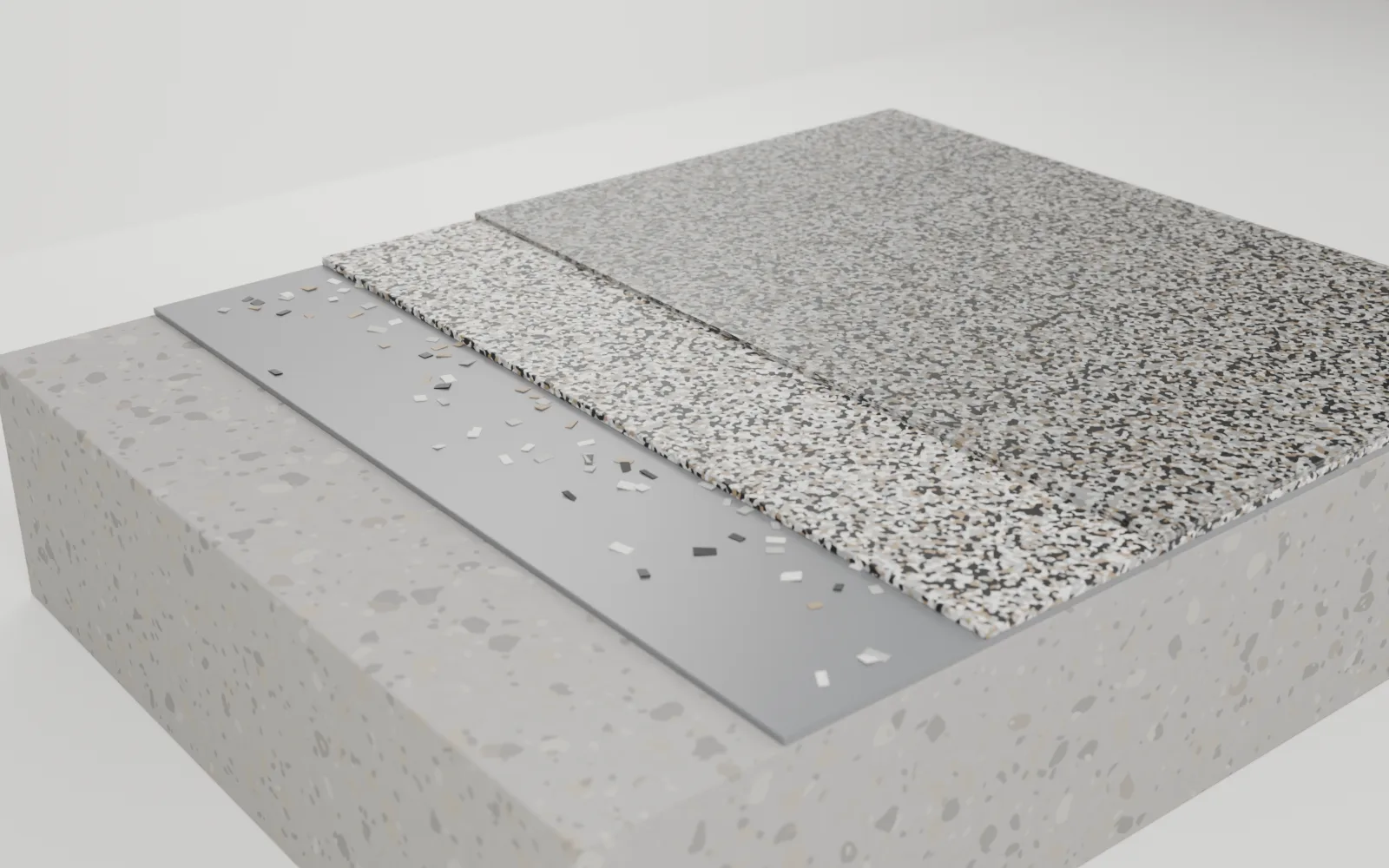
Basement floor coating at a glance
Moisture comes first
Basement slabs sit in the ground, and many older ones were poured without a vapor barrier. Water vapor moving up through the concrete pushes on a coating from below, and that's the most common reason basement coatings fail. So we test before we quote. A slab that passes gets our standard system; one that's borderline gets a moisture-tolerant base coat; one with an active leak or standing water needs the water fixed first, and we'll tell you so.
White powder on the floor? That's efflorescence: salts left behind by water moving through the concrete. It's a sign to test, not a reason to give up. More in cleaning concrete floors.
Who a basement coating is for
A basement coating suits a bare, dusty, stained or painted slab you want to be able to wipe clean: a laundry room, a workshop corner, storage, a home gym or a rec room. If the basement has ever been damp, it makes more sense than carpet. Carpet holds moisture and odors and is ruined by a backed-up drain or a failed sump pump, while a coated floor gets wiped dry. Carpet is softer and warmer underfoot, so plenty of people coat the whole floor and put area rugs in the family room.
It isn't waterproofing. A coating keeps spills, stains and dust out of the concrete, but no coating holds back water under pressure, and it can't change the humidity in the room. A cold floor can still sweat in summer, and a dehumidifier handles that.
Which finish suits a basement
Hides dust, scuffs and small flaws best. The busiest look and the most texture underfoot.
A colored base with a lighter scatter of flake. A cleaner, calmer look for a finished or rec room.
One even color, no flake. Good for a laundry room, workshop corner or storage area.
How we coat a basement floor
3D renders, not a job video; the tools are shown without the crew. Most garages are done in a day; parking time depends on the system.
Before we start, everything comes off the floor, and we set up ventilation for the install. Sunken sections, like a slab that dropped near a floor drain or a sump, get lifted first, because a coating can't level a floor.
How basement prep differs from a garage
- Floor coverings come up first. The coating goes on bare concrete, so carpet, pad, tack strips and loose tile come up first. Old black tile adhesive can contain asbestos; it gets tested before anyone disturbs it, and we don't grind it off. The floor prep guide explains the options.
- Old paint is ground off. Paint on a basement floor usually peels because moisture pushes on a thin film sitting on smooth concrete. It comes off with the grinder, and the base coat is matched to what the moisture test shows.
- We work around what's fixed. Furnaces, water heaters and other fixed equipment stay, and the coating runs right up to the sump basin and floor drains. Baseboards are best taken off beforehand and put back once the coating has cured, so the coating runs underneath.
- It's indoors. We grind with dust extraction and set up ventilation. There's a noticeable smell while the coating goes down and for a while after, so pets and anyone sensitive to odors are better off out of the house on install day.
- In-floor heat. Mention it when you send photos. We'll ask you to turn it down before the install and bring it back up slowly afterward, and if the tubing might sit close to the surface, we check before we grind.
- Other basement work goes first. Interior waterproofing and egress windows mean cut concrete, dust and debris. New concrete needs about a month of curing and a passed moisture test before it's coated with the rest of the floor.
What it costs
Basement floors are $6–$9 per square foot installed, with a $2,000 minimum. A basement the size of a two-car garage, 24 × 24 or 576 square feet, runs $3,456–$5,184. An 800-square-foot basement runs $4,800–$7,200. A 12 × 15 laundry or storage room (180 square feet) comes in at the $2,000 minimum, because the setup and the steps are the same on a small floor.
That covers diamond grinding, crack repair, the base coat, the flake or color and the topcoat on sound concrete. A moisture-tolerant base coat, heavy crack repair or old paint to grind off is extra, and it's priced on your quote before you decide. Nationally, professional floor coatings run about $4 to $12 per square foot installed (HomeGuide). The coating cost guide has a calculator for any size.
How long it takes
Usually a day, like a garage. A large basement, a lot of crack repair or old paint to grind off can add time, and we'll tell you up front from your photos. You can walk on the floor within a few hours, and we'll tell you when furniture can go back.
What to send for a quote
The photo estimate form asks what kind of floor it is, its size (length and width, or square feet) and what shape it's in: bare concrete in decent shape; cracks, pits or salt damage; or an old coating or paint. Then it asks for three photos:
- Whole floor. From the doorway, with the walls and the door in the shot.
- Up close. Cracks, pits, salt damage or peeling, with a coin or tape for scale.
- Edges and steps. Where the floor meets the walls, steps, a drain or the apron.
- For a basement: point out any damp spots, white powder, old paint or floor coverings, and tell us if there's a sump pit, a floor drain or in-floor heat.
You'll get a firm price by text or email within 24 hours, with anything extra, like heavy repair or an old coating to grind off, priced on the quote before you decide. More questions, including carpet versus a coating, finished basements, radiant heat and how long a basement coating lasts, are answered in the floor coating FAQ.