
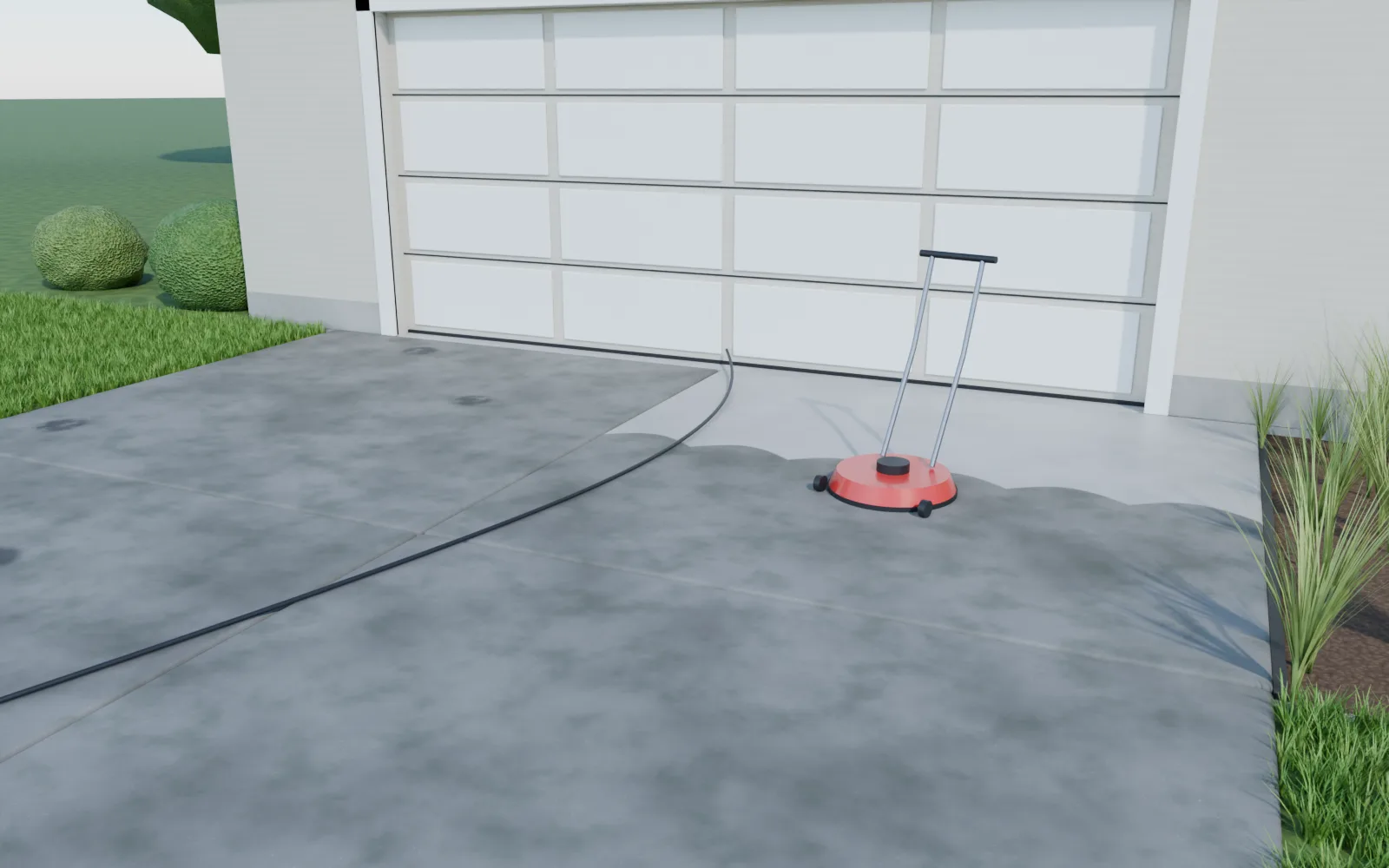
A winter of road salt, a fall of wet leaves and a few years of drips from the car can make a ten-year-old driveway look thirty. Driveway pressure washing done carelessly makes it worse: a narrow nozzle held close etches stripes that never wash out. We clean concrete the slow, even way, and treat each stain for what it actually is: oil stain removal, rust and mildew each get their own treatment. That goes for driveway cleaning, walks, patios and aprons alike.
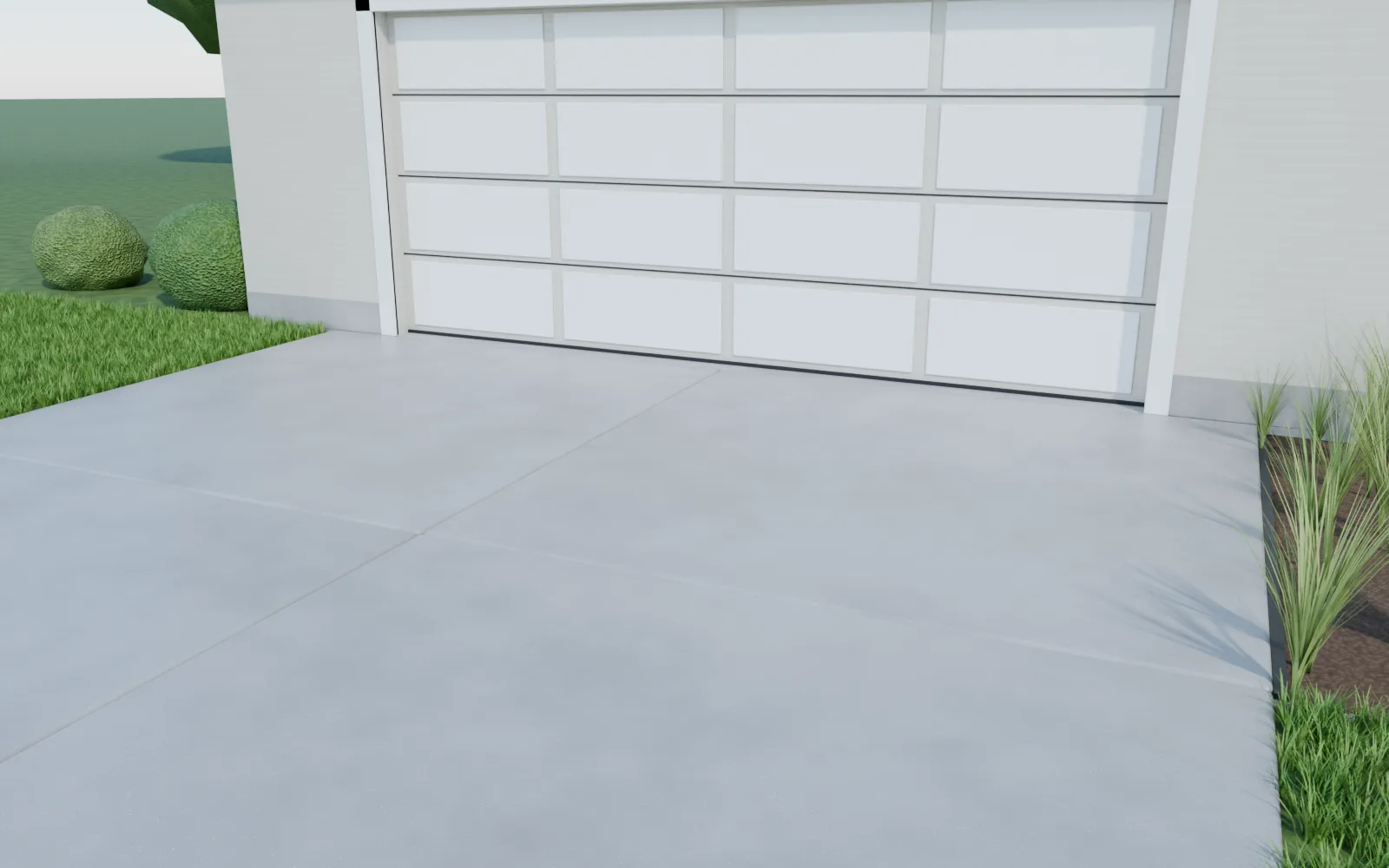
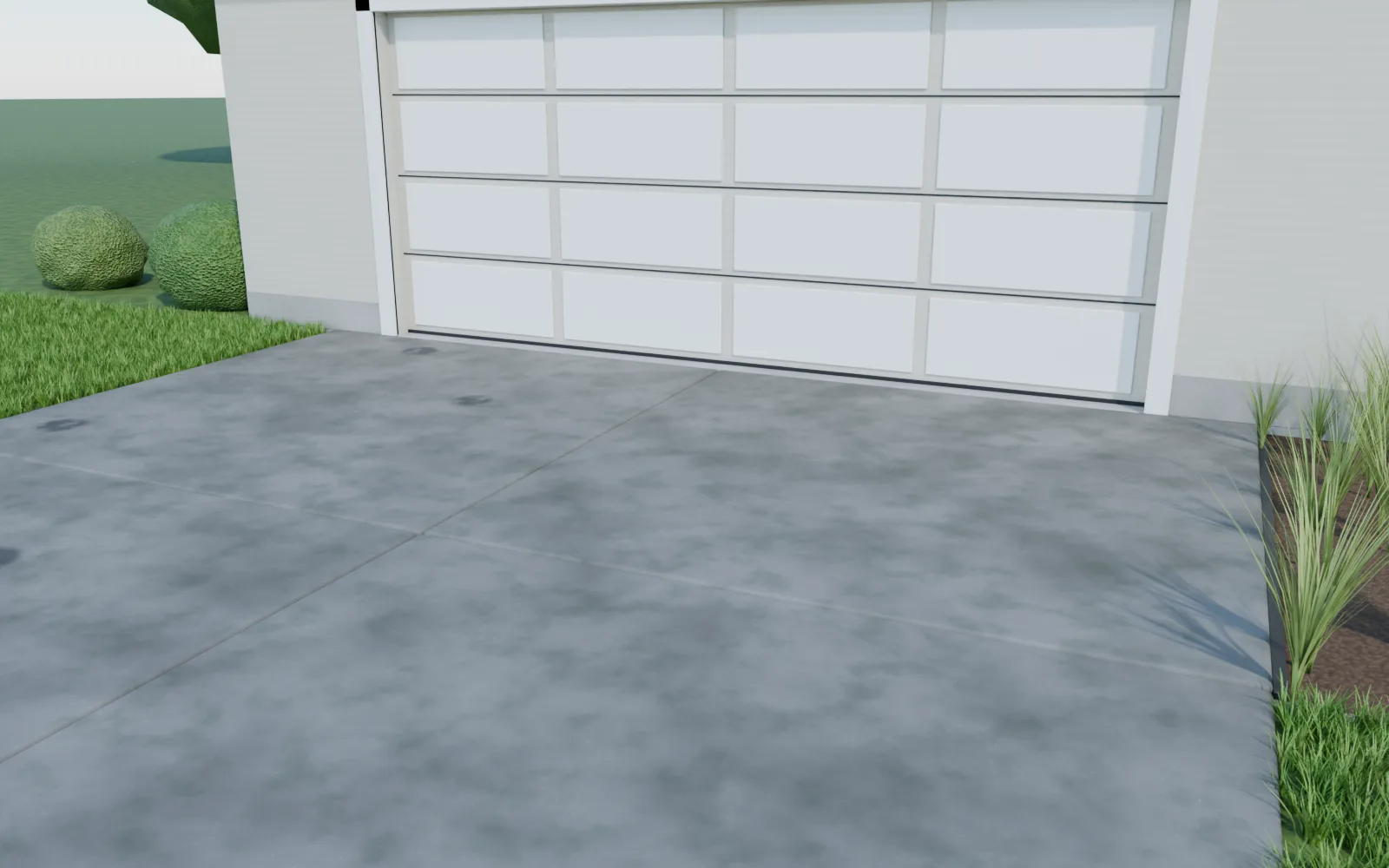
Concrete only. We clean driveways, walks, patios, garage aprons and garage floors before a coating. We don't wash houses, decks or roofs.
Concrete cleaning is also the first step of concrete sealing, and a clean slab shows every crack and open joint, so it's a good time to look at crack and joint caulking too.
A winter of road salt, a fall of wet leaves, and a few years of drips from the car can make a ten-year-old driveway look thirty.
You've probably thought about renting a pressure washer, and maybe seen what one does in a hurry: stripes that never wash out.
We don't have a branded name or a secret formula for cleaning concrete. Here's what we actually do, start to finish.
The Process at a Glance
| Step | What happens | What you do |
|---|---|---|
| 1. Photos | You send pictures of the area and the stains | 4–6 phone photos |
| 2. Quote | We look them over and send a price and a plan | Ask questions, say yes or no |
| 3. Scheduling | We pick a day with workable weather | Clear the concrete, check your outdoor faucet |
| 4. Cleaning day | Walk-through, protect, pre-treat, clean, detail, rinse | Point out anything we should know about |
| 5. Afterward | We show you anything the dirt was hiding | Let it dry, then decide about sealing |
What We Clean
| Surface | What's usually on it | Worth knowing |
|---|---|---|
| Driveways | Salt film, tire marks, oil drips, fertilizer rust | Takes the most salt, so it's the top candidate for sealing after |
| Sidewalks and front walks | Dirt, algae in shade, leaf stains | Lots of lawn edges to detail |
| Patios | Mildew, grill grease, berry stains, furniture rust rings | Shady, north-facing patios turn green fastest |
| Garage aprons | Salt brine, oil, tire marks | Catches the slush that drips off your car all winter |
| Garage floors before a coating | Oil and fluids soaked into the slab | Oil keeps a coating from bonding, so we degrease before coating prep. See garage floor coatings. |
Where you don't need us: concrete that's just dusty (a hose and a push broom will do), and brand-new concrete under about a month old, which shouldn't be pressure washed yet.
Step 1: Send Photos
No appointment window, nobody at your door. Grab your phone and take:
- The whole area from a corner or the end of the driveway, so we can see its size and what's around it.
- Close-ups of the worst stains, with a shoe or your hand in the frame for scale.
- Where the water will go: which way the concrete slopes and where the nearest storm drain or curb is.
- Anything delicate nearby, like flower beds at the edge, light-colored siding, or landscape lights.
Send them through the quote page with a line about what you're after, like "the rust from the fertilizer spreader" or "getting it ready to seal."
Step 2: We Look It Over and Quote
From your photos we work out:
- 1Size and layout. An open driveway goes fast. A walk with steps and planters takes longer per square foot.
- 2What each stain probably is. That decides the pre-treatment and what result is realistic.
- 3Where the runoff goes, and how to keep it on the lawn instead of in the street.
You get a price, what's included, roughly how long we'll be there, and an honest note on any stain that may lighten without disappearing. If the pictures don't tell us enough, we'll ask for one more instead of guessing.
Step 3: Pick a Day
Cleaning is a water job, so the weather sets the calendar.
- Above freezing, with no hard freeze right behind it. Water left on the slab turns to ice, and wet concrete freezing over and over is a big part of what flakes old Wisconsin driveways.
- Spring, once the snow is gone, is when people want the winter's salt and sand rinsed off.
- Late summer and early fall is the time to clean before sealing, so the sealer goes on before salt season.
Before we come:
- Move cars, bikes, grills, and furniture off the concrete.
- Check that an outdoor faucet works and tell us where it is.
- Close windows and the garage door on the side we're working.
- Tell us about anything buried at the edge, like a downspout line, lighting wire, or a sprinkler head.
Step 4: Cleaning Day
We walk it with you first
We confirm which stains matter most, look for flaking spots that need a lighter touch, and check where the slope sends the water.
We protect what's around the concrete
Plants along the edges get wetted down before any cleaner goes on and rinsed again after. Outdoor outlets and lights get covered, and we keep spray off siding, windows, and cars.
We pre-treat each stain for what it is
No single cleaner handles everything. Matching the treatment to the stain is what separates an okay job from a good one.
| Stain | Usual source | How we treat it | What to expect |
|---|---|---|---|
| Oil and fluids | Cars, mowers, snowblowers | Degreaser worked in and given time, sometimes more than one round | Fresh drips usually come out. Old, soaked-in spots often leave a shadow. |
| Rust | Fertilizer, metal furniture, sprinklers on iron-rich well water | A rust remover made for concrete, spot-tested first, since acid-based products can lighten the surface | Usually fades a lot. Old, deep rust may not fully disappear. |
| Mold, mildew, algae | Shade and moisture | A cleaner that kills the growth instead of just blasting it off | Comes clean. Damp, shady spots grow back eventually. |
| Leaves, berries, droppings | Trees and birds | Mild cleaner and a rinse | Most fade fast, and the sun finishes the job. |
| Salt film and grime | Winter | Comes off in the main cleaning | A white haze that keeps returning may be minerals rising from inside the slab. Washing can't stop that. |
One rule we never bend: bleach never gets mixed with ammonia or acid-based cleaners. Together they give off toxic gas. That goes for your garage shelf too.
We clean the flat surfaces with even passes
Too much pressure, or a narrow nozzle held too close, etches concrete and leaves stripes you can't wash out. On open, flat areas we use a rotary surface cleaner, which spins the spray inside a hood, and run it in steady, overlapping passes so the whole slab comes out the same shade.
We detail the edges
A surface cleaner can't get tight to the house, the steps, or the lawn line. We clean those by hand with a wand at lower pressure, and go easy along joints, cracks, and any surface that's already flaking.
We rinse it all down
The slab gets a final rinse so loosened dirt and cleaner don't dry back onto it. Siding and plants nearby get rinsed again too.
We keep the runoff out of the storm drain
Storm drains don't go to a treatment plant. What goes in flows untreated to the nearest creek, river, or the bay. Northeast Wisconsin's regional stormwater group says in its homeowner guidance that sending wash water down a storm drain is prohibited and can bring a fine. So we sweep up loose dirt first, use only as much cleaner as each stain needs, and steer runoff onto lawn or gravel where it can soak in, blocking off the drain when the slope heads that way.
What Clean Concrete Shows Us
Grime hides a lot. Once a slab is clean, problems that were buried under the dirt show up clearly.
| What shows up | What it can mean | Read more |
|---|---|---|
| Cracks you didn't know about | Normal shrinkage, or a slab that's moving | Concrete crack types |
| Empty or failed joints | Rain and snowmelt are getting under the slab | Our caulking process |
| One slab edge higher than the next | Settling, usually from soil washing out underneath | Voids under concrete |
| Washed-out soil along an edge | A downspout or sump line is undermining the slab | How to extend downspouts |
| Flaking or pitting | Freeze-thaw and salt damage | Concrete spalling causes |
How we flag it: we take a photo, show you, and tell you whether it's something to watch, a fix you can handle yourself, or something we can quote. Nothing gets added to your job unless you ask.
Step 5: What Comes Next
- Walk on it whenever you like. It's just wet. Watch your step on smooth spots until it dries.
- Let it dry before sealing. A just-washed slab is ready for sealer once the water is out of it. Sealer labels typically want at least a day of drying after washing or rain, and some want several. Our sealing process picks up from here.
- If you booked lifting or caulking too, cleaning goes first. Clean, dry joints take caulk better, and we can see every crack before we plan a lift.
- Take an "after" photo from the same spot as your "before" one.
What We'll Tell You Up Front
Cleaning makes concrete look a lot better. It doesn't make it new. Old oil can leave a shadow, deep rust can leave a tint, and a slab that's flaked from salt is still flaked, just cleaner. Old patches also stand out more on a clean slab, not less. If any of that applies to yours, it'll be in your quote.
What concrete cleaning costs
| Our price | |
|---|---|
| First 1,000 sq ft | $0.60 per sq ft |
| Every sq ft past 1,000 | $0.55 per sq ft |
| Minimum | $350 |
| Booked with caulking or a lift | $50 off (minimum $300) |
| Example | Area | Price |
|---|---|---|
| Two-car driveway, 24 × 24 | 576 sq ft | $350 |
| Driveway, walk and patio together | 830 sq ft | $498 |
| Three-car driveway, walks and patio | 1,300 sq ft | $765 |
| Driveway, walks, patio and apron | 1,750 sq ft | $1,013 |
Add each area you want cleaned on the same visit, in feet. $0.60 per sq ft ($0.55 past 1,000), $350 minimum; stain pre-treatment included.
576 sq ft × $0.60 = $346, so the $350 minimum applies
The $350 minimum covers up to about 583 sq ft: room for 7 sq ft more at this price.
Booking caulking or a lift too? It's $50 less.
An estimate from your measurements, not a quote. Stain pre-treatment, edges, rinse and runoff control are included. Your firm price comes from photos, by text within 24 hours.
Get my exact price →Booked with caulking or a lift, any cleaning is $50 less, since it's one trip and one setup. Sealing always starts with a cleaning, because sealer only soaks in evenly on clean concrete, so the cleaning is part of a sealing job rather than an add-on discount. More in the concrete cleaning cost guide.