
From first photo to finished slab
- 1Send three photosA wide shot, a tape measure standing at the lowest edge, and one looking down the length of the slab. How to measure sunken concrete shows each one.
- 2Get a firm priceBy text or email within 24 hours, with the warranty terms on the quote. Most jobs are priced from the photos; we visit only when they can't answer something.
- 3Lift dayOne visit, 1 to 4 hours for most homes. The four steps are below.
- 4Seal the jointsOpen joints are how the water got under the slab, so joint sealing follows the lift. It's its own line on the quote.
- 5Photos backWe text you before-and-after photos before we leave.
Before we arrive
- Move cars off the driveway and anything heavy off the slabs we're lifting.
- Mark any sprinkler heads, invisible dog fence or low-voltage lines near the concrete.
- Keep pets inside while we're working.
- You don't need to be home. Our rig has its own power and material.
On the day, step by step
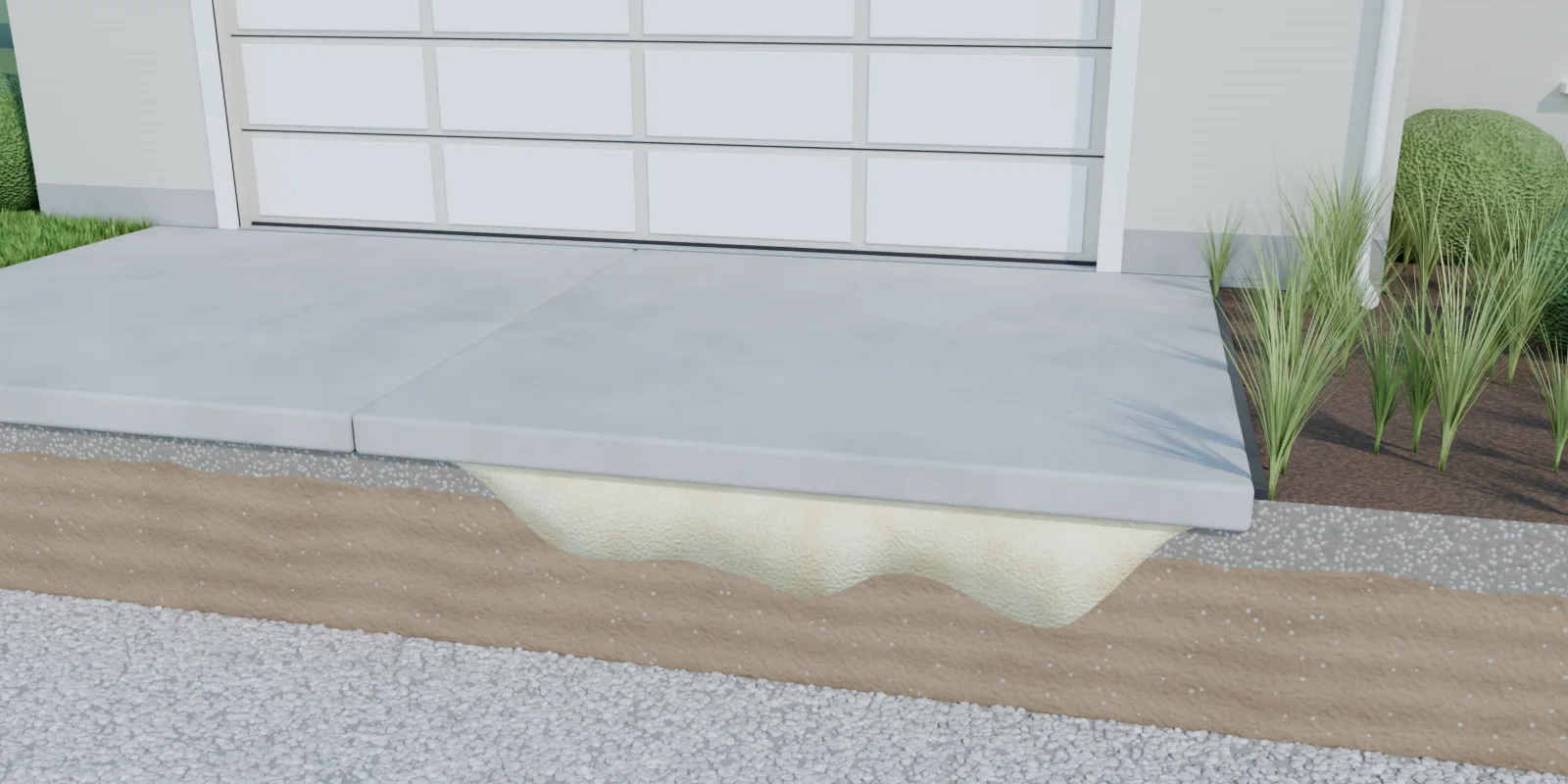
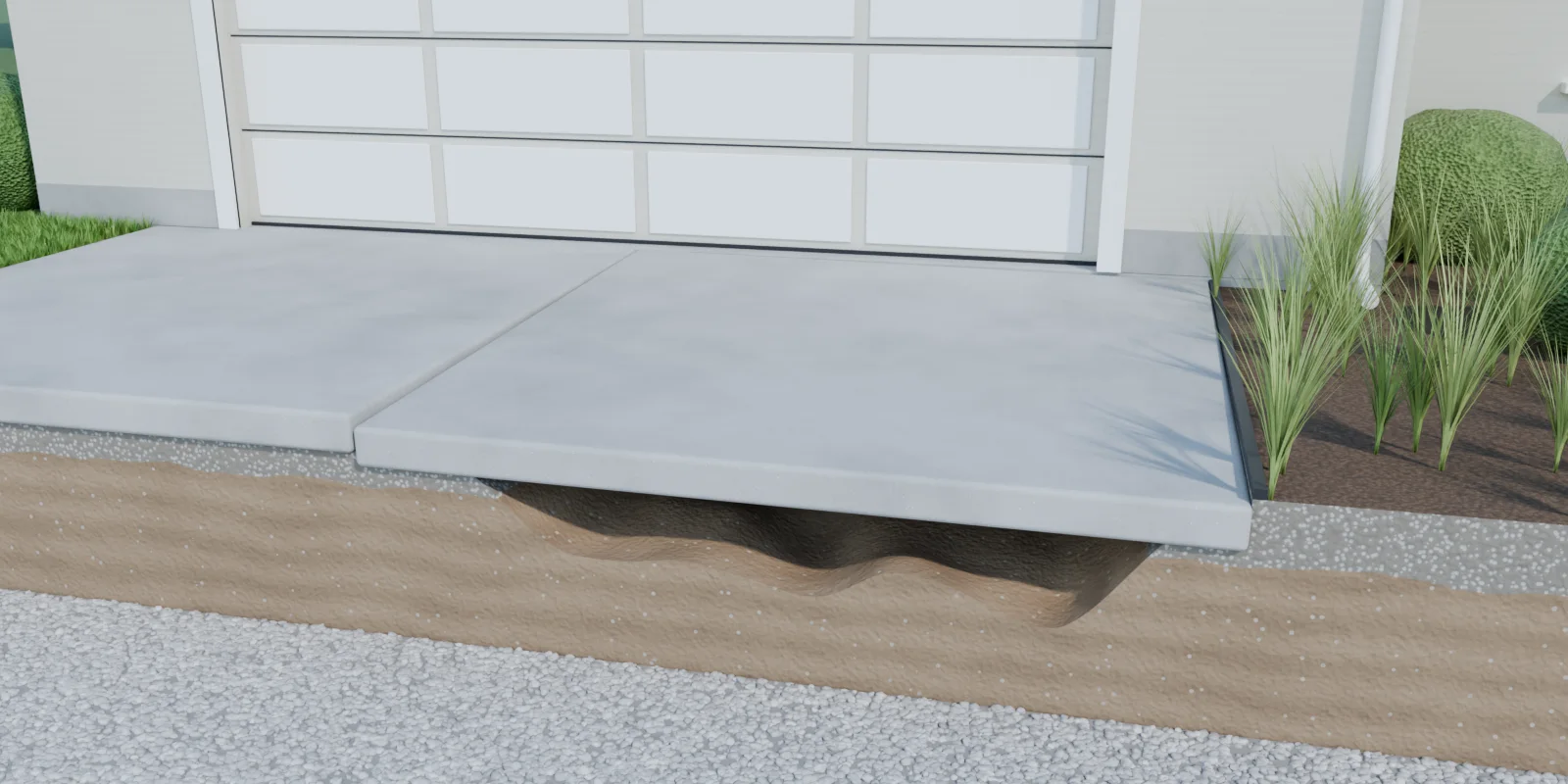
3D renders with the ground cut away, simplified to fewer holes than a real job. Most residential jobs take a few hours, and you can walk on the slab when we pack up.
Before we leave, we check every section against the line, clean up, and text you before-and-after photos.
The numbers behind a lift
What's happening under the slab
A sunken slab almost always has empty space under it, where water carried soil away or loose fill settled. The foam has to fill that space before it can lift anything. That's why we inject in short shots: the first few fill the void, and the ones after that do the lifting. Stopping between shots lets the foam firm up so the slab rises in small, controlled steps instead of jumping.
How can foam lift a slab that heavy?
Concrete weighs about 145 pounds per cubic foot, so a 10 by 10 foot section 4 inches thick weighs about 4,800 pounds. Spread over its whole underside, that's about 48 pounds per square foot, or a third of a pound per square inch. Expanding foam pushes up across that whole area at once, and once cured, lifting foam is rated at roughly 64 to 100 psi, hundreds of times what the slab presses down with. Most residential lifts are 1 to 4 inches.
How long a foam lift takes, by surface
| Surface | Typical time on site | Back in use |
|---|---|---|
| Sidewalk or front walk | 1–2 hours | Walk on it as soon as we pack up |
| Driveway | 2–4 hours | Drive on it the same day |
| Garage apron | About 2 hours | Park on it the same day |
| Patio or pool deck | A few hours | Same day |
| Stoop or porch | 1–3 hours | Same day |
| Garage floor | A few hours | Park inside the same day |
| AC pad or small slab | 1–2 hours; an AC pad is usually under an hour | Same day |
Lifting vs. stabilizing a slab that hasn't sunk
Most sunken concrete starts as a void: the soil leaves first, the slab bridges the gap for a while, and then it drops. A slab that sounds dull and hollow when you tap it, rocks underfoot or shows a gap under its edge is at that first stage. The same holes and the same foam can fill the space and stop there, firming the slab up without raising it. One caution on the tap test: an old slab with a thin topping layer can sound hollow because the topping has separated, not because the ground left. Voids under concrete has the checks you can do yourself.
What foam lifting can't do
- Lower a slab. Foam only pushes up. If roots shoved a slab up, the most a lift can do is raise the slabs around it to ease the edge.
- Put broken concrete back together. A slab in one piece or a few big pieces rises as a surface. One in a dozen chunks is a replacement.
- Change the surface. Flaking, pitting and old stains ride along with the slab and are still there when it's level.
- Stop the water. If a downspout keeps soaking the same corner, the soil around the foam can keep washing away. Moving the water is part of the fix.
- Free a slab that's pinned. Concrete tucked under siding or wedged tight against its neighbor can bind. Sometimes clearing the joint frees it.
- Lift pavers, asphalt or a foundation wall. Pavers are pulled up and re-set, asphalt flexes and would crack over the injection points, and a cracked or bowing basement wall needs a foundation specialist.
If you're not sure which side of that line your slab is on, lift or replace? has a 30-second checker.
Before and after
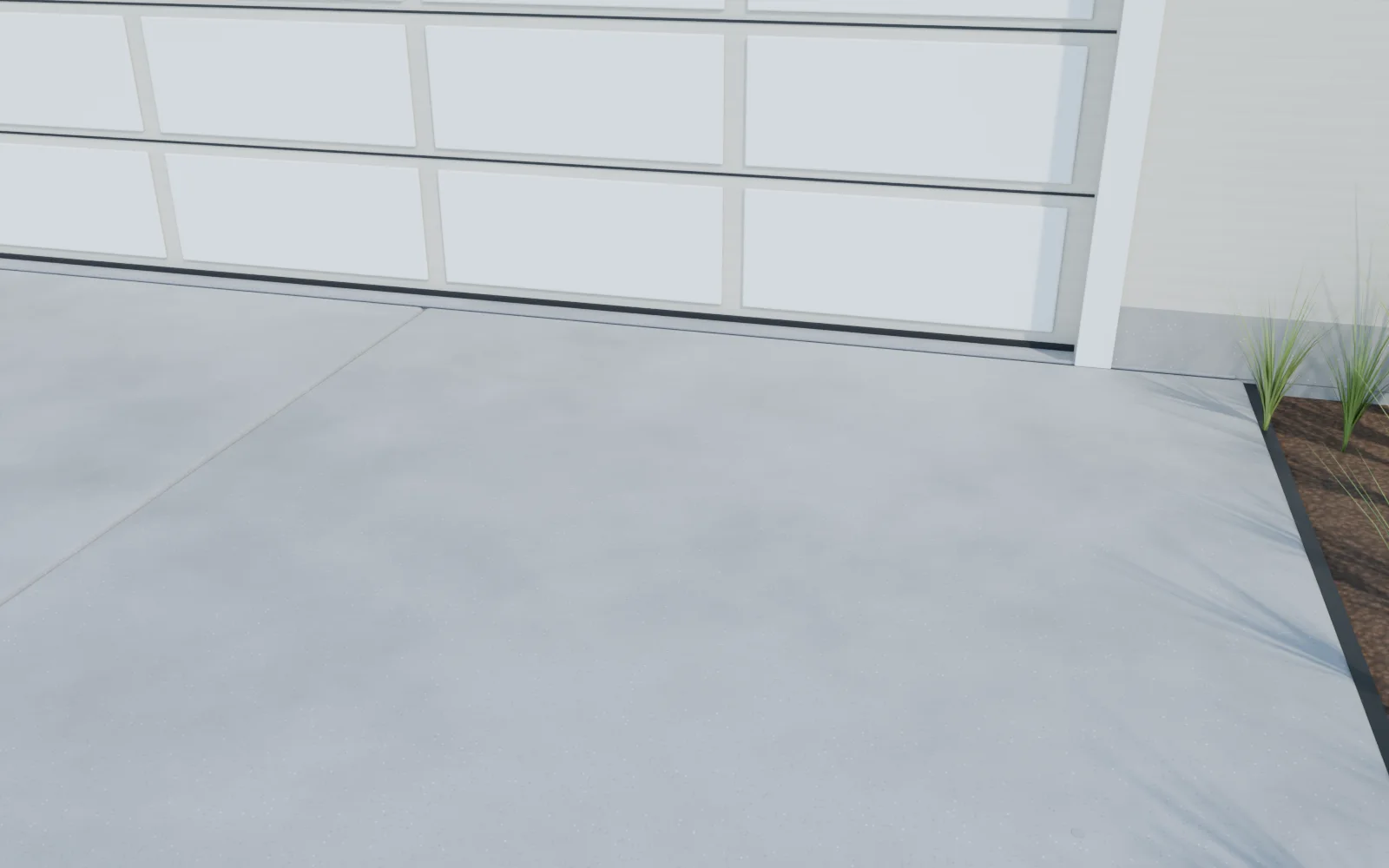
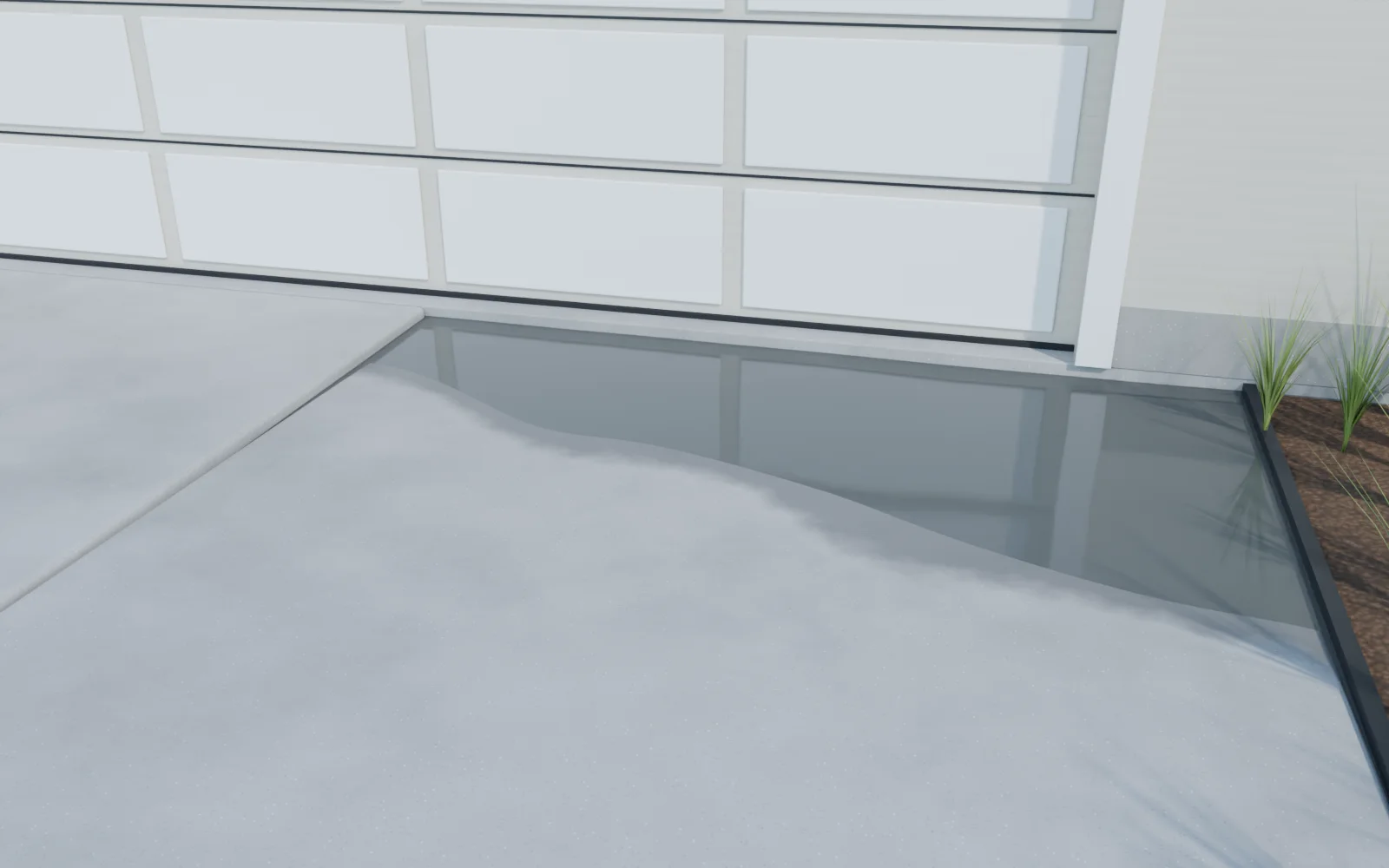
On real concrete
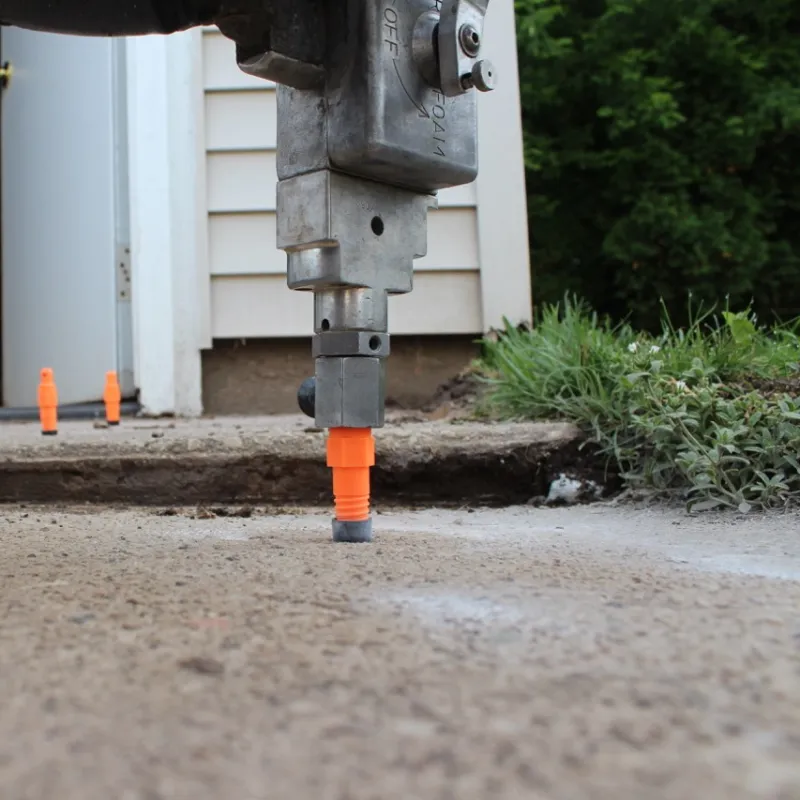
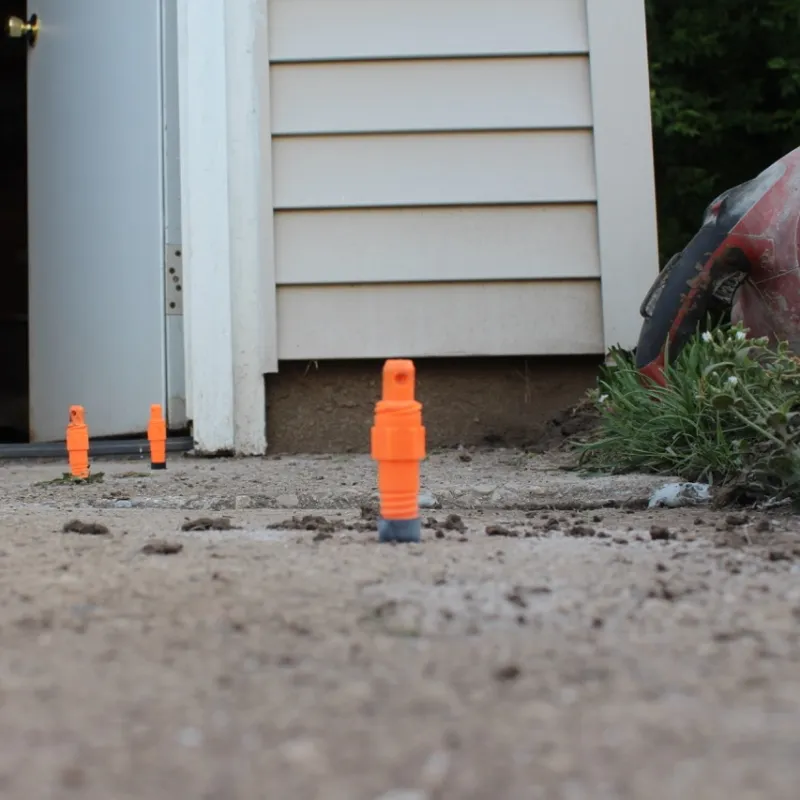


Example lifts. Photos from our own local jobs get added as we finish them.
Why polyurethane foam
- Light. It weighs a few pounds per cubic foot, so it doesn't add load to the soil that already let the slab down. Mudjacking slurry weighs many times more.
- Waterproof. It doesn't absorb water or wash out like soil or slurry can.
- Fast. It reaches most of its strength in minutes.
- Small holes. About 5/8 inch, so the finished slab looks like the original concrete.
Afterward
Walk on it right away. Drive on it the same day, once the hole patches set. Keep downspouts pointed away from the slabs, keep the joints sealed, and if the lift left a slab edge standing above the soil, backfill against it with topsoil so the base stays covered. Those three things do more than anything else to keep concrete where it is. The full list is in what to do after your concrete is lifted.
When we lift: the season in Wisconsin
We lift from the spring thaw until the ground freezes. Frozen soil under a slab moves again when it thaws, so a lift on frozen ground isn't reliable. Photos sent in winter still get a price and a spot on the spring schedule. If a slab only looks off in late winter, wait for the thaw before judging it: frost may have pushed it or its neighbor up, and it can settle back. Concrete lifting in winter covers the calendar.
Sources
- Alchemy-Spetec AP Lift 435 technical data sheet (lifting foam)
- Prime Resins Precision Lift 475 technical data sheet (lifting foam)
- City of Columbus supplemental specification 1521: polyurethane slab raising
- HD Foundation Repair: mudjacking vs. polyurethane foam
- ArmorThane: concrete leveling cost and foam vs. concrete weights