Skip to content
(920) 655-2193|Serving Green Bay & Northeast Wisconsin
Rise & Grind Concrete
Get My Price
Polyurea flake floors · Green Bay & NE Wisconsin

Garage Floor Coatings in Green Bay: Polyurea, Not Epoxy

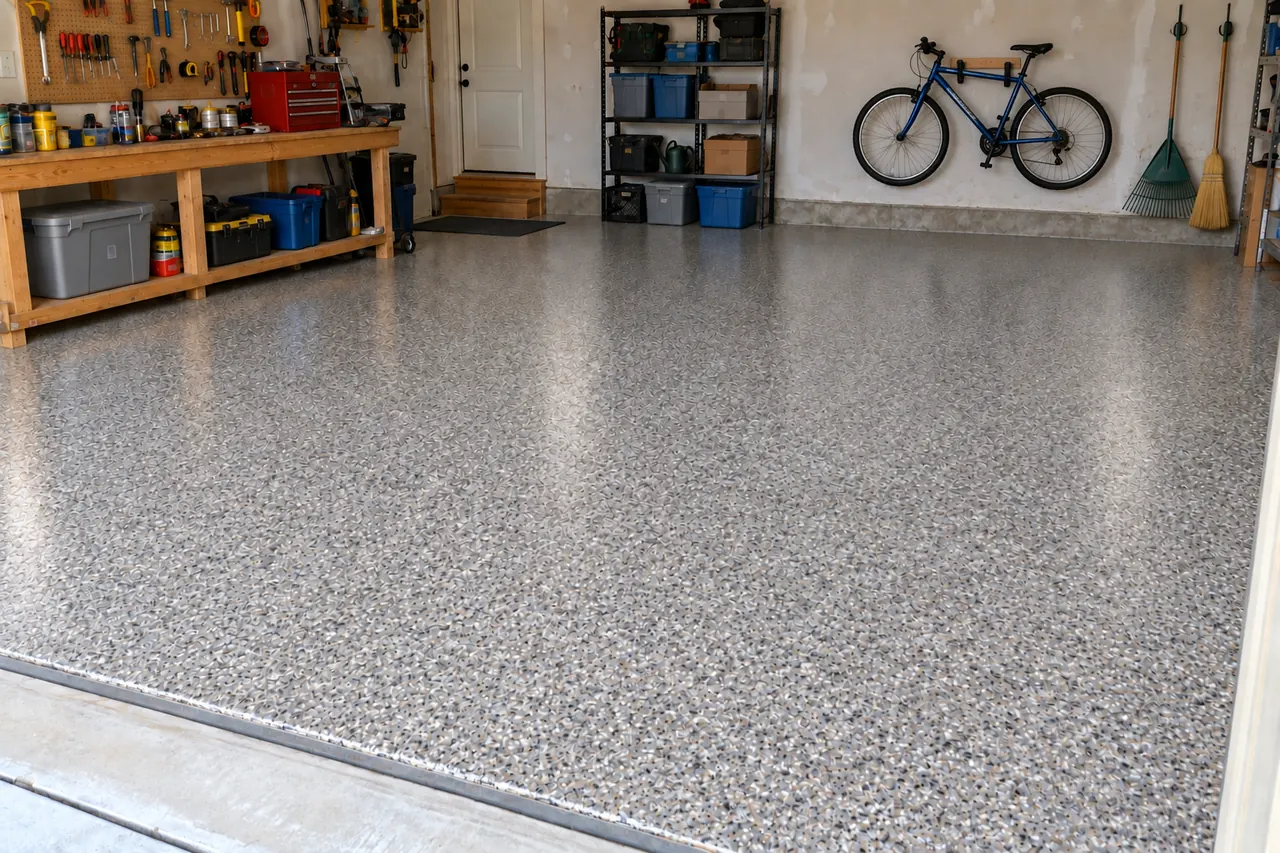
Stained bare concrete garage floor before and after a full-broadcast flake coating — after
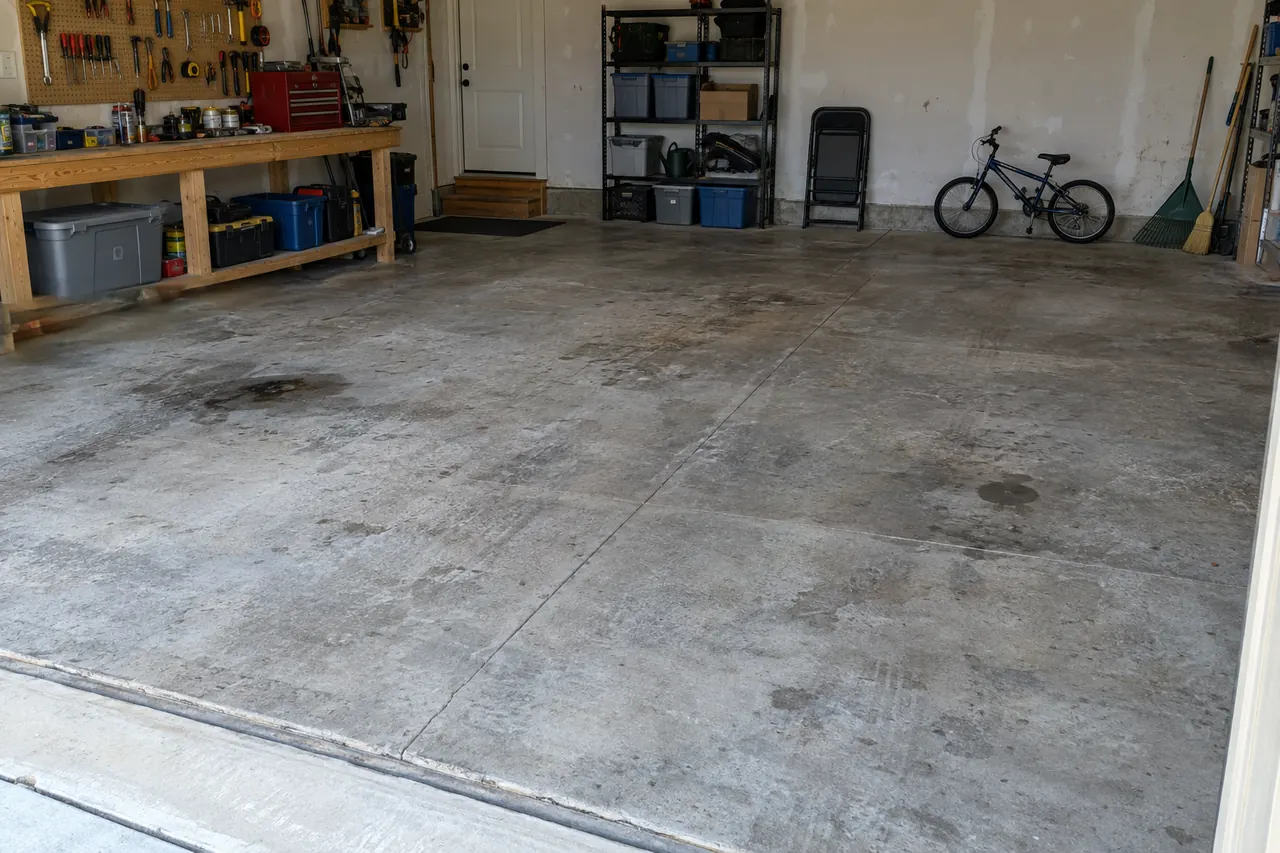
Stained bare concrete garage floor before and after a full-broadcast flake coating — before
Example
A stained, cracked garage floor, ground, repaired and coated with a full-broadcast flake system. Drag the slider. Example images, not a customer's job; photos from local jobs replace them as we finish them.
The short answer

Our garage floor coatings in Green Bay are polyurea flake floors, not epoxy. The concrete is diamond ground to about CSP 2–3 and repaired, then gets a polyurea base coat, a full broadcast of color flake and a clear, UV-stable polyaspartic topcoat. Most one- and two-car garages take a day, and you can park on it after 24 to 48 hours.

By Rob Diederich, owner · Updated
Prep
Diamond grind, CSP 2–3
Install
Usually 1 day
Park on it
24–48 hours
Price
$6–$9 per sq ft

Garage floor coating at a glance

Surface prepFull diamond grind to about CSP 2–3 on the ICRI scale, with dust extraction; no acid etching
Slab checksMoisture coming up through the slab, old sealers or coatings, cracks and settled sections
SystemPolyurea base coat, full flake broadcast, clear UV-stable polyaspartic topcoat
Film per coatPolyaspartic coats go on about 6–12 mils dry per coat
Install timeUsually 1 day for a one- or two-car garage
Walk on itWithin a few hours (polyaspartic)
Park on itAfter about 24–48 hours; epoxy-only floors can take up to a week
Garage sizesOne-car about 288 sq ft (12×24); two-car 400–576 sq ft (20×20 to 24×24); three-car about 864 sq ft (24×36)
Expected lifeCost guides cite 10–20+ years for professionally installed polyaspartic floors in homes
Surface profile from CS Unitec's ICRI CSP guide; film thickness from the ArmorGarage polyaspartic data sheet; sizes, cure times and lifespan from HomeGuide and HomeGuide's polyaspartic guide.

Looking for epoxy flooring in Green Bay?

We don't install epoxy. If you searched for epoxy flooring or an epoxy garage floor in Green Bay, the floor you're picturing is most likely a hard, glossy, flaked garage floor. That's the floor we install, built from a polyurea base coat and a polyaspartic topcoat in place of epoxy.

Epoxy was the go-to for years, and it still beats bare concrete. But a garage here sees road salt, hot tires and January cold, and that's where epoxy falls short: it yellows in sunlight, it's slow to cure in the cold, thin coats can lift under hot tires, and you can wait up to a week to park on it. With our system you walk on the floor in a few hours and park in 24 to 48.

Epoxy
The older way
  • Yellows over time in sunlight
  • Hard and brittle, so it doesn't flex with the slab
  • Thin coats can lift under hot tires
  • Up to about a week before you park
  • Slow to cure in the cold; often 2–3 days to install
Polyurea + polyaspartic
What we install
  • UV-stable polyaspartic topcoat: stays clear, won't amber
  • Tougher and more flexible than epoxy
  • Better resistance to hot-tire pickup
  • Walk on it in a few hours, park in 24–48 hours
  • Diamond-ground prep for a mechanical bond, never acid etching

Same flake colors, same square footage, and you're parking on it in a day or two instead of a week. The full comparison →

What you get in place of an epoxy garage floor

  • The same look. A hard, glossy floor covered in color flake, in the same flake blends an epoxy floor uses.
  • Your garage back in a day or two. Walk on it within a few hours and park after about 24 to 48 hours.
  • No yellowing by the door. The polyaspartic topcoat is UV stable, so it stays clear where the sun hits the floor.
  • A floor built for hot tires and salt. It's bonded into diamond-ground concrete and built in layers, with better resistance to hot-tire pickup than a thin epoxy coat.
  • A price close to epoxy. Nationally, installed epoxy runs about $4 to $10 per square foot and polyaspartic about $5 to $12 (HomeGuide). Ours is $6–$9, prep included.

If you want epoxy specifically

Then we're not the right installer, and we'd rather say so up front. Epoxy still has its place: as a base coat under a UV-stable topcoat, or in a room with no sunlight on the floor and no car waiting to come back in. For a Green Bay garage that takes salt, slush and hot tires, we think polyurea and polyaspartic are the better floor, and that's the only system we install.

The longer version, including cost, lifespan and the cases where epoxy still makes sense, is in epoxy vs. polyaspartic garage floors.

Why coat a garage floor

  • Road salt and brine eat bare concrete. A sealed, coated floor keeps them on top where they wipe off.
  • Oil, antifreeze and hot-tire marks don't soak in.
  • It's brighter, cleaner and easier to sweep, and a finished garage helps resale.
  • Flake texture gives grip, even with snowmelt on the floor.

What's in a polyurea flake floor
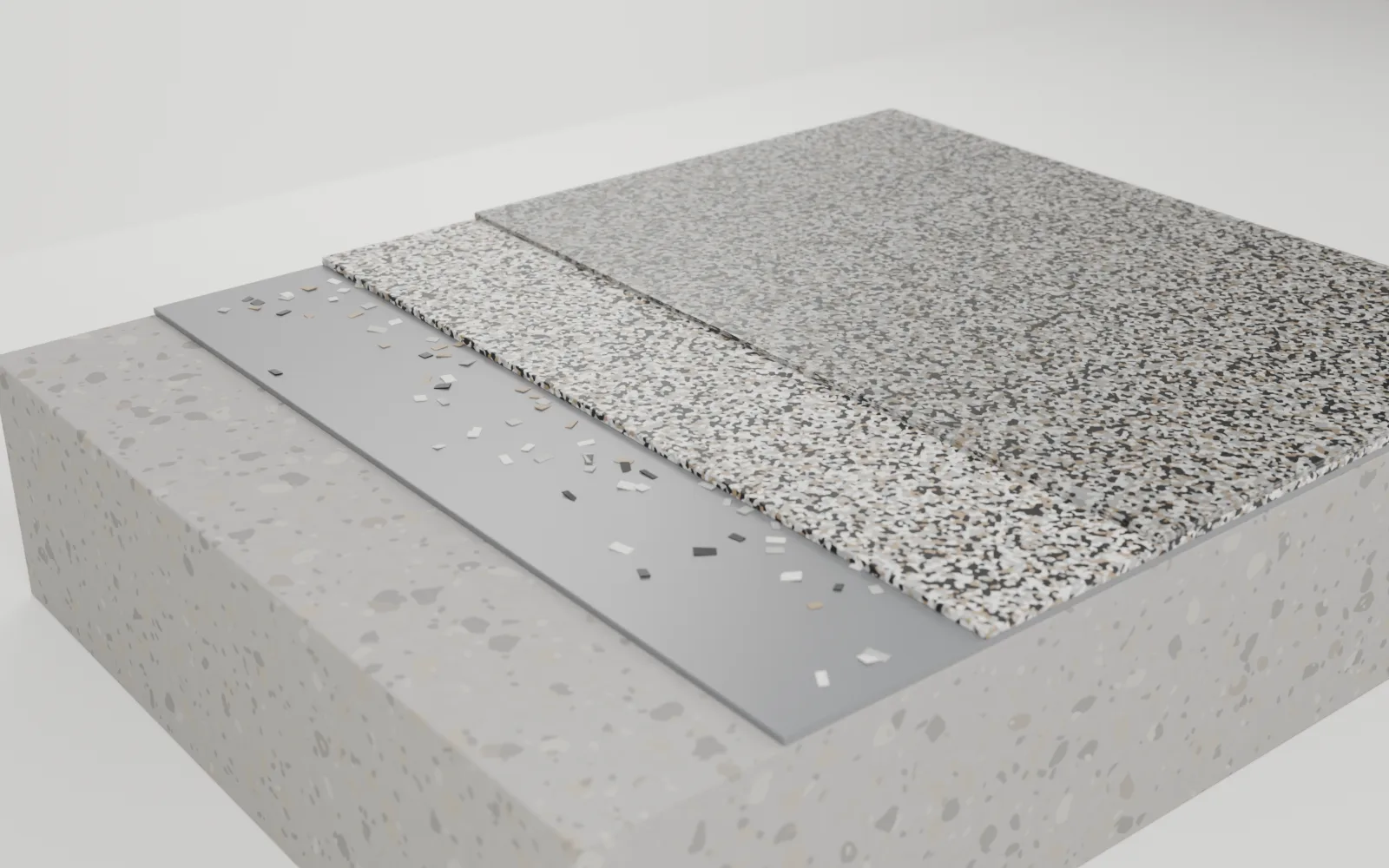
A coating is only as good as the layer under it
Layers exaggerated for clarity.
3D render of a cut block of coated concrete stepped back layer by layer: the concrete slab with its diamond-ground top, a gray base coat, a full broadcast of gray, black, white and tan flake, and a glossy clear topcoat3D render
  1. 1Concrete slab Moisture-checked, cracks repaired first.
  2. 2Diamond-ground profile Opens the surface so the base coat bites.
  3. 3Base coat Bonds into the concrete and holds it all on.
  4. 4Flake broadcast Color, texture and grip, thrown to full cover.
  5. 5Clear topcoat UV-stable wear layer that locks in the flake.
Each layer has a job. The bond to the concrete underneath is the one that matters most.

We install a polyurea and polyaspartic flake system: a polyurea base coat bonded to diamond-ground concrete, a full broadcast of vinyl color flake, and a UV-stable polyaspartic clear topcoat.

How we install it, step by step

Before anything else we check the slab: moisture coming up through the concrete, old sealers or coatings, and sections that settled. A sunken slab gets lifted first. Then:

  1. 1Diamond grindThe whole floor is ground with diamond tooling and vacuumed. This opens the concrete so the coating has something to bite into. No acid etching.
  2. 2Repair cracksCracks, pits and spalls are filled and ground flush so they don't show through the finished floor.
  3. 3Base coatA base coat goes down over the ground concrete. This is the layer that bonds to the slab.
  4. 4Broadcast flakeFlake is thrown into the wet base coat until it covers the floor, then the excess is scraped and vacuumed off.
  5. 5Clear topcoatA UV-stable clear topcoat locks in the flake, sets the texture for grip and takes the wear.

3D renders, not a job video; the tools are shown without the crew. Most garages are done in a day; parking time depends on the system.

Why the grinding matters so much is covered in why garage floor coatings peel.

Is your garage floor ready for a coating?

Most garage floors can be coated as they are, cracks and stains included. This is what we look for in your photos, and what each one means for the job:

What your floor hasWhat happens
Cracks, pits and salt damageCleaned out, filled and ground flush during prep. The flake pattern hides most of what's left.
A crack that's still movingIt can show back through any coating over time. If we think a line could show on your floor, we'll say so from the photos.
Old paint, epoxy or sealerGround off completely first, priced on top of the rate. A new coating is only as strong as what it's stuck to.
Oil stainsDegreased, then ground out or treated with a primer made for it, because oil left in the concrete blocks the bond.
White powder, damp spots or a bubbling old coatingSigns of moisture coming up through the slab. We look closer before we coat, and the floor may need a moisture-tolerant base coat.
A sunken section, or an apron that dropped at the doorLifted with foam first, on its own line of the quote. A coating can't level a slab.
A slab poured this yearIt needs at least about a month of curing, and we test it before we coat.
A slope toward the door or a drainIt stays. A coating follows the slab, so meltwater keeps running out the door.

More on what a slab needs before a coating is in the concrete floor prep guide, and garage floor cracks explains which cracks are cosmetic and which mean the slab has moved.

Garage floor flake colors

Light gray
Gray & black
Charcoal
Tan & brown
Earth tones
Blue-gray
Black & white
Warm gray
Drawings of common blend families, not exact colors. We bring physical samples so you see the real thing.

Flake comes in dozens of blends, from light grays that hide dust to dark mixes that hide tire marks. We bring real samples, because colors on a screen never match colors on a floor. More on chip size and full vs. partial broadcast in flake garage floors. Tell us what you like when you send photos.

Full flake, partial flake or solid color

Full flake →

Flake to refusal: hides dust, salt and tire marks best, with the most grip. Our standard garage floor.

Partial flake →

A colored base with a lighter scatter of flake, for a cleaner, calmer look.

Solid color →

One even color, no flake, with grit where it gets wet. Practical for shops and back rooms.

A coated garage floor through a Wisconsin winter

  • Salt and slush stay on top. Salty meltwater sits on the coating instead of soaking into the concrete. A floor squeegee pushes it out the door, and a mop now and then clears the white salt film.
  • Grip. The flake and the topcoat leave a textured surface, and where the floor gets wet a lot, like the strip inside the door, grit can be added to the topcoat.
  • Cleaning. Sweep or shop-vac it, and mop with a pH-neutral cleaner when it needs more. Skip harsh solvents and abrasive scrub pads, which dull the topcoat.
  • Tools and jacks. A coated floor takes tool chests, floor jacks and creepers. A heavy or sharp drop, or steel dragged across it, can chip or scratch any coating, and a damaged spot can usually be repaired without redoing the whole floor.
  • Cold. Temperature limits apply while the coating goes down and cures, not afterward. A cured floor in an unheated garage isn't hurt by sitting below freezing.

More on cleaning and care is in cleaning garage and basement floors.

Not just garages

Basements →

Moisture-tested first, then a bright floor that wipes clean.

Shops and pole barns →

Oil, hydraulic fluid and salt stay on top of the concrete.

Commercial floors →

Showrooms, offices, break rooms and back rooms, back in use within hours.

Patios, porches and pool decks →

UV-stable outdoor coatings with grit for grip.

Garage floor coatings near you

We're based in Suamico and coat floors across Green Bay, the Fox Valley, and north and east into Oconto, Shawano, Kewaunee and Door counties. Each town has its own page with the questions people there ask.

Green Bay →

Older floors, old coatings

De Pere →

A sunken apron outside a good floor

Suamico →

Shops and pole barns

Howard →

Garages from the 1990s to now

Ashwaubenon →

Business floors back in use fast

Allouez →

Floors as old as the house

Bellevue →

Before salt pitting spreads

Ledgeview →

Open lots, full sun

Hobart →

Newer floors still get ground

Pulaski →

Floors that see farm equipment

Abrams →

The garage is the front door

Oconto →

Basements after high water

Appleton →

What goes on the floor

Kaukauna →

Garage and shop on one trip

Little Chute →

A settled apron gets lifted first

Kimberly →

Basements get a moisture test

Neenah →

A one-day job for most garages

Menasha →

Pick the color in your own garage

Freedom →

Attached, detached, heated or not

Wrightstown →

Salt, slush and a Wisconsin winter

Sturgeon Bay →

Priced from photos and the floor's size

Luxemburg →

Polyurea, not epoxy

Kewaunee →

Ground first, then coated

Algoma →

Planning a floor in Algoma

Shawano →

Lifting and coating together

Oconto Falls →

Basement floors too

Have a question this page doesn't answer? The floor coating FAQ covers cost, chemistry, prep, warranty, care and booking in one place.

What a garage floor coating costs in Green Bay

Polyaspartic flake floors are $6–$9 per square foot installed, with a $2,000 minimum. That covers grinding, crack repair, base coat, flake and topcoat on sound concrete; heavy repair or grinding off an old coating is extra. The garage floor coating cost guide has the details.

Most common
2-car garage
about 576 sq ft (24 × 24)
FROM $3,456 to $5,184
  • Full diamond-ground prep
  • Polyurea base + polyaspartic topcoat
  • Full flake in your color blend
  • Usually done in 1 day
Get my number
Bigger build
3-car garage
about 864 sq ft (24 × 36)
FROM $5,184 to $7,776
  • Full diamond-ground prep
  • Crack and joint repair included
  • Polyurea base + polyaspartic topcoat
  • Can run into a second day
Get my number
Living space
Basement
about 800 sq ft
FROM $4,800 to $7,200
  • Moisture test before we quote
  • Full flake, partial flake or solid color
  • A bright floor that wipes clean
  • Moisture-tolerant base coat if it's needed
Get my number

Patios, porches and pool decks are $7–$10 per square foot for the UV-stable outdoor topcoat. Every floor has a $2,000 minimum, and heavy repair or grinding off an old coating is extra. Send photos and we'll text a firm number within 24 hours.

Floor coating price calculator

Drag the slider. See your number.

Pick your floor and set its size for an installed price from our published rates.

1.Pick your floor
100 sq ft3,000 sq ft
Ballpark estimate
$3,456 – $5,184

$6–$9 per sq ft · installed · Polyurea base coat, full flake, polyaspartic UV topcoat

About garage floor coatings →

Get a real number

Leave your name and mobile number and we'll text you about your floor within 24 hours.

Your quote: Garage floor · 576 sq ft · $3,456–$5,184 ballpark

By sending, you agree we can text or call you about this request. No spam. Privacy

Want it firm? Add photos on the full photo form.

Five things that move the number

  1. 1. Slab condition

    Deep cracks, spalling or pitting take more repair before the coating goes down. Most floors come in at the posted rate; your photos tell us if yours needs more.

  2. 2. An old coating or sealer

    Paint, old epoxy and sealers have to be ground off completely first, and that's priced on top. A new coating is only as strong as what's under it.

  3. 3. Square footage

    Every floor has a $2,000 minimum for setup and grinding, so small floors cost more per foot and bigger floors spread that setup out.

  4. 4. Moisture below grade

    Basement and below-grade slabs get a moisture test before we quote. A slab with moisture coming through may need a moisture-tolerant base coat.

  5. 5. A sunken section

    If a section has settled, we lift it before we coat, priced on its own line. Planning both together saves a trip.

Every coating comes with a written warranty, spelled out on your quote before you approve it.

What happens after you send photos

  1. 1A firm price by text or emailWe look over your photos, the floor size and your notes, and send a firm price within 24 hours. Anything extra, like an old coating to grind off, is priced on the quote before you decide.
  2. 2A visit only if we need oneMost floors are priced from photos. If something can't be judged from them, we come look first, and we bring real flake samples.
  3. 3Pick a dateOnce you approve the price, you pick a date. We check air and slab temperatures before a late-season job goes on the schedule.
  4. 4Empty the floorCars, shelving, freezers, bikes and bins come off the floor before we arrive. Things hung on the walls can usually stay.
  5. 5Install day and walk-throughGrinding, repairs, base coat, flake and topcoat usually happen in one visit. We walk the finished floor with you. You can walk on it within a few hours and park after about 24 to 48 hours.

Sources

  1. CS Unitec: concrete surface profiles (ICRI CSP) and prep equipment
  2. ArmorGarage Polyaspartic 80 technical data sheet
  3. HomeGuide: garage floor coating cost
  4. HomeGuide: polyaspartic floor coating cost
Questions

Common questions

How long until I can walk and park on a coated garage floor?

For our polyurea and polyaspartic system, foot traffic is usually fine within a few hours and parking after about 24 to 48 hours, depending on temperature. Epoxy-only systems can need up to a week. We give you exact times for your floor before we start.

Do you install epoxy garage floors?

No. We install polyurea flake floors with a polyaspartic topcoat, which give you what most people are picturing when they ask for epoxy: a hard, glossy, flaked garage floor. Our system cures faster, doesn't yellow in sunlight and handles hot tires and cold weather better than an epoxy-only floor, so you can usually park on it in 24 to 48 hours instead of a week.

Is a flake garage floor slippery when wet or snowy?

Less than you'd think. The flake and topcoat create a textured surface, and the topcoat texture can be adjusted. Any smooth floor gets slicker with ice or oil on it, so we set the texture for a Wisconsin garage.

Will road salt and hot tires damage a coated floor?

A properly bonded professional coating resists road salt, brine and hot-tire pickup. Hot-tire peeling is mostly a problem with thin, roll-on epoxy over a poorly prepared floor.

Can you coat a floor that has cracks or an old coating?

Yes. Cracks are filled and repaired as part of prep. An old coating that's peeling has to be ground off first, because a new coating is only as strong as the one under it.

How long does a garage floor coating last?

Cost guides cite 10 to 20 years or more for a professionally installed polyaspartic floor in a home garage, far longer than a DIY kit. Prep, film thickness, traffic and care decide where in that range a floor lands.

Can garage floors be coated in cold weather?

Coatings have minimum temperatures for the air and the slab. An attached garage can often be coated into late fall, sometimes with heat; a cold detached garage may need to wait for spring. We check temperatures before scheduling.

What flake colors do you offer?

Dozens of blends, from light grays to dark mixes with accents. Lighter blends hide dust, darker ones hide tire marks. We bring physical samples so you see the real color.

What is CSP, and why does it matter for a garage coating?

CSP, or concrete surface profile, is the International Concrete Repair Institute's scale for how rough prepared concrete is, from CSP 1 (nearly smooth) to CSP 10 (very rough). Broadcast garage coatings bond best at about CSP 2 to 3, which a diamond grinder produces; a smooth or etched floor gives the coating little to grip.

How much does it cost to coat a one-car or three-car garage?

With us, about $2,000–$2,592 for a one-car garage of about 288 square feet and $5,184–$7,776 for a three-car garage of about 864 square feet, at $6–$9 per square foot with a $2,000 minimum. Nationally it's roughly $4 to $12 per square foot installed (HomeGuide). Send a photo of your floor and its size for a firm price by text or email within 24 hours. The cost guide covers two-car sizes.

How much more does polyaspartic cost than epoxy, and is it worth it?

Nationally, installed polyaspartic runs about $5 to $12 per square foot and epoxy about $4 to $10 (HomeGuide), so the gap is usually small. For a Wisconsin garage we think it's worth it: you park in 24 to 48 hours instead of up to a week, the topcoat won't yellow, and it resists hot tires better. Prep still matters as much as the chemistry. Ours is $6–$9 per square foot installed.

How long does it take to install a garage floor coating?

Usually one day for a one- or two-car garage. Grinding, crack repair, base coat, flake and topcoat all happen in the same visit; a big floor or one with an old coating to grind off can take longer. You can walk on it within a few hours and park after about 24 to 48 hours.

What do I need to do to get my garage ready for the coating?

Empty the floor completely: cars, shelving, freezers, bikes and anything else sitting on it. Things hung on the walls can usually stay. Light items can come back once the floor is walkable, a few hours after we finish, but heavy shelving, tool chests and anything on wheels should wait until it's ready for cars, about 24 to 48 hours.

Do I still need garage floor mats with a coated floor?

Not to protect the concrete. On a coated floor, salty slush sits on top instead of soaking in, and a squeegee pushes it out the door. Some people keep a containment mat anyway to hold meltwater in one spot through a long Wisconsin winter, which is fine; just lift it and clean under it now and then.

Is a garage floor coating worth it if I'm selling my house?

It can help the house show better, but don't count on getting every dollar back in the sale price. A clean, bright garage floor photographs well and tells buyers the place was cared for. If you're listing in a few months it's mostly presentation; if you'll stay a few more years, you get to enjoy it too.

Keep reading

Related

Coatings · Comparison
Epoxy vs. Polyaspartic

Epoxy vs. polyaspartic and polyurea garage floors: cure time, UV yellowing, hot tires, cold, road salt, cost and lifespan, and when epoxy still fits.

Coatings · Prep
Why Coatings Peel

Peeling garage floor coatings come down to prep, moisture, hot tires and contamination. What goes wrong and what a lasting install does differently.

Pricing · Garage floor coatings
Garage Floor Coating Cost

Garage floor coating cost in Green Bay: our polyurea flake floors are $6–$9 per sq ft ($2,000 minimum). One-, two- and three-car prices and what's included.

Price your polyurea flake floor

Send a photo of the floor and its size. You'll get a price by text or email within 24 hours.

Get My PriceCall (920) 655-2193