
In this article (7 sections)
Most coated garage floors you see in northeast Wisconsin are flake floors. There's a reason: a solid-color coating shows every footprint, every salt ring and every speck of dust. A floor covered in flake hides all of it, and the texture gives your boots something to grip when snowmelt runs off the car.
If you're comparing garage floor coatings, this is the part of the system you'll actually see every day. Here's what's in it, what changes the look and the price, and what to ask before anyone grinds your floor.
What's in a Flake Floor
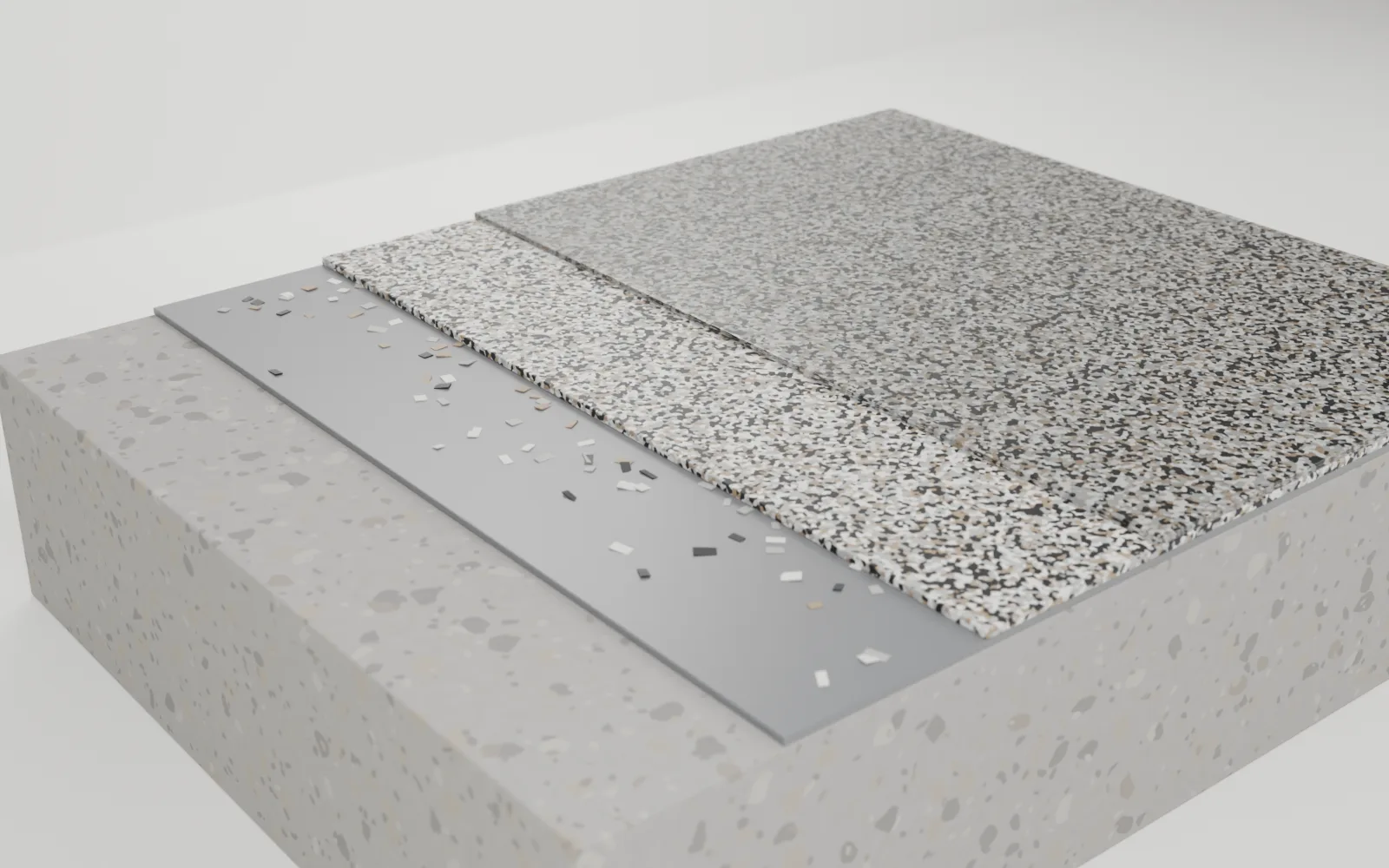
A flake floor is three layers on top of prepared concrete:
- 1Diamond-ground concreteThe top of the slab is ground to a rough profile so the coating soaks in and bonds instead of sitting on top.
- 2A base coat with flake broadcast into itWhile the base coat is wet, flakes are thrown across the floor by hand. They stick wherever they land.
- 3A clear topcoatAfter the loose flakes are scraped and swept off, a clear topcoat locks them in and takes the wear.
The flakes themselves don't hold anything up. They're decoration and texture. The bond, the thickness and the topcoat are what make the floor last.
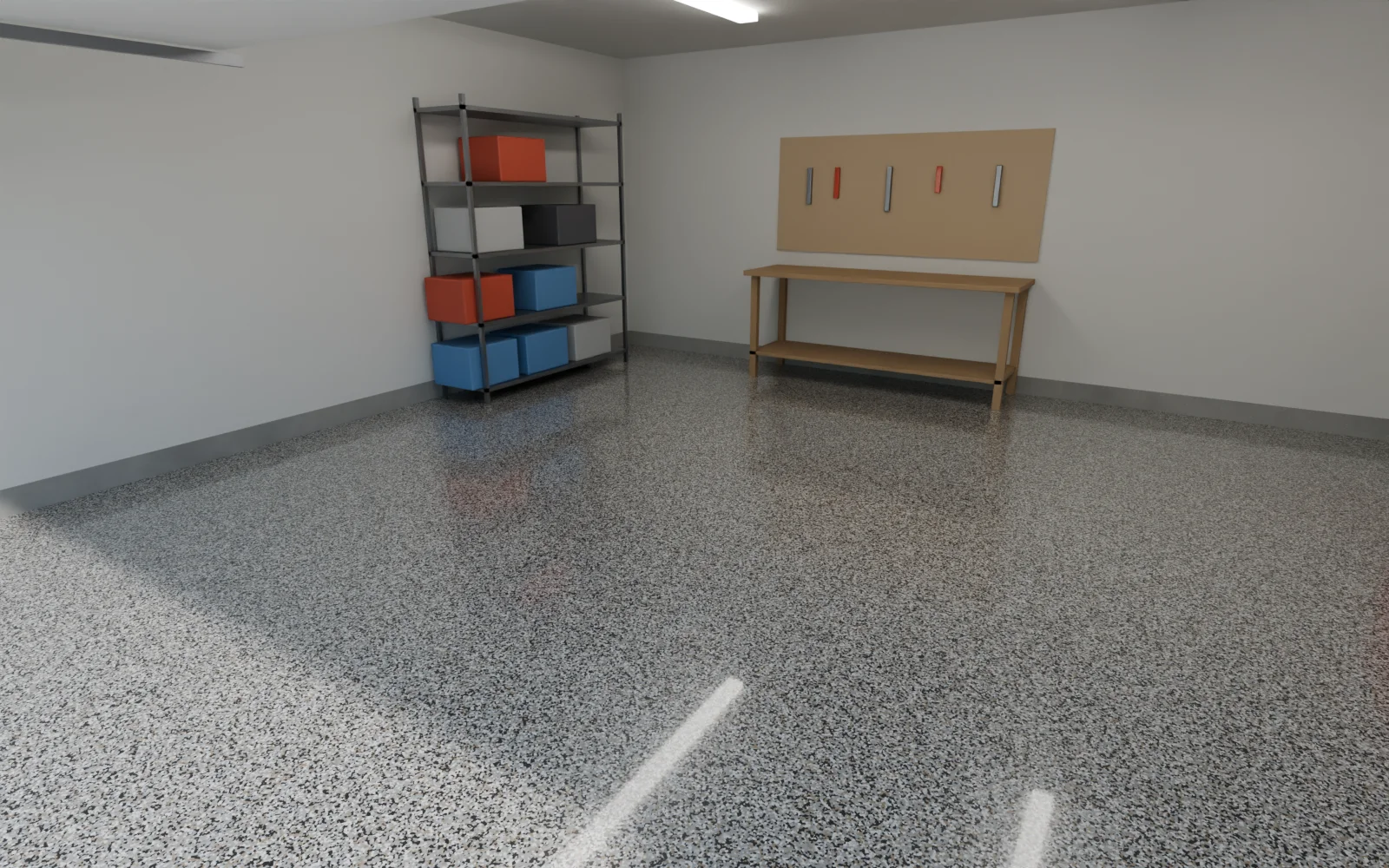
Full Broadcast vs. Partial Broadcast
| Full broadcast | Partial broadcast | |
|---|---|---|
| What it means | Flakes thrown until the base coat won't take any more | A light sprinkle over a colored base coat |
| What you see | All flake, no base color | Base color with flecks of flake |
| Hides dust and flaws | Very well | Some |
| Texture | More grip, built in | Smoother, more slippery when wet |
| Thickness | Thicker system | Thinner system |
We install both. In a Wisconsin garage, full flake is our standard, because the extra texture and the way it hides salt residue between washes are worth it. Partial flake suits basements and rooms that stay cleaner, and for a floor with no flake at all there's solid color.
Chip Size and Color
Flake comes in different sizes and dozens of color blends.
- Bigger flakes make a bolder, busier pattern.
- Smaller flakes look finer and more like stone.
- Lighter blends hide dust and make the garage brighter.
- Darker blends hide tire marks and oil drips.
Colors on a screen never match colors on a floor, so we bring real samples. Look at them on your own concrete, in your own garage light, before you pick.
Why Flake Works in a Wisconsin Garage
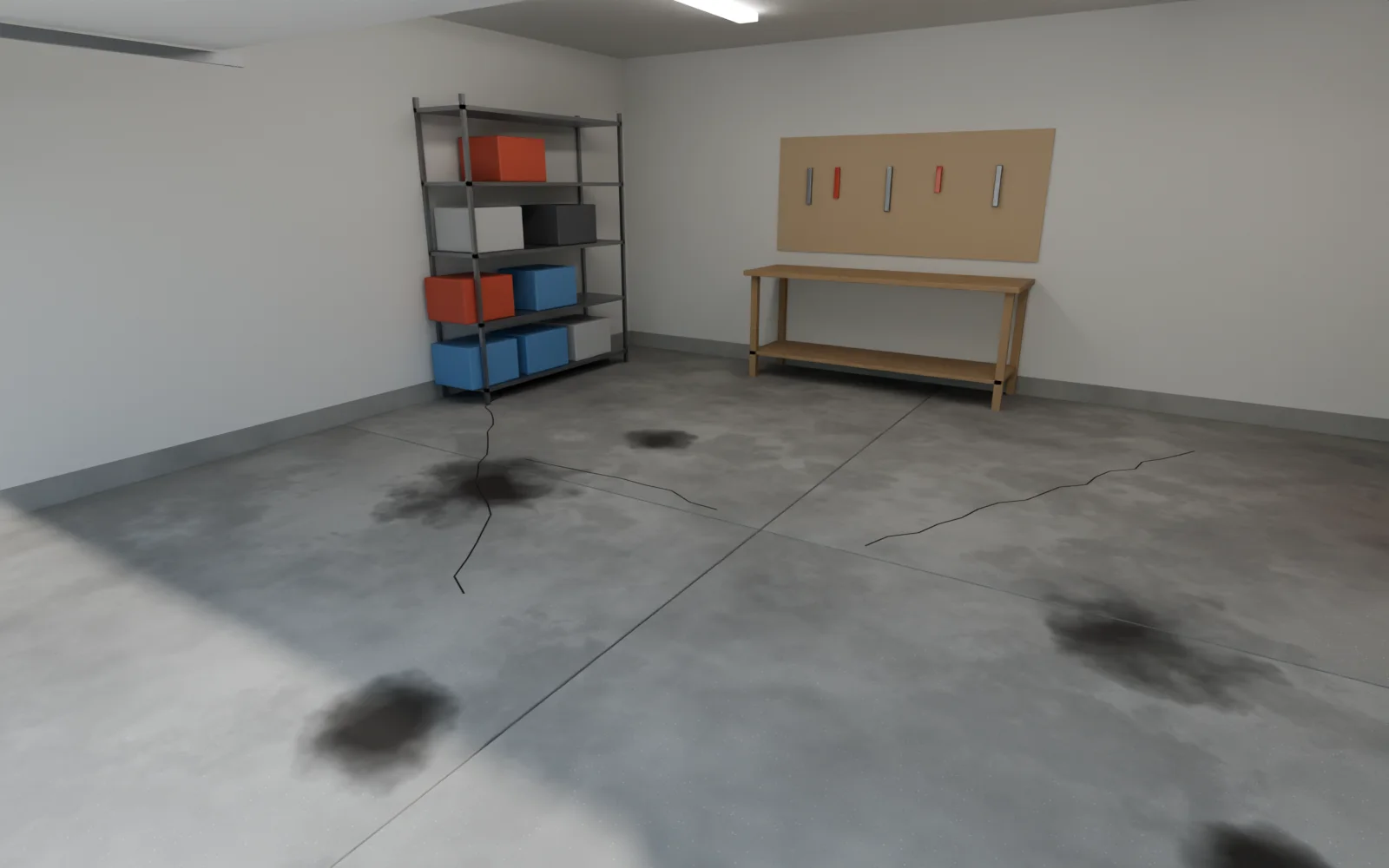
Winter is hard on a garage floor. Cars drag in road salt and slush, the brine sits in puddles for days, and bare concrete soaks it up and starts to flake and pit. A coated floor keeps that brine on top, where a squeegee and a rinse take care of it.
Flake helps in two more ways. The texture gives grip on a wet floor, and the busy pattern hides the white salt film that shows up on a solid-color floor between washes.
Epoxy or Polyaspartic Under the Flake?
You'll see flake floors sold as epoxy, polyurea and polyaspartic systems. If you've been pricing an epoxy garage floor, the differences are in epoxy vs. polyaspartic. We install a polyaspartic system, with a UV-stable clear topcoat that doesn't yellow in a garage with the door open all summer.
Be careful with DIY kits that come with a packet of flakes. They're a thin film over etched concrete, and hot tires can lift them. The flakes look the same on day one; the difference shows up the first winter. Why garage floor coatings peel explains it.
What a Flake Floor Costs
Our polyurea flake floors are $6 to $9 per square foot installed, with a $2,000 minimum, so a 24 × 24 two-car garage (576 square feet) runs $3,456 to $5,184. Nationally, professional garage floor coatings run about $4 to $12 per square foot installed, according to HomeGuide. The garage floor coating cost guide breaks it down by garage size.
What moves the price on a flake floor:
- Square footage, the biggest factor
- Floor condition: heavy cracking, pitting or flaking needs more repair first
- An old coating or sealer that has to be ground off
- Moisture coming up through the slab
- A sunken section that needs garage floor leveling before it's coated
We price from photos of the floor and its size.
What to Ask Before You Hire
- Do you diamond grind the whole floor, edges included?
- Is it a full or partial broadcast?
- What's the topcoat, and is it UV stable?
- How are cracks and control joints handled?
- What does the warranty cover, in writing?
Why garage floor coatings peel goes deeper on each one.