Skip to content
(920) 655-2193|Serving Green Bay & Northeast Wisconsin
Rise & Grind Concrete
Get My Price
Concrete leveling · Other slabs

AC Pads, Shed Floors, Basements & Other Slabs

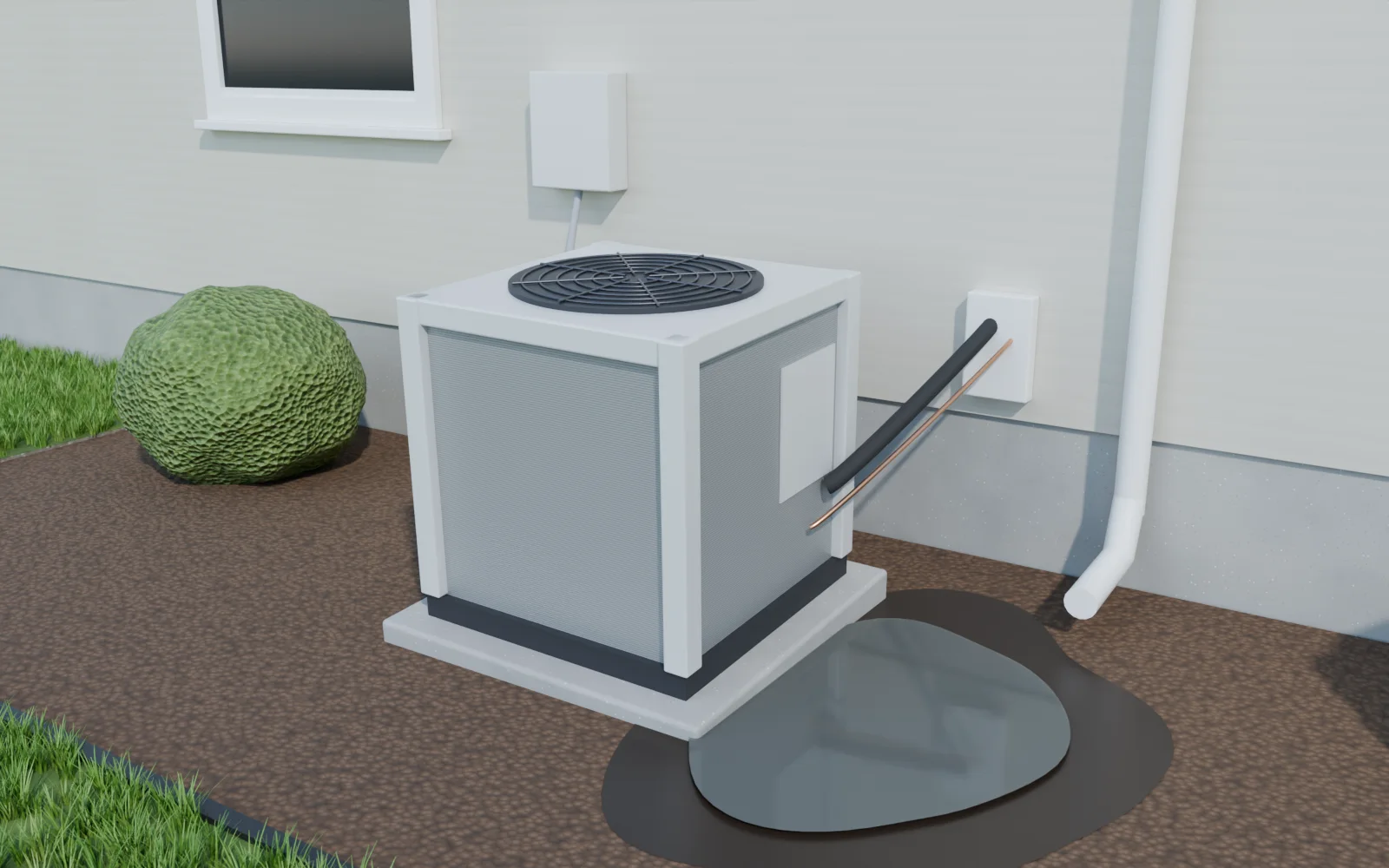
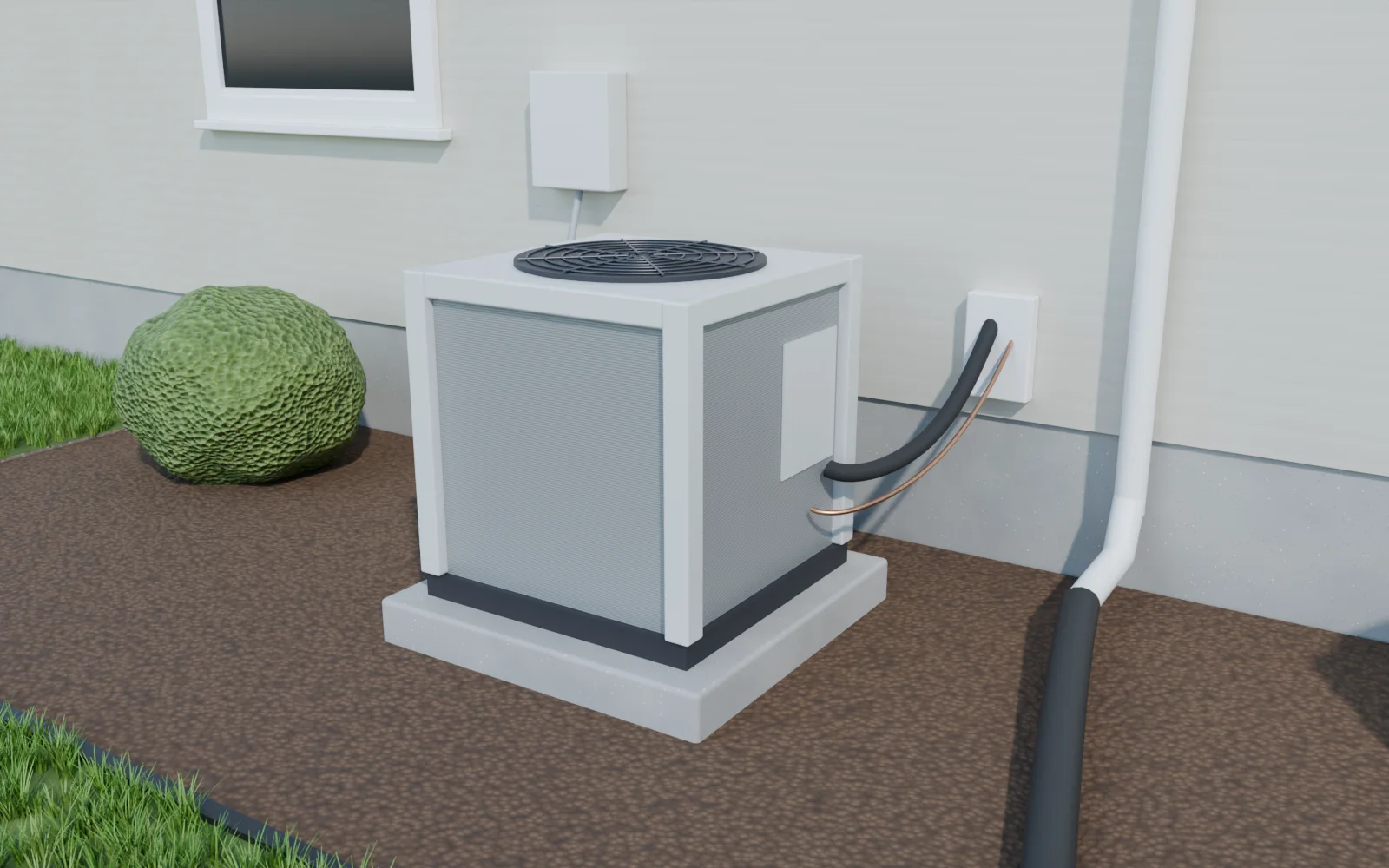
3D render: an air-conditioner pad tipped away from the house by downspout water, its refrigerant lines pulled tightPad tipped 2″, lines tight3D render
The short answer

Any poured concrete slab on the ground can be lifted with polyurethane foam: AC and heat pump pads, shed and pole barn floors, basement floors, sunroom and breezeway slabs, hot tub and generator pads. We drill 5/8-inch holes, fill the void and raise the slab to the line, usually in an hour or two. Small slabs price near the job minimum, so bundle them into one trip.

By Rob Diederich, owner · Updated
Works on
Any slab on the ground
Time on site
1–2 hours
AC pads
Unit stays connected
Small slabs
Near the job minimum
3D render of an air-conditioner pad tipped by downspout water with the refrigerant lines pulled tight, before and after foam lifting — afterLevel, lines slack
3D render of an air-conditioner pad tipped by downspout water with the refrigerant lines pulled tight, before and after foam lifting — beforePad tipped 2″, lines tight
3D render
The pad is lifted level with the unit still connected, so it sits square and the lines go slack. Extending the downspout keeps the water off the pad. Drag the slider.

Slabs we lift

AC & heat pump pads

A tipping condenser strains its mounts and refrigerant lines. The unit stays connected while we level the pad.

Shed & pole barn floors

Thin slabs on uncompacted gravel that dropped at a corner or a joint, so the door won't close square.

Basement floors

Slabs that settled at the edges or at a crack, lifted from inside through the same small holes.

Sunroom, porch & breezeway slabs

Slabs on grade between the house and the garage, or under a three-season room.

Hot tub & generator pads

Lifted level once the tub is drained and moved; a standby generator stays put.

Kennels, landings & mailbox pads

Any small slab with a lip or a tilt. Bundle them into one trip.

Slab leveling at a glance

Works onPoured concrete on the ground, inside or out, in one piece or a few large pieces
Doesn't work onAsphalt, pavers, gravel, and slabs broken into many small pieces
Holes5/8 inch: 1–3 for a small pad, a grid for a floor
AC padsThe unit stays connected; we lift in small steps and watch the line set so nothing pulls on the refrigerant lines or the disconnect
Basement floorsFloor coverings come up over the low area; dust is vacuumed at the drill; holes are patched flush
In-floor heatTell us if a slab has radiant tubing or snow-melt lines in it. We locate them before drilling or pick another spot; we don't drill a heated slab blind
Before we liftMove the mower, shelving and anything heavy off the low area; the shed, sunroom or unit on the pad stays put
Time on site1–2 hours for most pads and small floors
Use itSame day; set a hot tub back once the patches have set

Signs a small slab has settled

  • An AC or heat pump unit that's visibly tilting, or whose lines look stretched.
  • A shed door that won't close square, or a floor that slopes to one corner.
  • A crack across the basement floor with a step in it, or water collecting along one wall.
  • A hot tub that rocks, or a generator that's no longer level.
  • A landing or breezeway slab with a lip at the door.
  • A spot that feels soft or sounds hollow underfoot.
  • Shed or sunroom doors and windows that stick, because the slab under that wall settled and racked the frame.

How to check a leaning AC pad or small slab

  1. 1Level the unit, both waysSet a 2-foot level on top of the condenser, front to back and then side to side. Install instructions call for the unit to sit level, and many installers aim for within about ¼ inch.
  2. 2See which way it tipsToward the house is the most common and the worst, because it also sends rain and heat-pump defrost water at the foundation.
  3. 3Look at the copper linesLines that are kinked, stretched tight or pulling at the wall need your HVAC company before anyone lifts the pad.
  4. 4Look under the edgeA gap under one side, or soil washed out from beneath it, means the ground moved. Round holes or fresh dirt piles mean an animal is tunneling there.
  5. 5Check what the pad is made ofA concrete pad is heavy, gray and usually 3–4 inches thick. A lightweight pad with a textured top is plastic or composite, and that one is your HVAC company's to re-level.

For a shed or basement floor, lay a straight board across the crack or joint and measure the step under it. More on pads in is your AC unit leaning?

Why small slabs sink

Small pads get the least care when they're poured: a couple of inches of gravel, rarely compacted, often right beside a downspout. Interior slabs settle where the base under them was thin or where water runs along the footing. The fix is the same as for a driveway, just quicker. A crack doesn't rule it out: a slab in a few large pieces is lifted piece by piece, and filling the void under it usually stops the crack from growing.

Thin or loose base

Pads and shed floors are often poured on a couple of inches of gravel that was never compacted, or straight on topsoil. Gaps open under the edges and the slab tips.

Fix: Foam fills the gaps and supports the slab across its whole footprint.

Water at the edge

Downspouts, the roof drip line and a condenser's own condensate soak the ground beside a pad, so the edge nearest the house or the unit drops first.

Fix: We point out downspouts to extend and seal any joint against the house.

Freeze-thaw

Clay-heavy Green Bay soil holds water. Every winter it freezes, swells and thaws softer, loosening the base a little more each year.

Fix: Sealed joints keep water out of the base, which is what freezes.

Lifting an AC pad

A tipping condenser pad is one of the quickest lifts we do and one of the most worthwhile: a unit that runs tilted strains its mounts and refrigerant lines, and HVAC techs will tell you to level it. The unit stays connected. We drill one to three holes in the pad beside it, raise the pad in small steps while watching the line set, and the whole thing usually takes under an hour. If the pad has tipped far enough that the lines are kinked, have your HVAC company look at the lines before we lift.
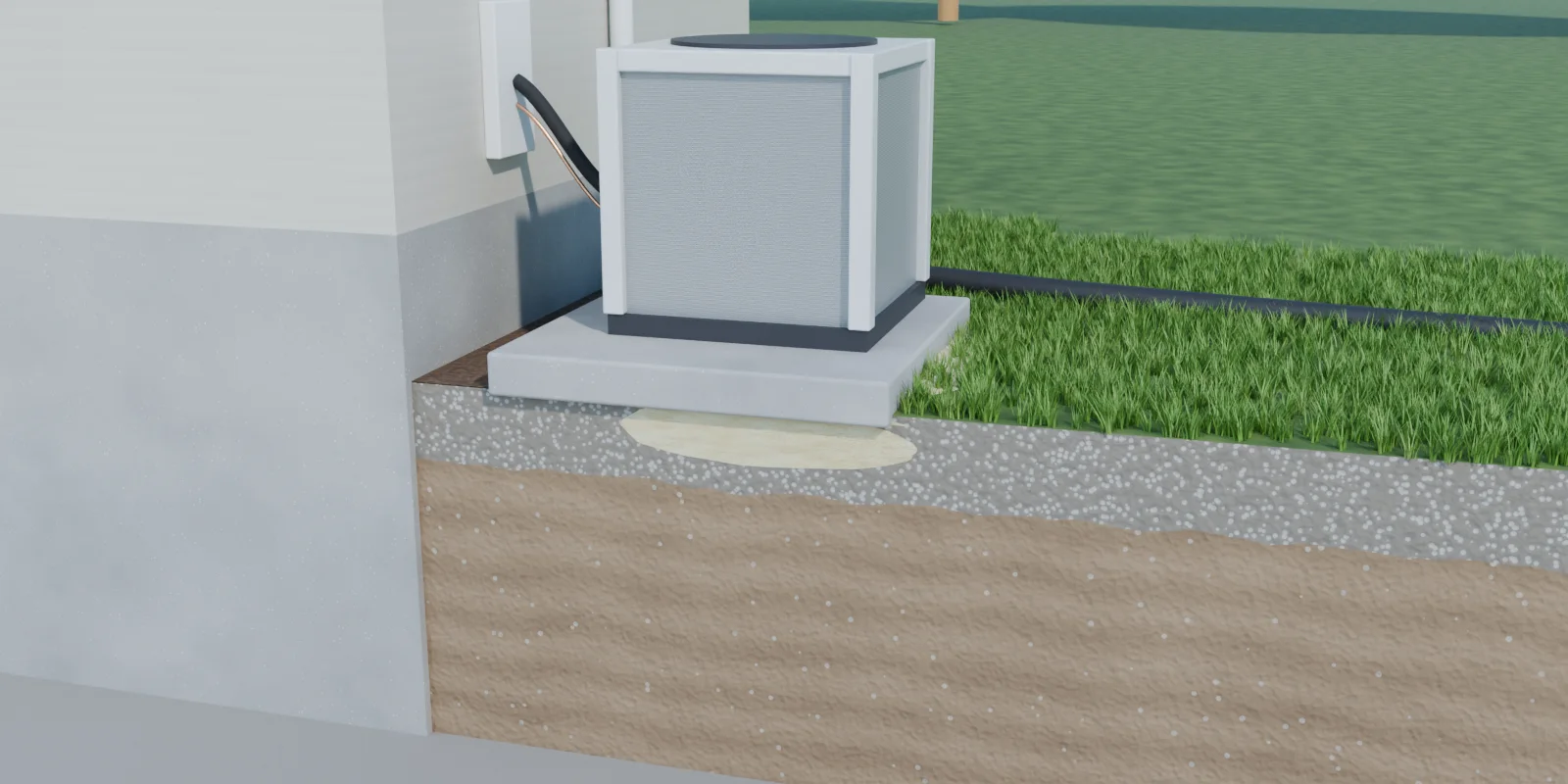
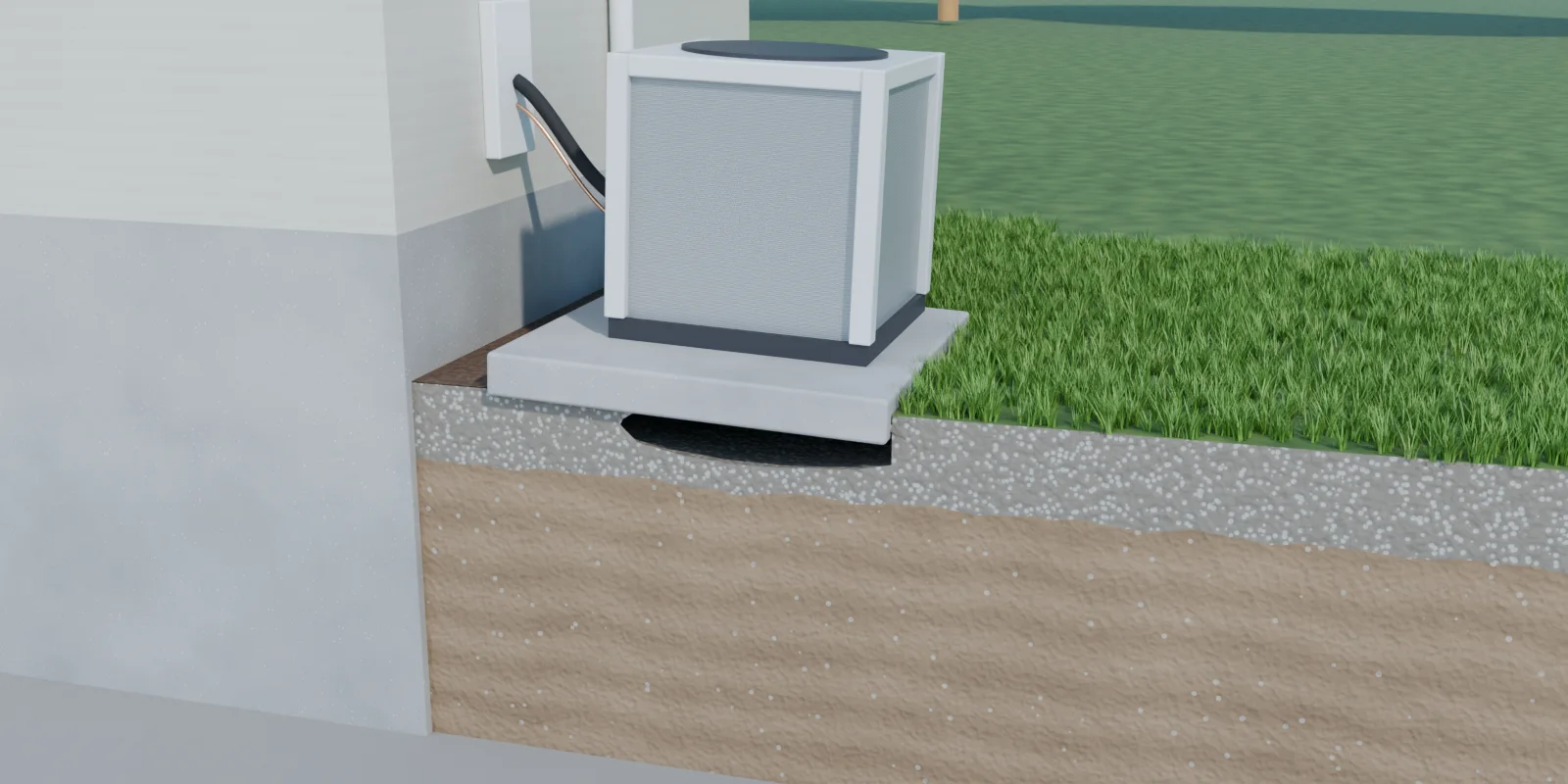
3D cutaway of an air-conditioner pad beside a house: the pad tipped away from the wall over a hollow where the downspout empties, then the hollow filled with foam and the pad level with the condenser still connected — afterFoam-filled, level
3D cutaway of an air-conditioner pad beside a house: the pad tipped away from the wall over a hollow where the downspout empties, then the hollow filled with foam and the pad level with the condenser still connected — beforeTipped over a hollow
3D render
Under an AC pad: downspout water washed out the edge away from the house and the pad tipped. Foam fills the hollow and lifts the pad level with the unit still connected. Drag the slider.

Lifting a basement floor

Basement slabs settle at the edges and at cracks when the base under them was thin or water runs along the footing. We lift from inside: floor coverings come up over the low area, holes are drilled through the slab, foam goes in, and the holes are patched flush. Dust is vacuumed at the drill. If water is coming up through the floor, that's a drainage problem to solve first; lifting doesn't stop water, and foam under a slab doesn't waterproof it.
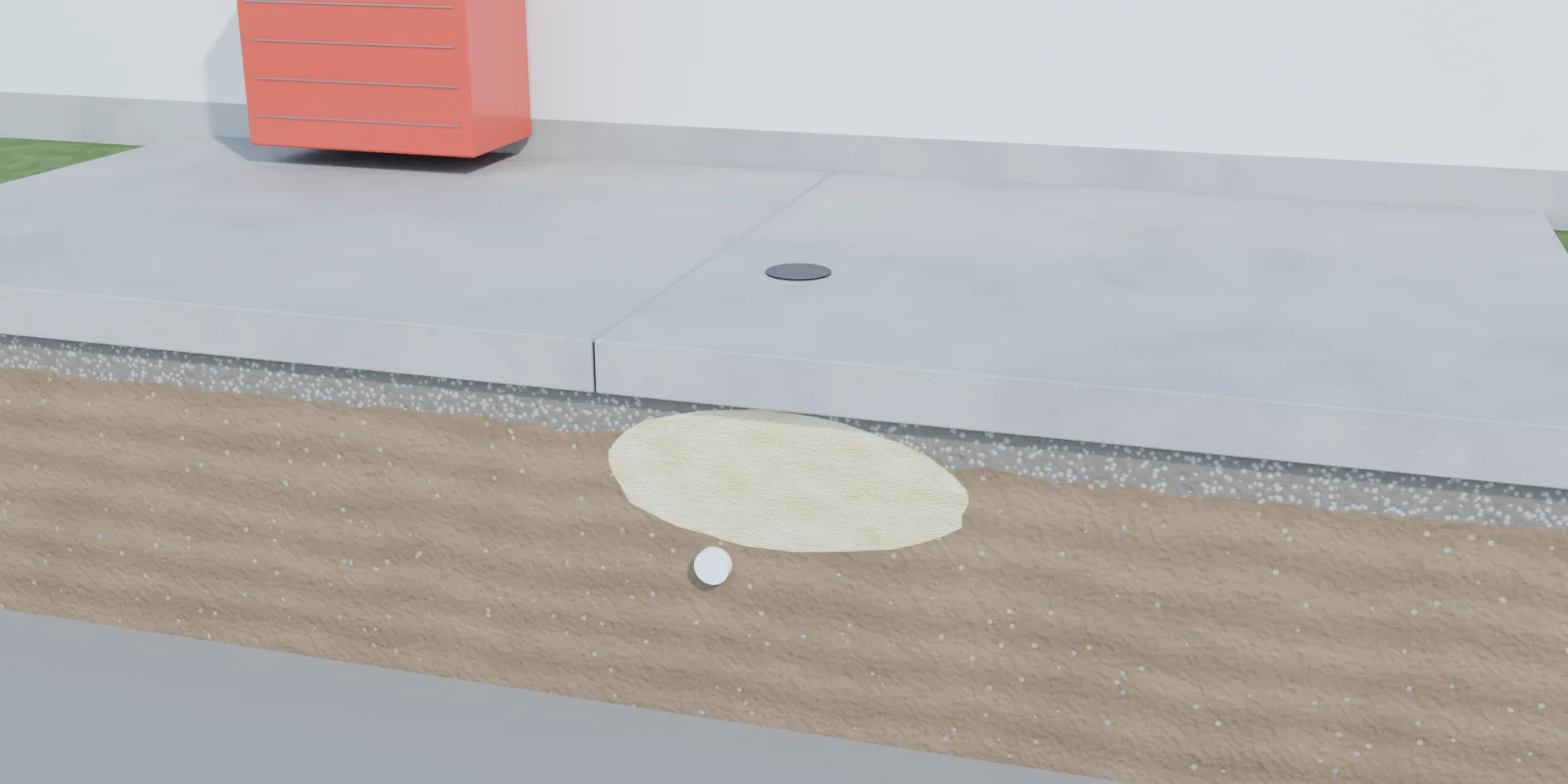
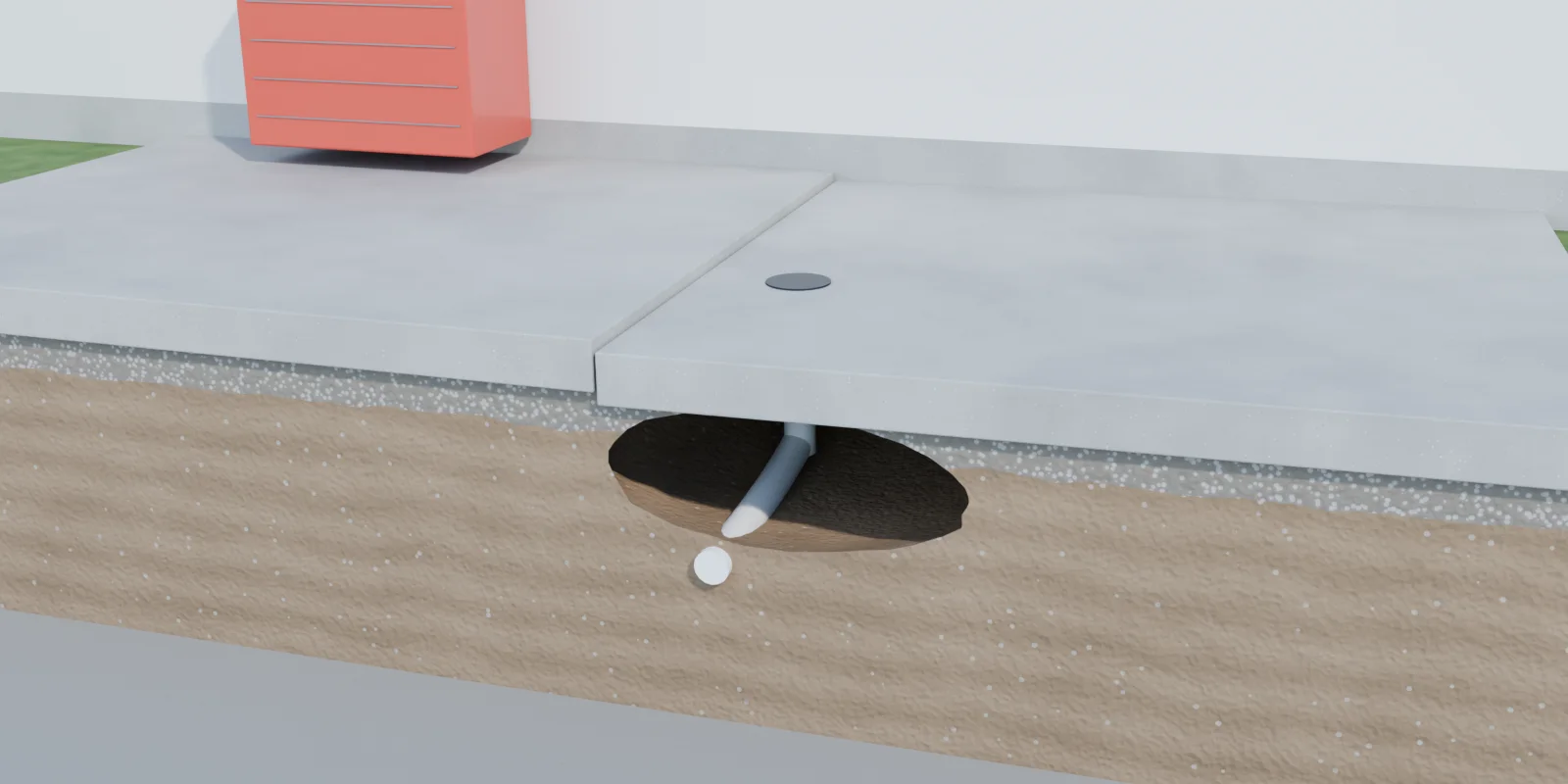
3D cutaway of a garage floor: a leaking floor-drain line washed a hollow out under the panel beside the control joint, then the hollow filled with foam and the panel level — afterFoam-filled, level
3D cutaway of a garage floor: a leaking floor-drain line washed a hollow out under the panel beside the control joint, then the hollow filled with foam and the panel level — beforeWashed out at the drain
3D render
Floor drains are a common culprit indoors: a leaking drain line washes the base out and the panel beside it tips toward the drain. Foam fills the hollow and lifts the panel once the leak is fixed.

Lifting a shed or pole barn floor

Shed floors are often poured thin on a gravel pad that was never compacted, so they drop at a corner or a joint and the door stops closing square. We lift at the joints and corners like any other slab. Move the mower and anything heavy off the low area; the shed itself stays put.

How we lift a small slab, step by step

  1. 1Clear it and set the lineAnything heavy comes off the slab, we note what sits on it (an AC unit stays connected), and set a line to the edge that didn't move, or to level.
  2. 2Drill 5/8″ holesOne to three dime-sized holes for a small pad, a grid for a floor, kept off the edges and away from anything mounted on the slab.
  3. 3Inject in small shotsFoam fills the void first, then each short shot raises the slab a little. On an AC pad we watch the unit and the line set the whole time; on a floor we move between holes so it rises evenly.
  4. 4Patch it and move the waterHoles are grouted flush and any joint against the house is sealed. If a downspout or drip line washed the soil out, we'll point it out; an extension keeps that water off the pad.

3D renders with the ground cut away, simplified to fewer holes than a real job. Most residential jobs take a few hours, and you can walk on the slab when we pack up.

When a small slab isn't a lifting job

  • The pad is plastic or composite. Foam lifting is for concrete.
  • The AC lines are already tight, kinked or were rerouted after the pad sank. Your HVAC company checks them first, and we can time the lift with that visit.
  • Something is still living under it. Chipmunks dig along slab edges and woodchucks dig under them. Get them out before the tunnel is filled.
  • Water is coming up through a basement floor. That's drainage. A lift doesn't stop water and foam doesn't waterproof a slab.
  • The floor has a shallow dip but hasn't moved. That's a job for the flooring installer, not foam.
  • The room sits on a block or wood foundation, not a slab on the ground.

What small slab leveling costs

Every lifting job has a minimum that covers travel and setup, so one AC pad on its own costs about the same as the pad plus a walk square. If you have more than one low spot, send photos of all of them and we'll price the trip once. See the leveling cost guide.

Small slab jobTypical price
AC, generator or mailbox pad$300–$600
Shed floor or part of a basement floor$4–$10 per sq ft
Job minimum$300
Several low spots in one visitPriced as one trip
From our price sheet.
Lifting ballpark

Pick the job that looks like yours.

We price by the foam the job takes, $4–$10 per sq ft on average with a $300 minimum. Add the size and how far it dropped for a closer number; your photos make it a firm price.

1.What sank?
sq ft of low concreteA driveway section is about 100 sq ft; a sidewalk panel about 20.
3.How far did it drop? (at the lowest edge)

Stand a tape measure at the low edge and read the gap to the slab next to it.

4.How did it sink?
Ballpark

Pick a job or enter a size and the range appears here.

What moves it: how far it dropped, how many sections, what the slab is sitting on, and how close we can park. The cost guide explains each.

Get the firm number

Leave your name and mobile. We text you within 24 hours, and three photos make it a firm price, no site visit for most jobs.

By sending, you agree we can text or call you about this request. No spam. Privacy

Have photos now? Use the full photo form and skip the back-and-forth.

Send photos of every low spot
The pad, the shed floor, the walk square: price them in one trip. Firm price by text or email within 24 hours.
Get My Price

After the lift: keeping water away from a small pad

Level slab, sealed joints, and a few dime-sized gray patches where the foam went in. The patches are close to concrete color and fade into older slabs within a season. We text you before-and-after photos before we leave.

Keeping it level means keeping water out from under it. Three things do most of the work: keep the joints and cracks sealed, backfill soil against any slab edge the lift left exposed, and keep downspouts discharging away from the concrete. Sealing is its own line on your quote; the rest is in what to do after your concrete is lifted.

Questions

Common questions

Can you level a tilting air conditioner pad?

Yes, and the unit stays connected. We drill one to three 5/8-inch holes in the pad beside the condenser, raise the pad in small steps while watching the line set, and patch the holes. It usually takes under an hour. If the lines are already kinked from the tilt, have your HVAC company check them before we lift.

Can you lift a basement floor?

Yes. Floor coverings come up over the low area, we drill through the slab, inject foam and patch the holes flush, with dust vacuumed at the drill. If water comes up through the floor, fix the drainage first; lifting doesn't stop water and foam under a slab doesn't waterproof it.

Is a small slab worth lifting, or is it cheaper to pour a new pad?

Lifting is usually cheaper once you count what sits on the slab. A new AC pad means the HVAC company disconnects, recovers refrigerant and reconnects the unit, which costs more than the pad; lifting keeps it connected. A new shed floor means emptying the shed. Lifting is an hour or two and the slab is back in use the same day.

Can you lift a sunroom or three-season room floor?

If the floor is a concrete slab on the ground, usually yes; we lift it from inside or from the exposed edge. Tell us if the slab has in-floor heat or snow-melt lines, because we won't drill a heated slab blind. A sunroom on a block or wood foundation is a different problem, and we'll tell you from the photos.

What does it cost to lift a small concrete pad or shed floor in Green Bay?

A single small pad, like an AC, generator or mailbox pad, usually runs $300–$600, and our job minimum is $300. Larger slabs, such as a shed floor or part of a basement floor, run about $4–$10 per square foot. Several low spots in one visit are priced as one trip, so send photos of all of them.

What if my AC lines were replaced after the pad started sinking?

Have your HVAC company check them before we lift. Lines that were cut or rerouted to fit the sunken position can be pulled tight when the pad comes back up. Send us photos anyway, and we can time the lift with your HVAC visit so the line work and the lift happen together.

Can you lift a plastic or composite AC pad?

No, and you don't need us for it. Foam lifting is for concrete pads. Lightweight plastic or composite pads, common on newer installs, are usually re-leveled by your HVAC company with compacted gravel underneath, often at a regular tune-up.

Why does my heat pump pad keep sinking?

Mostly water at the edge. A heat pump sheds meltwater every time it defrosts in winter, and with roof drip and downspouts that keeps the loose backfill beside the foundation wet. Foam fills the voids and lifts the pad without adding weight, and extending downspouts and grading soil away from the pad helps keep it there.

Can I just jack up my AC pad and pack gravel under it?

We wouldn't. The pad and unit together can weigh several hundred pounds, it's easy to yank on the refrigerant lines while prying, and hand-packed gravel rarely supports a pad evenly, so it tends to settle again. Foam fills the void under the whole pad and raises it in small steps with the unit still connected.

Can you lift a shed floor with the shed still on it?

Yes. The shed stays put, and the walls sitting on the slab come up with it. Move the mower and anything heavy off the low area, and we lift the corners and joints that dropped, usually in an hour or two; thin floors poured on uncompacted gravel are the usual case, and they lift fine if they're still in one or a few large pieces.

Will lifting my shed floor fix a door that won't close?

Often, yes. When a corner or edge of the slab drops, the wall on it drops too and racks the door frame, so the door sticks or won't close square. Lifting that part of the slab back usually lets it close again, though a frame that has warped or rotted may still need adjusting.

Should I lift my basement floor before installing flooring or a coating?

Yes, if a section dropped. Flooring and coatings follow the slab, so a step at a crack or a low edge along a wall shows right through them. Lift the low section first, then patch and lay flooring or a basement floor coating; shallow dips on a floor that hasn't moved are a job for the flooring installer, not foam.

When can I put my hot tub back on the pad after it's lifted?

Usually the same day, once the grout in the holes has set, and we'll tell you when before we leave. The tub has to be drained and moved for the lift, but once it's back, cured foam rated at roughly 64–100 psi carries far more than a filled hot tub puts on the pad.

Does my standby generator have to be moved to level its pad?

No. The generator stays on the pad and stays connected, and we raise the pad in small steps while watching the gas line and wiring, the same way we watch an AC line set. If the gas line looks tight or was rerouted after the pad sank, have your generator installer check it before we lift.

Do small jobs like an AC pad come with a warranty?

Yes. Every lift comes with a written warranty, a single AC pad or shed floor included, and the written warranty on your quote spells out what's covered before you approve the job. Keeping downspouts and condensate draining away from the pad is the best thing you can do to keep it level.

Keep reading

Related

Concrete leveling · Garage & shop floors
Garage & Shop Floor Leveling

Garage floor slab dropped or tipping? Foam lifting raises it back to the pitch line, and it can be coated afterward. Send photos for a free quote.

Concrete leveling · Patios
Patio Leveling

Patio tipping toward the house or rocking underfoot? Foam lifting levels it and fills the voids underneath. Free photo quote, no sales call.

Pricing · Concrete leveling
Concrete Leveling Cost

Concrete leveling cost in Green Bay: our foam lifting prices by job, from a $300 minimum, next to national averages, and what moves the price.

Get your price from a few photos

Send three phone photos and a quick measurement. You'll get a firm price by text or email within 24 hours, no site visit needed for most jobs.

Get My PriceCall (920) 655-2193