
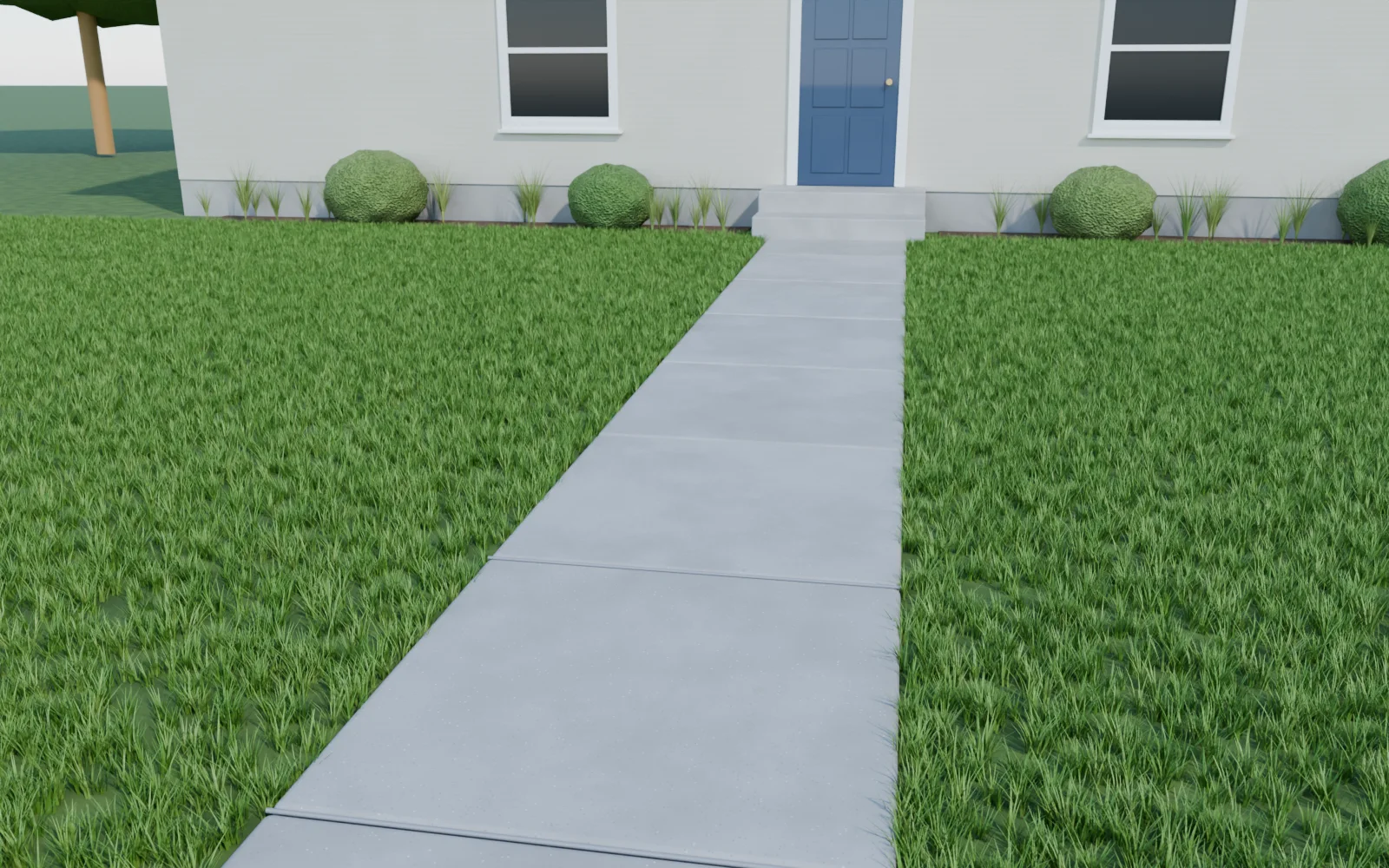
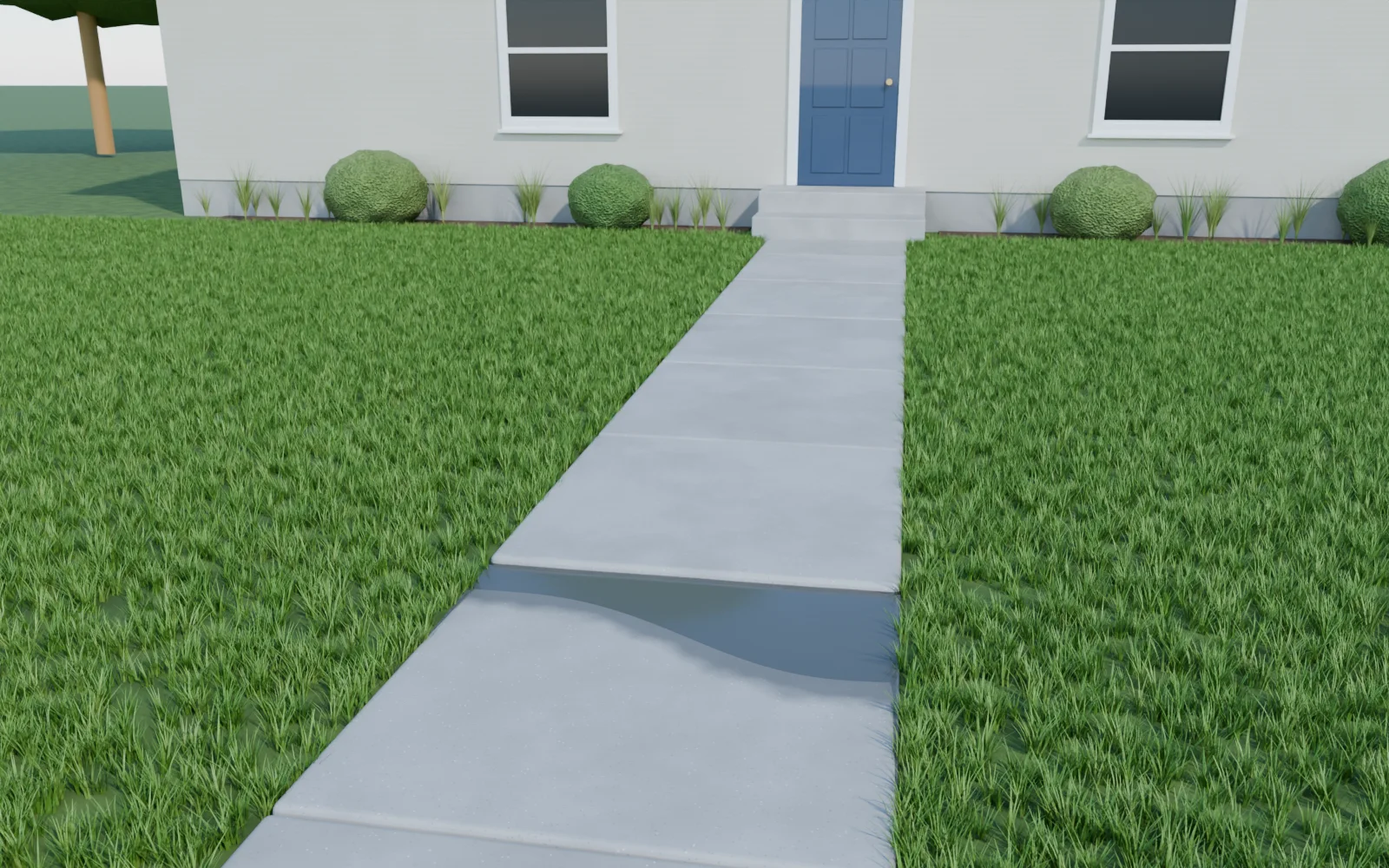
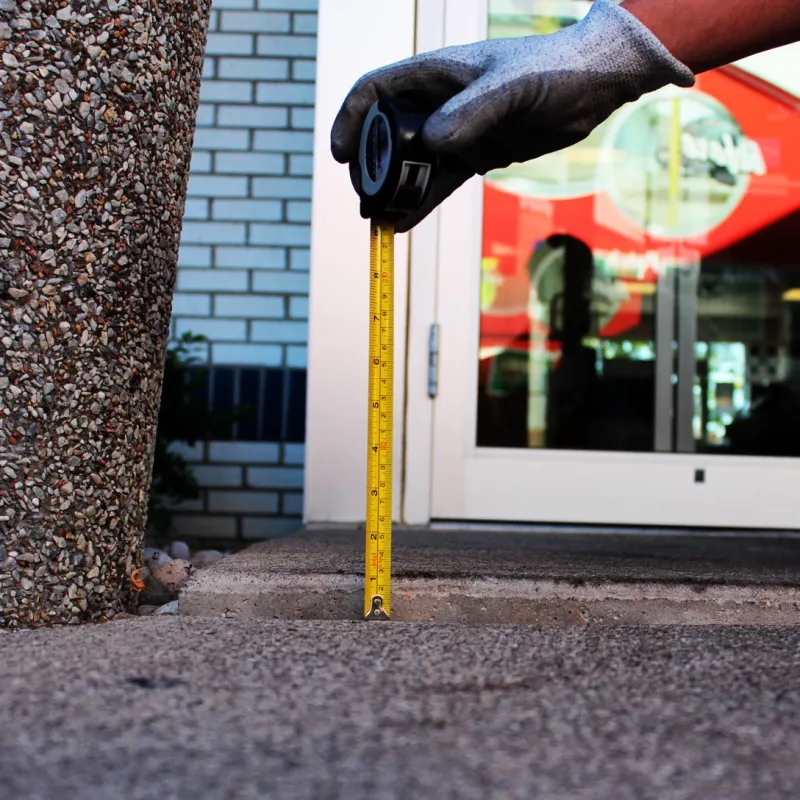
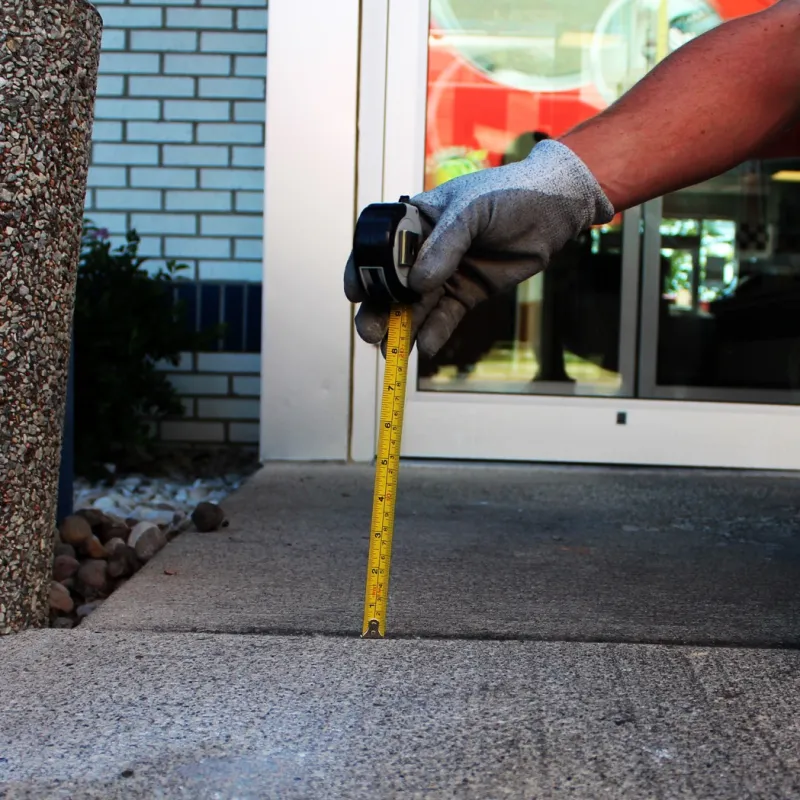
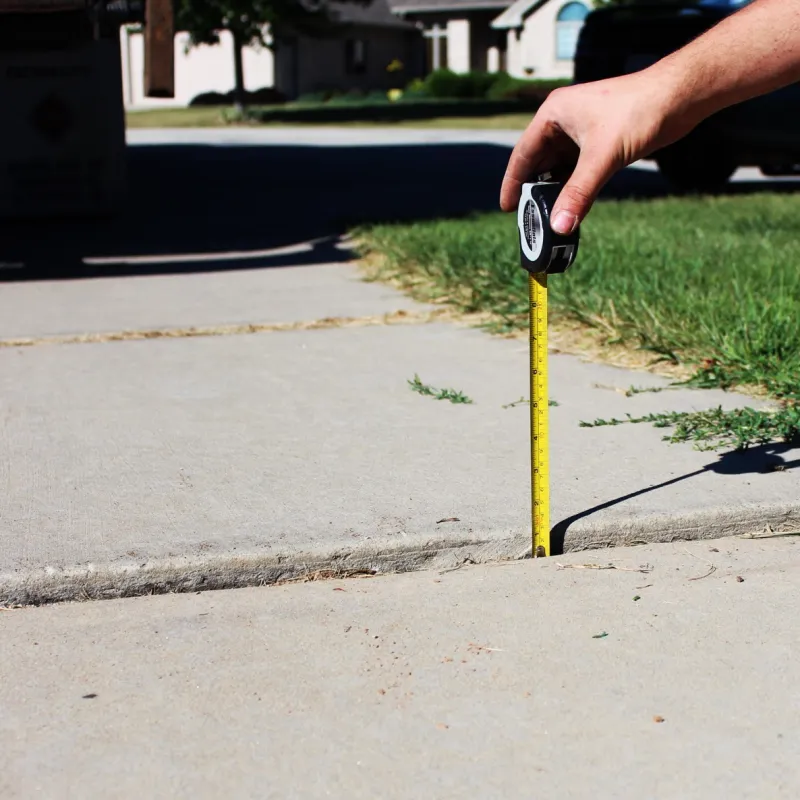
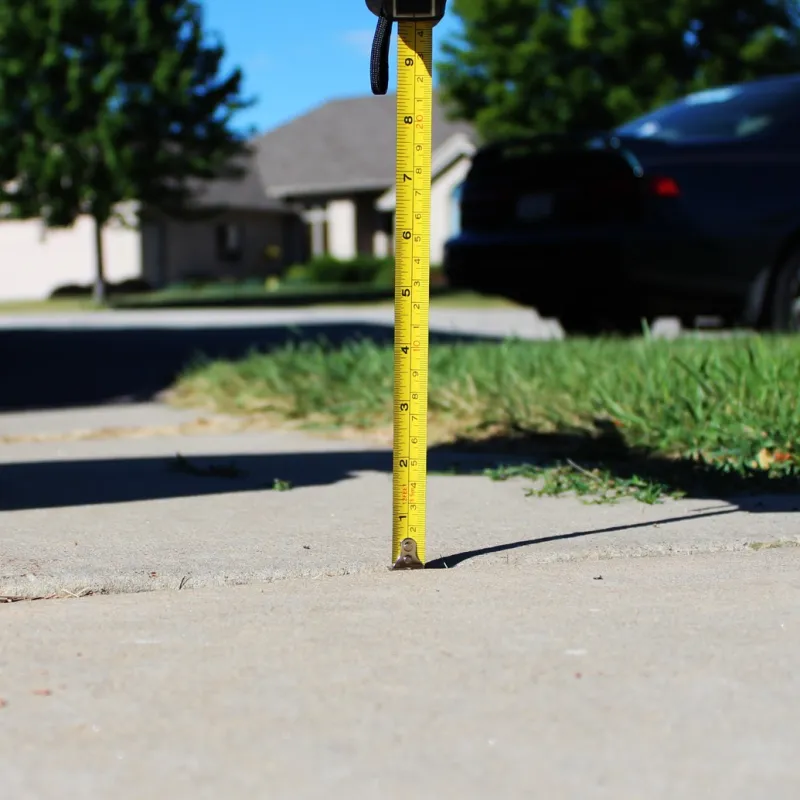
Example lifts. Photos from our own local jobs get added as we finish them.
Commercial trip-hazard repair at a glance
Why trip hazards can't wait
Uneven walks are one of the most common causes of slip, trip and fall claims. Under the 2010 ADA Standards for accessible routes, a change in level up to 1/4 inch can be vertical, between 1/4 and 1/2 inch it must be beveled, and anything over 1/2 inch must be treated as a ramp. Lifting removes the change in level instead of working around it.
ADA sidewalk limits: what lifting fixes and what it doesn't
A sunken panel can put a walk outside more than one ADA limit at once: the lip at the joint, the slope of the tipped panel and the joint that opened up beside it. Lifting and caulking fix the ones that settling caused.
| On an accessible route | The limit | Can we fix it? |
|---|---|---|
| Vertical change in level | ¼ inch | Yes. The low panel is lifted flush with its neighbor. |
| Beveled change in level | Over ¼ inch up to ½ inch, beveled no steeper than 1:2 | Yes, by lifting. A small, stable lip can also be ground to a bevel, and you may not need us for that. |
| Running slope | No steeper than 1:20, or it counts as a ramp | Yes, when settling tipped the panel. Not if the walk was poured too steep. |
| Cross slope | No steeper than 1:48 | Yes, when settling caused the tilt. Not if it was poured that way. |
| Openings and gaps | Can't pass a ½ inch sphere | Joint caulking closes open joints. |
| Clear width | 36 inches minimum | No. Lifting can't widen a narrow walk. |
Foam can only raise concrete. A panel pushed up by tree roots can't be lowered, so that's usually a grinding or replacement job. One that heaved with frost may settle back when the ground thaws, so we measure it again in spring before lifting anything.
What we lift
- Sidewalks, entries and stoops at storefronts and offices.
- HOA and apartment walkways and patios.
- Dumpster pads, loading areas and sidewalk sections at drives.
- Interior slabs in shops and warehouses.
Where commercial concrete sinks, and the fix for each
| Problem | Why it matters | The fix |
|---|---|---|
| Entrance walk panel sunk below its neighbor | A trip lip on the route to your door | Lift the low panel flush, then caulk the joints |
| Entrance slab tipped toward the building | Water pools at the threshold and freezes | Lift to restore the pitch away from the door, then seal the gap at the wall |
| Drive-thru lane dipped at the window | Ice right where customers stop | Lift the settled panels, then caulk the joints |
| Dumpster pad sunk or rocking | Edges break off under truck wheels, and water ponds around the enclosure | Lift it if the pad is in one piece; replace it if it's shattered |
| Dock apron settled near the building | Ponding and ice where drivers and dock staff walk | Lift the apron, then seal its joints and the gap at the dock wall |
| Shop or warehouse floor joint offset | Forklift and pallet jack wheels hammer the edge | Lift the low side, if the floor is a good candidate |
Interior floors: tell us what's in the slab. In-floor heat tubing, floor drains, under-slab plumbing and anything bolted down change where we can drill. We need to know where they are before we decide whether lifting is an option.
How commercial concrete lifting works
3D renders with the ground cut away, simplified to fewer holes than a real job. Most residential jobs take a few hours, and you can walk on the slab when we pack up.
Why lift instead of replacing sections?
Replacing a walk section means barricades, a pour and a week of cure time on an entrance your tenants and customers use every day. A lifted section is back in service before the next shift, and because lifting restores the drainage too, you're not left with an icy low spot every winter. The same goes for parking lot concrete repair: a sunken section at a curb, an island or a building entrance lifts in hours, and commercial concrete lifting runs early or after hours when that's easier.
Replacement timing is typical; a contractor's schedule and the weather can stretch it. New-concrete cure times from Concrete Network.
How we work with property managers
- 1Walk the propertySend a list or a site map, or we walk it and mark every hazard with photos and measurements.
- 2Priced listYou get a priced list by location, so you can approve all of it or the worst first.
- 3Scheduled around youEarly mornings or after hours, with sections back in use quickly.
- 4RecordsBefore-and-after photos and measurements for each location, for your files and your insurer.
Scheduling around your business hours
- No cure time. A lifted section carries foot traffic as soon as we pack up, and vehicles the same day, once the hole patches set.
- One section at a time. Where we can, we work one part of an entrance or drive lane while people use the rest.
- Early or after-hours starts can be arranged when an entrance, dock or drive-thru can't be blocked while you're open.
- Fresh caulk needs a little room. If joints are sealed on the same visit, the sealant has to be left alone for as long as its label says, so plan on those joints being coned off.
- The season. We lift from spring thaw to freeze-up, because frozen ground won't lift accurately. Caulking needs dry, frost-free joints at about 40°F or warmer.
Tell us your hours, delivery windows, shift changes and events when you send photos, and the schedule is built around them.
What documentation you get
What commercial concrete lifting costs
Commercial lifting is priced from the same sheet as every other lift: about $4–$10 per square foot of concrete that has to come up, with a $300 job minimum. These are the ranges common jobs fall in:
| Job | Our price |
|---|---|
| Single sidewalk panel, AC pad or small stoop | $300–$600 |
| Front walk, 3–5 panels (50–125 sq ft) | $300–$1,250 |
| Garage apron, approach or one driveway section (about 100 sq ft) | $400–$1,000 |
| Patio, 1–2 slabs (about 150 sq ft) | $600–$1,500 |
| 2–3 driveway sections (200–300 sq ft) | $800–$3,000 |
| Several areas in one visit (300–400 sq ft) | $1,200–$4,000 |
| Joint and crack caulking | $5–$10 per linear foot, no separate minimum when added to a lift |
Travel and setup cost the same for one spot as for six, so several spots lifted in one visit cost less per spot than the same list spread over a season. Each one still gets its own priced line.
What to send for a commercial quote
Nobody has to meet us on site to get a number. Send:
- Photos. A wide shot of each problem area showing the building and any drains nearby, and a close-up of the worst edge with a tape measure standing at the lip.
- Rough size. Length and width of each area. Paced off is fine.
- Hours we can't work. Business hours, delivery windows, the drive-thru rush, shift changes, events.
- Access. Where a truck can park near the work, gate or door codes, and who to call on site.
- What's in or under the slab. Floor drains, catch basins, in-floor heat, known utility lines.
- Any notices from the city, a landlord or an insurance inspection.
- Vendor paperwork requirements, if your company or property manager has them.
You get a firm price by text or email within 24 hours. If a spot isn't clear from the photos, we ask for another photo or come look.
For HOA and condo boards
- Survey once, in spring. Walk the property after the frost is out, number each spot, and take a wide photo and a close-up with a tape at the lip. A slab that heaved over the winter can drop back once the ground thaws.
- Send the whole list at once. A survey log and photos are usually enough to quote it.
- Approve in phases. With every spot on its own line, the board can approve the worst now and hold the rest for a later phase or next year's budget.
- Give residents a few days' notice to move cars off aprons and clear stoops and patios.
- Tell us what's buried. Irrigation lines, landscape lighting and downspout drain pipes need to be marked before we drill.
The step-by-step version, with a sample survey log and a way to rank what you find, is in HOA and condo concrete repair.
When lifting isn't the fix
- The concrete is broken into pieces or crumbling. That's a replacement job for a concrete contractor.
- Tree roots pushed the slab up. Foam only raises concrete, so grinding or replacement may make more sense.
- The lip is small and the slab is stable. It can often be ground to a bevel, and you may not need us at all.
- Water is still washing soil out. A broken storm line or a downspout emptying under the slab has to be fixed first, or at the same time.
- It's asphalt. That's a paving contractor's work.
We'll tell you which of these applies from the photos, before you spend anything.
After the lift: caulking, cleaning and sealing
Lifting fixes the slab; water is what sank it. Open joints and the gap where a walk meets the building send meltwater straight under the concrete, so most commercial lifts end with joint caulking. We also clean and seal concrete walks. On a combined job the order is clean, let it dry, lift, patch the holes, caulk, then seal once the caulk has cured.
Entrances, dock aprons, dumpster pads and shop floors: where lifting fits and where it doesn't.
Sunken sections at curbs, islands and entrances.
The numbers in plain English, and which ones a lift can fix.
Showrooms, offices, break rooms and back rooms, back in use within hours.