
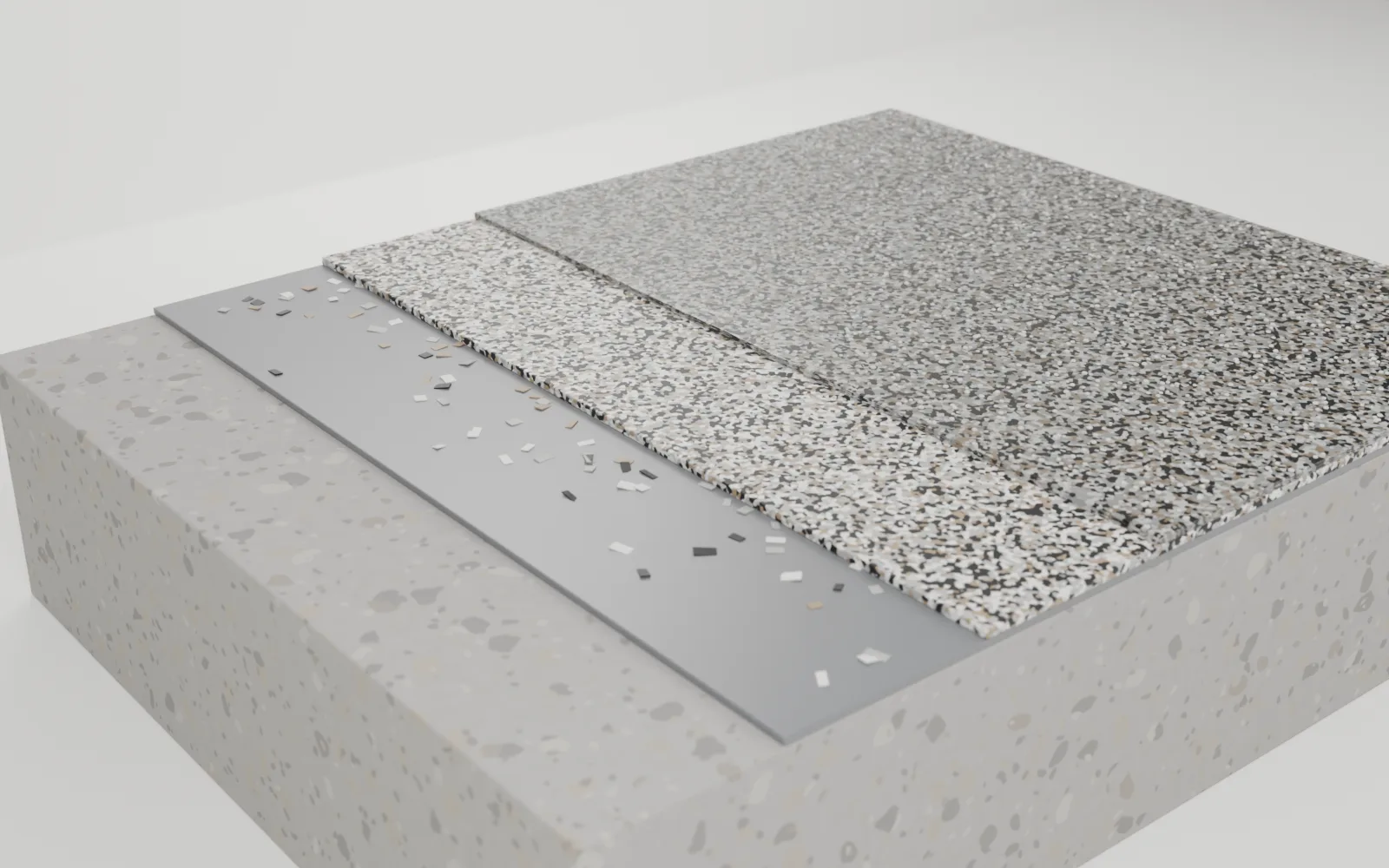
Patio, porch and pool deck coating at a glance
Coating or sealer?
| Polyaspartic coating | Penetrating sealer | |
|---|---|---|
| Look | New color and flake; covers stains and patches | About the same as bare concrete |
| What it does | A tough, UV-stable layer on top | Soaks in and keeps water and salt out |
| Best for | Porches, covered patios, pool decks you want to look new | Driveways, walks and patios you want protected as they are |
| Grip | Grit added to the topcoat | Unchanged |
The slab has to be ready
- Level and draining. A coating can't fix a patio that tips toward the house or a sunken pool deck panel. Those get lifted first.
- Sound. Flaking, crumbling concrete has to be ground back to solid concrete or repaired. A coating is only as strong as the surface under it.
- Stable cracks. Cracks that still move can show back through any coating, so moving joints get flexible joint caulking instead of being coated over.
- Dry. Outdoor slabs have no vapor barrier and get rain from every side, so we pick dry days and check the slab before we start.
Porches
A covered porch is the easiest outdoor coating job: it stays drier, sees less sun, and a flake floor makes the front of the house look finished. Grit in the topcoat keeps it from getting slick when snow blows in.
Pool decks
Around a pool, grip matters more than anything, so the topcoat gets grit, and lighter colors stay cooler under bare feet than dark ones. If a deck panel has dropped away from the coping, it gets lifted first.
Stamped or decorative concrete? A flake coating would cover the pattern you paid for. Stamped concrete usually gets a decorative sealer instead, and we can do that reseal for you.
Who an outdoor coating is for, and what we'd seal instead
Coat a porch, patio or pool deck when you want it to look new, with stains and patches covered. Covered porches and pool decks are the usual jobs. If you like how the concrete looks and only want it protected from water and salt, seal it instead.
We don't coat driveways. A driveway gets plowed, shoveled, salted and driven on in every kind of weather, and a penetrating sealer protects it without adding a layer on top for all that to wear on. That's why we recommend sealing driveways and walks, and coating the porches, patios and pool decks you want to look new.
How outdoor prep differs from a garage
- Weather picks the day. The coating has minimum temperatures for the air and the slab, and an outdoor slab has to be dry when we start. Late spring through early fall is the season, and rain in the forecast moves the date.
- Paint and old sealer are ground off. Porch paint is a thin film over concrete that's usually only been washed, so water and freeze-thaw lift it. We grind the paint and the weak surface down to sound concrete and bond a much thicker polyaspartic into it.
- Moving joints get caulk, not coating. Stable cracks are filled and coated over with the rest of the slab. The gaps between slabs and the joint where the patio meets the house get flexible joint caulking.
- The topcoat is the outdoor grade. It's UV stable, so it stays clear in direct sun, and it has grit mixed in for wet feet. Epoxy yellows and chalks outdoors, which is why it doesn't belong on a patio, porch or pool deck.
How we coat a patio, porch or pool deck
The steps are the same five as indoors. Outdoors, the last one changes: the clear topcoat is the UV-stable outdoor grade, with grit mixed in.
3D renders, not a job video; the tools are shown without the crew. Most garages are done in a day; parking time depends on the system.
Picking a color for a patio or pool deck
Lighter colors stay cooler under bare feet than dark ones, so for a pool deck or a patio in full sun we steer you toward a light blend. Any surface in direct afternoon sun gets warm. We bring real samples, and outdoors is the place to look at them: in the light the patio actually gets.
What it costs
Outdoor coatings are $7–$10 per square foot installed, with a $2,000 minimum: a little more than a garage floor, because the topcoat is the UV-stable outdoor grade with grit mixed in for wet feet. A 16 × 20 patio (320 sq ft) runs $2,240–$3,200. Heavy crack repair or grinding off an old sealer is extra. See the coating cost guide.
A small front porch, say 6 × 20 or 120 square feet, comes in at the $2,000 minimum. A 500-square-foot pool deck runs $3,500–$5,000. Lifting a sunken panel first is priced on its own line, and planning both together saves a trip. Nationally, professional floor coatings run about $4 to $12 per square foot installed (HomeGuide).
How long it takes, and when you can use it
Most porches and patios take a day, on a dry day. You can walk on it within a few hours. Before we start we'll tell you when the furniture, grill and planters can go back, since temperature affects the cure.
Living with a coated porch or pool deck
- Snow. A plastic shovel, or one with a rubber or poly edge, is easiest on it. A steel blade scraped hard or an ice chopper can scratch or chip any coating.
- Ice melt sits on top of the coating instead of soaking into the concrete. Sweep or rinse it off when the weather breaks.
- Pool water isn't a problem; splash from a chlorine or saltwater pool rinses off. Spilled pool chemicals are different: rinse them off right away and store them off the deck.
- Upkeep is sweeping, hosing it off and washing with a pH-neutral cleaner. There's no resealing every few years the way there is with a sealer.
What to send for a quote
The photo estimate form asks what kind of floor it is, its size (length and width, or square feet) and what shape it's in: bare concrete in decent shape; cracks, pits or salt damage; or an old coating or paint. Then it asks for three photos:
- Whole floor. From the doorway, with the walls and the door in the shot.
- Up close. Cracks, pits, salt damage or peeling, with a coin or tape for scale.
- Edges and steps. Where the floor meets the walls, steps, a drain or the apron.
- For a patio, porch or pool deck: which way water runs off it, any sunken or tipped panels, old paint or sealer, and whether it's covered or in full sun.
You'll get a firm price by text or email within 24 hours, with anything extra, like heavy repair or an old coating to grind off, priced on the quote before you decide. More questions, including stamped patios, pool chemicals, hot decks, shoveling and the best time of year, are answered in the floor coating FAQ.