
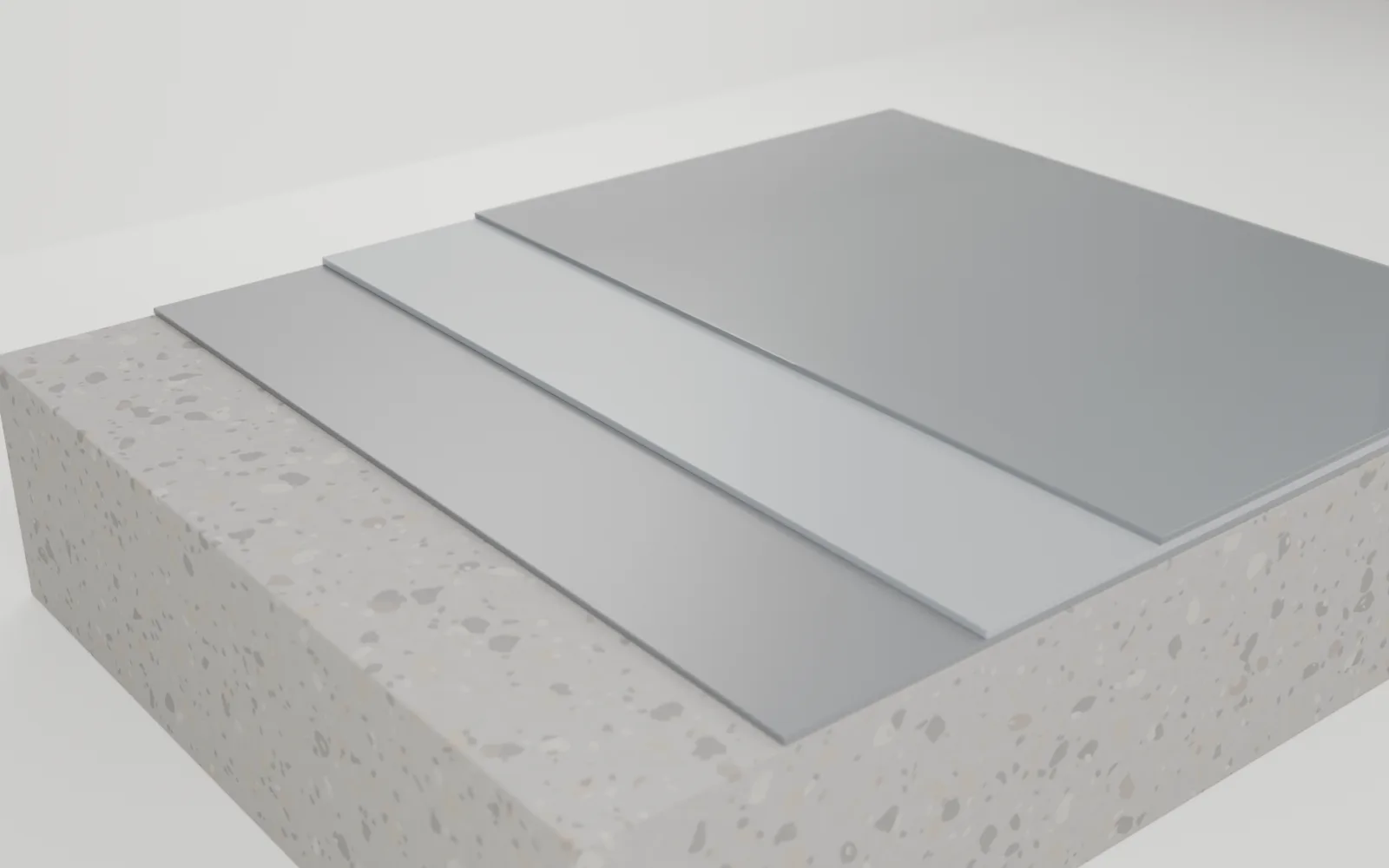
Solid color floor coating at a glance
Solid color vs. flake
| Solid color | Flake (full or partial) | |
|---|---|---|
| Look | Clean, even, utilitarian | Textured, speckled, hides more |
| Shows dust and tire marks | More | Less |
| Grip | Smooth unless grit is added | Flake adds texture |
| Easy to see dropped parts | Yes | Harder on a busy flake |
Where solid color makes sense
- Shops and workbenches, where you want to spot a dropped bolt or a fresh leak.
- Storage rooms and mechanical rooms, where a clean, bright floor is the goal.
- Laundry areas and basements, with grit where the floor gets wet.
- Commercial back rooms, where a uniform floor is easy to keep clean. See commercial floor coatings.
Picking a solid color
- Grays are the most forgiving with everyday dirt, which is why they're the usual pick for a working floor.
- Lighter shades hide dust better and reflect more of the room's light, so a shop or storage room looks brighter.
- Darker shades show dust and scuffs more.
- Any solid color shows tire marks and scratches more than a flake floor would, so think about how the room gets used before you think about the shade.
We bring real samples, because a color on a screen never matches a floor. Look at them in the room, under the lights the floor will actually have.
Same prep, same topcoat
A solid color floor gets the same full diamond grind, crack repair and moisture check as any coating we install. The pigmented coat goes on in layers for an even color, and the finish is UV stable, so it won't yellow by a sunny garage door or window.
3D renders, not a job video; the tools are shown without the crew. Most garages are done in a day; parking time depends on the system.
How prep and install differ for solid color
- Nothing hides the repairs. Cracks are filled and ground flush before the color goes on, but with no flake to break up the surface, a faint line can still show where a flake floor would hide it. A crack that's still moving can come back through any coating, so those get handled before we coat.
- The color goes on in more than one layer, so it builds up evenly without thin or streaky spots. Grinding the whole floor first gives every part of it the same surface to bond to.
- It still gets the clear topcoat. The same UV-stable polyaspartic topcoat we use on flake floors goes over the color and takes the wear.
- Grit is added where the floor gets wet, like entries and wash areas. It gives the topcoat a fine texture that holds a bit more dirt than a smooth finish, so dry areas can be left smoother.
- Fixed equipment stays. In a storage or mechanical room we coat around the water heater, furnace or softener.
What to expect day to day
One even color shows more: dust, tire marks, scuffs and a scratch from a dragged toolbox all catch the eye where a flake pattern would hide them. Rubber tires, jack stands and creepers are fine; it's steel dragged across the floor that scratches it. Tire marks and scuffs sit on top of the coating, so most come up with a pH-neutral cleaner and a microfiber mop or soft deck brush, and a degreaser handles the stubborn ones.
The same plainness is the reason to pick it. A drip from a water heater shows up right away, a dropped bolt is easy to find, and a light color reflects more of your shop lights than bare concrete does. In a garage it works with grit in the topcoat, but most people pick flake there because salt film and tire marks show more on a solid color.
What it costs
Solid color is $6–$9 per square foot installed, with a $2,000 minimum. A 24 × 24 garage or shop bay (576 square feet) runs $3,456–$5,184, and a 30 × 40 shop (1,200 square feet) runs $7,200–$10,800. A storage room, laundry area or mechanical room usually comes in at the minimum. That covers diamond grinding, crack repair, the base coat, the flake or color and the topcoat on sound concrete. The size, crack and pit repair, and any old paint or sealer that has to be ground off move the number most. Nationally, professional floor coatings run about $4 to $12 per square foot installed (HomeGuide). See the coating cost guide.
How long it takes
Usually a day for a one- or two-car garage or a room that size. Grinding, repairs, the color coats and the topcoat go on the same day, because polyaspartic can be recoated within hours. You can walk on it within a few hours and drive on it after about 24 to 48 hours.
What to send for a quote
The photo estimate form asks what kind of floor it is, its size (length and width, or square feet) and what shape it's in: bare concrete in decent shape; cracks, pits or salt damage; or an old coating or paint. Then it asks for three photos:
- Whole floor. From the doorway, with the walls and the door in the shot.
- Up close. Cracks, pits, salt damage or peeling, with a coin or tape for scale.
- Edges and steps. Where the floor meets the walls, steps, a drain or the apron.
- For solid color: tell us how the room gets used and where the floor gets wet, so we know where grit belongs.
You'll get a firm price by text or email within 24 hours, with anything extra, like heavy repair or an old coating to grind off, priced on the quote before you decide. More questions, including scratches, touch-ups, tire marks and whether the color comes out even, are answered in the floor coating FAQ.