
Partial flake floor coating at a glance
How a partial flake floor is built
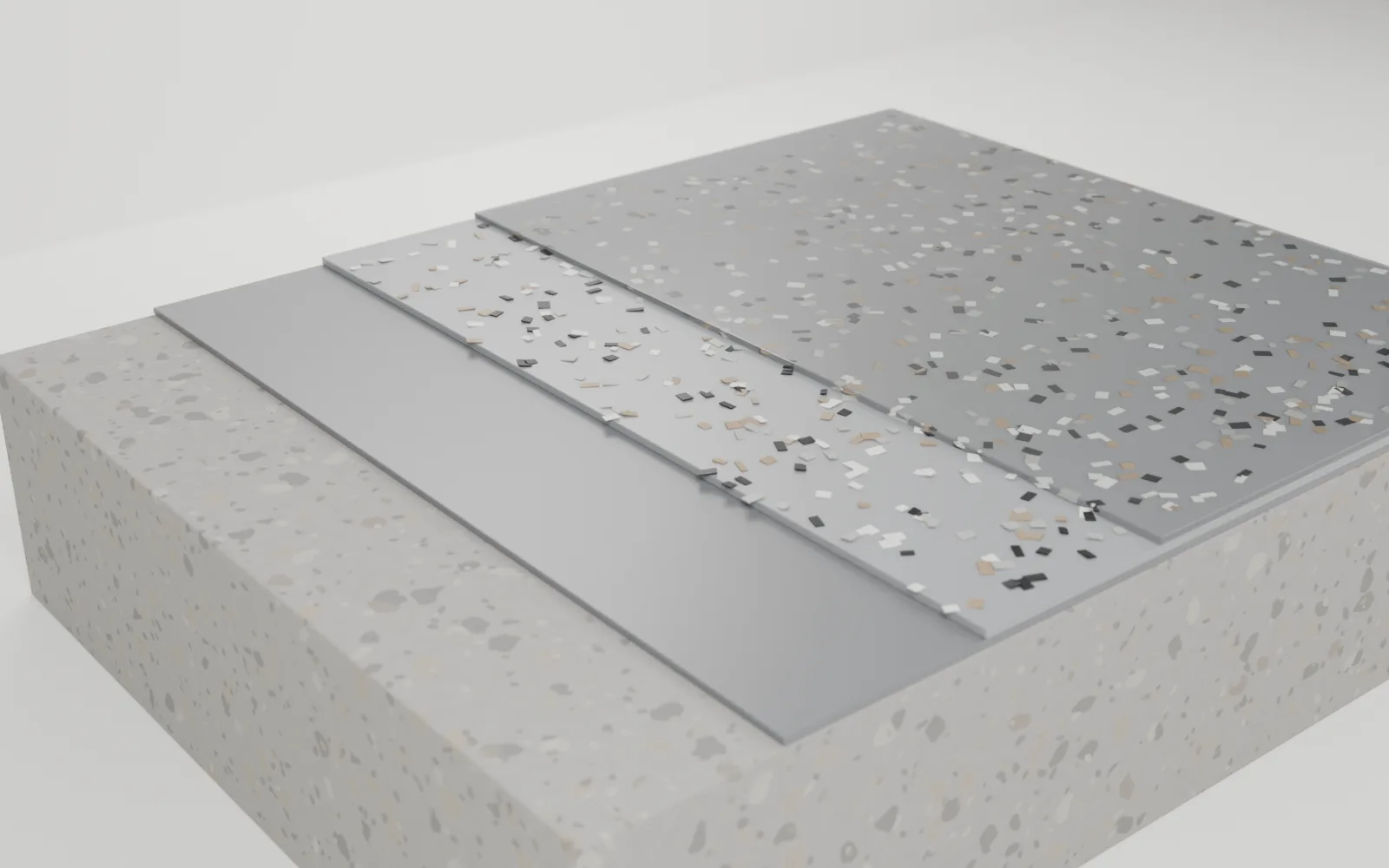
The prep is the same as any coating we install: a full diamond grind to about CSP 2–3, crack and pit repair, and a moisture check where the slab needs one. Then a pigmented base coat goes down, flake is scattered over it by hand to the density you pick, and a clear UV-stable topcoat seals it in.
Choosing the base color and how much flake
- Base color does most of the work. Grays are the most forgiving; lighter tones brighten a basement.
- Flake density runs from a light speckle to a heavier scatter. More flake hides more dust and adds more texture.
- Flake blend can match the base or contrast with it. We bring samples of both so you can see them together.
Where partial flake fits, and where it doesn't
Partial flake is a great finish for rooms that stay fairly clean: finished basements, rec rooms, home gyms, showrooms and offices. In a garage that sees slush and road salt all winter, full flake hides more and grips better, which is why it's our standard for garages.
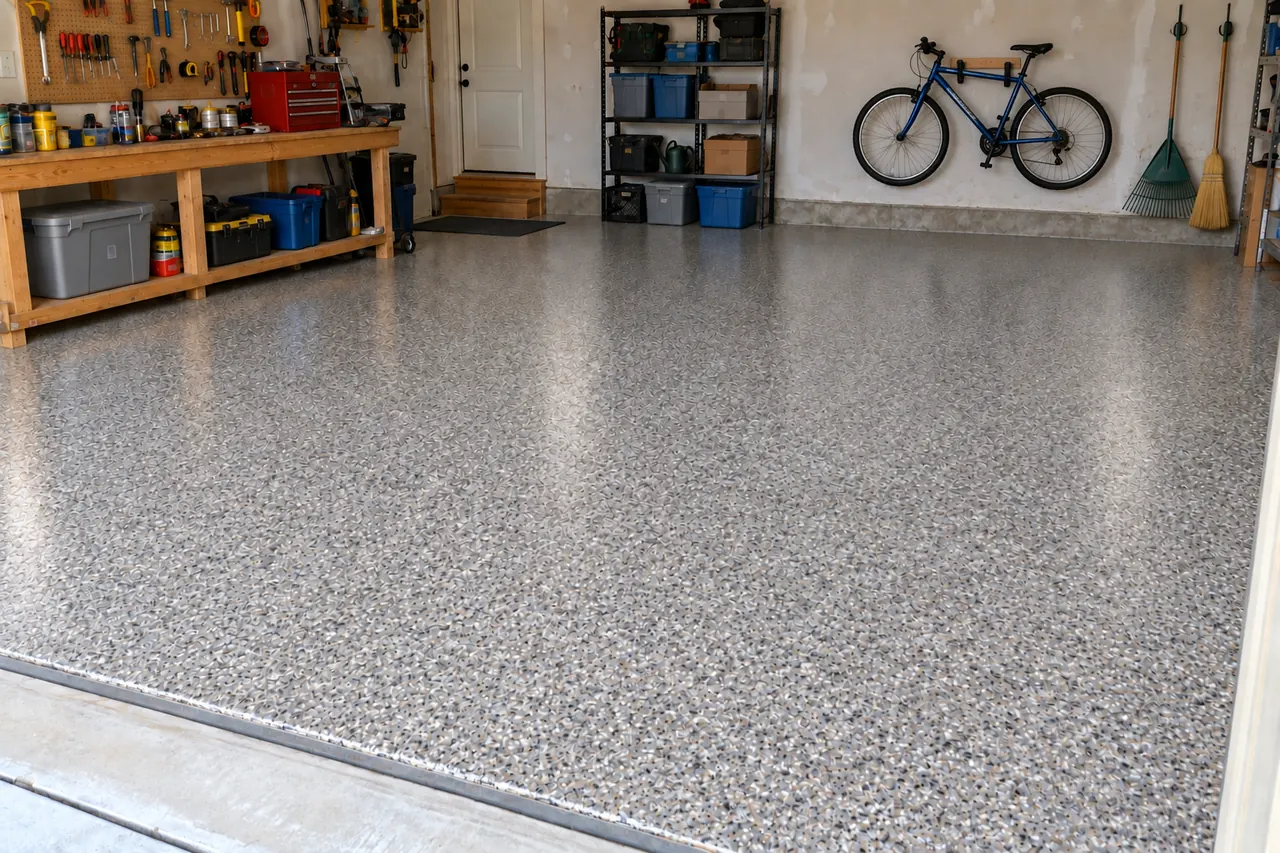
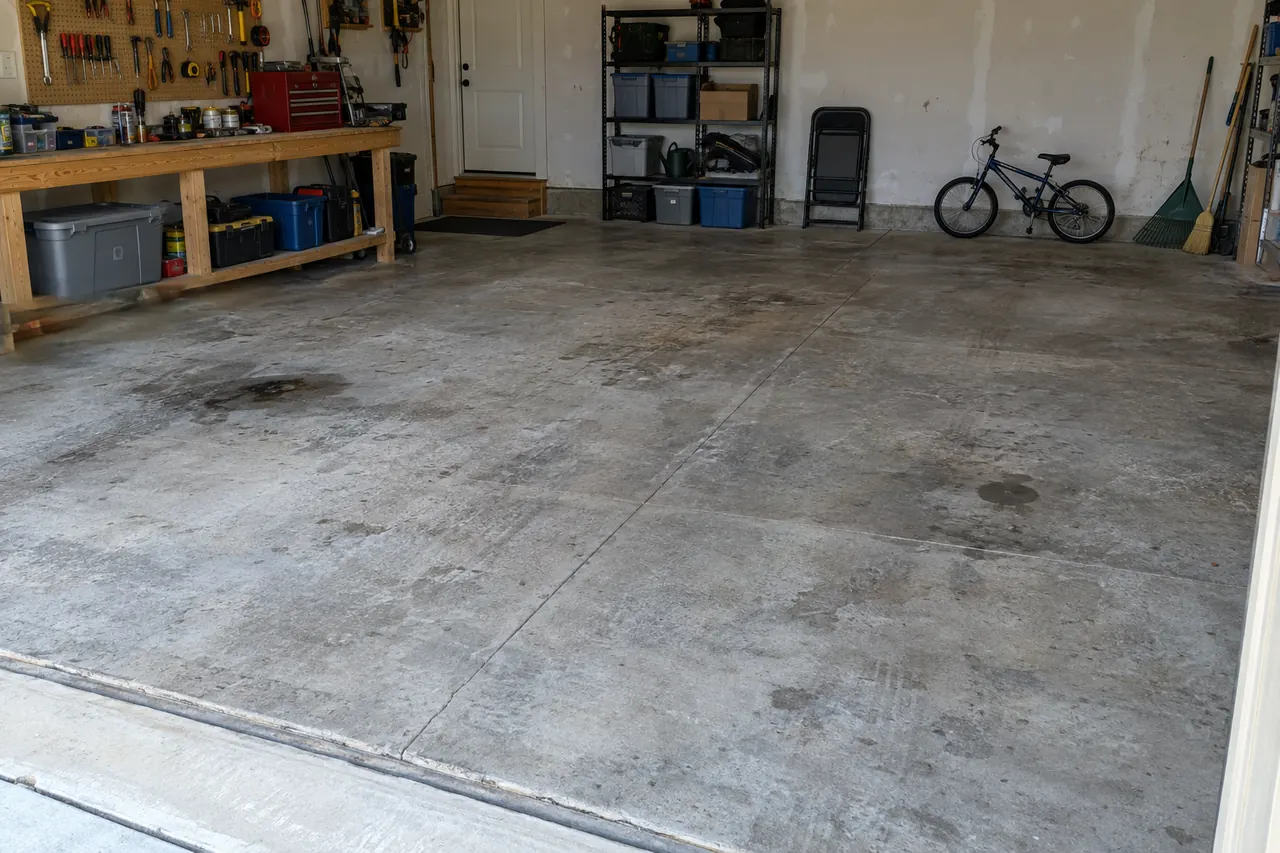
Partial flake, full flake or solid color: which one for your room?
| Room | Finish that fits | Why |
|---|---|---|
| Finished basement, rec room or home gym | Partial flake | A cleaner, calmer look in a room that stays fairly clean |
| Showroom or office | Partial flake | The base color carries the look, with flake for some texture |
| Entry or laundry area | Partial flake, with grit | It's smoother than full flake, so the wet spots get grit in the topcoat |
| Garage that sees slush and road salt | Full flake | It hides more and grips better, which is why it's our standard there |
| Shop or storage room | Solid color | One plain color where a dropped part or a new leak is easy to spot |
How prep and install differ for partial flake
- Repairs have less to hide behind. Filled cracks and patches are ground flush, but with less flake over them a repair can be easier to spot than on a full flake floor. Stains aren't an issue: the base coat is pigmented, so what shows between the flakes is the color you picked, not the concrete.
- The flake goes down by hand. We scatter it across the whole floor to the density you picked and keep it even from wall to wall. That's harder than a full broadcast, where flake simply covers everything, so it's a fair thing to ask any installer about.
- Grit goes where the floor gets wet. A partial flake floor is smoother than a full flake one, so entries and laundry areas get grit in the clear topcoat. You feel it as a fine texture more than you see it, and dry areas can stay smoother.
- Everything else is the same: the full diamond grind, the moisture check where the slab needs one, a pigmented base coat and a clear, UV-stable topcoat built to a real thickness. That's the difference from a DIY flake kit, which is a thin epoxy coat rolled over acid-etched concrete with a light sprinkle of flakes.
What to expect day to day
A partial flake floor hides more dust and footprints than a solid color and less than full flake. A heavier scatter over a gray base hides the most; a light speckle over a dark base shows dust soonest. In a basement or rec room that stays fairly clean it holds up well. In a garage full of slush and salt, full flake's thicker build and busier pattern hide wear longer.
What it costs
Partial flake is in the same $6–$9 per square foot range as full flake, with a $2,000 minimum, because the prep, the base coat and the topcoat are the same and only the amount of flake changes. A 24 × 24 room (576 square feet) runs $3,456–$5,184, and an 800-square-foot basement runs $4,800–$7,200. A small room comes in at the minimum. That covers diamond grinding, crack repair, the base coat, the flake or color and the topcoat on sound concrete. We can price partial and full flake from the same photos so you can compare. Nationally, professional floor coatings run about $4 to $12 per square foot installed (HomeGuide). See the coating cost guide.
How long it takes
Usually a day for a garage-sized room. Grinding, repairs, the base coat, the hand-scattered flake and the clear topcoat all go on the same day, and you can walk on it within a few hours. A large basement or a floor that needs a lot of repair can take longer. Where cars park, wait about 24 to 48 hours.
What to send for a quote
The photo estimate form asks what kind of floor it is, its size (length and width, or square feet) and what shape it's in: bare concrete in decent shape; cracks, pits or salt damage; or an old coating or paint. Then it asks for three photos:
- Whole floor. From the doorway, with the walls and the door in the shot.
- Up close. Cracks, pits, salt damage or peeling, with a coin or tape for scale.
- Edges and steps. Where the floor meets the walls, steps, a drain or the apron.
- For partial flake: tell us which room it is and how it's used, and whether you'd like full flake priced from the same photos.
You'll get a firm price by text or email within 24 hours, with anything extra, like heavy repair or an old coating to grind off, priced on the quote before you decide. More questions, including base colors, matching or contrasting flake, DIY kits and how long it lasts, are answered in the floor coating FAQ.