
In this article (7 sections)
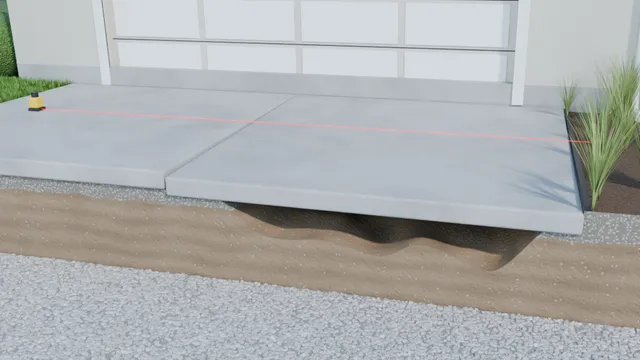
Your front walk has a panel that dropped an inch. Or your garage floor is pitted and stained from ten winters of salt. Or the driveway is cracked into puzzle pieces.
You search for concrete contractors in Green Bay, you get three names, and all three websites say they're the best. How do you actually pick?
Here's a practical way to sort it out, plus what Wisconsin's home improvement rules say you're entitled to.
Start by Calling the Right Trade
"Concrete contractor" covers a lot of different trades. Calling the wrong one is how people end up with a full tear-out quote when concrete leveling would have done it, or a lift on a slab that should have been replaced.
| Your problem | Usually the right trade | Signs it's the wrong trade |
|---|---|---|
| Slab sank or tipped but is mostly in one piece | Concrete lifting (foam or mudjacking) | Slab is shattered into small pieces or crumbling |
| Garage floor is pitted, stained, dusty, or cracked but stable | Garage floor coating | Sections have dropped or are still moving; lift first |
| Concrete is broken up, heavily scaled, or heaved beyond repair | Tear-out and replacement | The slab is intact and just needs to come up |
| Gaps at joints or along the house | Joint and crack sealing | Gap is caused by a slab that dropped (lift it first) |
A good contractor will tell you when you've called the wrong one. If every problem looks like their solution, keep shopping.
Questions That Separate Straight Shooters From Salespeople
You don't need to be an expert to ask these. You just need to listen to whether the answers are specific.
- "What's causing this, and will your fix address the cause?" A sunken slab has a reason: washed-out soil, loose backfill, a downspout dumping next to it. You want someone who talks about the cause, not just the symptom.
- "Is this the right fix, or is there a cheaper one?" Honest contractors will tell you when grinding a lip, sealing a joint, or redirecting a downspout is enough.
- "What exactly will you do, step by step?" For lifting: how many holes, how big, what material, how the holes get patched. For coatings: how the floor gets prepped, how cracks get repaired, how many coats. For replacement: removal, base prep, thickness, reinforcement, joints.
- "What can go wrong?" Every method has limits. Someone who says "nothing" isn't being straight.
- "Who will actually be doing the work?" Wisconsin's rule requires disclosure if someone other than the seller will be responsible for performing it.
- "Does this job need a permit?" Under Wisconsin's rule, the contractor has to tell you about required permits before you sign.
- "Can I see a certificate of insurance?" More on this below.
- "When will you start and finish?" You want dates or a time window, in writing.
- "How do you get paid?" Deposit, payment on completion, progress payments: get it spelled out.


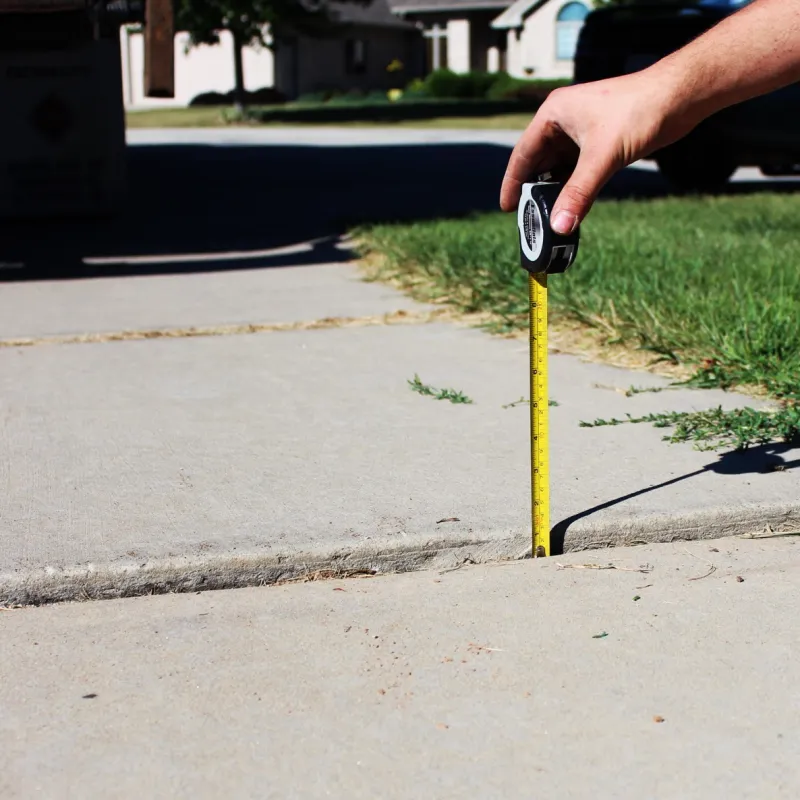
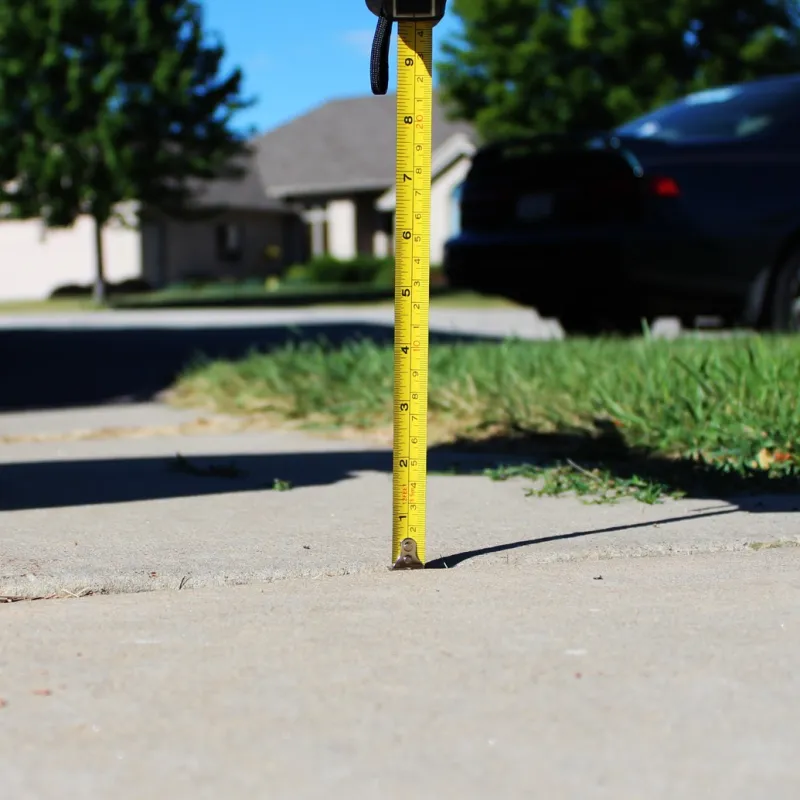
Example lifts. Photos from our own local jobs get added as we finish them.
Red Flags
| Red flag | Why it matters |
|---|---|
| Door-to-door "we have leftover concrete (or asphalt) from a job down the street" | Wisconsin's consumer protection agency has repeatedly warned about traveling paving crews using this pitch. Its home improvement rule specifically prohibits falsely claiming a special price because of materials left over from another job. |
| "This price is only good if you sign today" | Pressure to sign on the spot is a sales tactic, not a concrete fact. A slab that sank over five years can wait a week while you compare. |
| Starting work or dropping off materials before you've agreed | Wisconsin's rule prohibits starting work or delivering materials to pressure you into a contract. |
| Big cash deposit up front | The state's advice: never pay the full price of a project up front. Cash leaves you no paper trail. |
| No written scope, or a one-line quote | If the quote says "fix driveway, $X," you have no way to hold anyone to anything. |
| Can't or won't show insurance | If they claim to be insured, Wisconsin's rule says they have to give you a written description of that insurance. |
| Scary claims you can't verify | "Your foundation is failing" from someone who wants to sell you the fix is worth a second opinion. Wisconsin's rule prohibits misrepresenting that your home is dangerous or needs repair. |
| Asking for final payment before the job is done | Wisconsin's rule prohibits requesting final payment or a completion sign-off before the work is complete. |
What Belongs in a Written Quote
Wisconsin's home improvement rule (ATCP 110, enforced by the Department of Agriculture, Trade and Consumer Protection, or DATCP) lists what a required written contract has to state. Use it as your checklist even when a contract isn't legally required:
- Seller's name and address, plus the name and address of the salesperson who quoted you
- A description of the work and the main products and materials
- The total price, including any finance charges (or the hourly rate and other terms for time-and-materials work)
- Start and completion dates, or a time window
- Any warranty or guarantee, in writing (oral warranty promises are supposed to be written down and given to you too)
- Any other documents that are part of the deal
- Signatures from everyone, and a copy given to you before work starts or you pay anything
For concrete work, we'd add: exactly which slabs or areas are included (marked on a photo is ideal), what prep is included, cleanup and disposal, and what's not included.
Wisconsin's Rules in Plain Language
Here are the key points from Wisconsin's home improvement rule (Wis. Admin. Code ATCP 110) and DATCP's consumer guidance. This is a plain-language summary, not legal advice. Read the rule itself or call DATCP if you have a specific situation.
- When a written contract is required. If you're asked to pay anything before the work is finished, or if the contractor solicited you at your home, by phone, by mail, or with flyers left at your door, the contract must be in writing, and so must any changes.
- You get a copy first. You must get a copy of the written contract before work starts or you pay anything.
- Permits. Before you sign, the contractor must tell you which permits the job needs, and can't start until required permits are issued.
- Lien waivers. Before you sign, the contractor must give you a separate written notice that you're entitled to lien waivers. Ask for them with each payment. They protect you if the contractor doesn't pay a supplier or sub, who could otherwise file a lien on your home.
- Your money goes to your job. Payments made before the work is done can only be used for that job's materials and services.
- No substitutions without consent. A contractor can't swap the materials in your contract without your OK, in writing when a written contract applies.
- Three days to cancel door-to-door deals. DATCP's guidance says contracts over $25 signed at your home or away from the contractor's regular place of business generally come with three business days to cancel, and the contractor must give you two copies of a cancellation notice.
- If you lose money because of a violation, the rule notes you can sue and may recover twice your loss plus costs and reasonable attorney fees.
To check complaints against a contractor or report a problem, contact DATCP's Consumer Protection Hotline at (800) 422-7128 or [email protected].
Proof of Insurance, and Who Needs a License
Ask for a certificate of insurance that lists you as the certificate holder. DATCP suggests this, and it shows the contractor has an active policy. A contractor who says "yeah, we're insured" but never produces the paper hasn't shown you anything. DATCP also says contractors should be able to show proof of workers' compensation, unemployment insurance, and liability coverage or a bond.
On licensing, DATCP notes that for general construction on one- and two-family homes where the contractor pulls the permits, Wisconsin's Department of Safety and Professional Services requires Dwelling Contractor certifications. Whether your job involves a permit at all depends on the work and your municipality, so ask, and check with your city or village if you're unsure.
Lining Up Bids Side by Side
DATCP recommends getting several bids on the same work. A few tips:
- Make sure everyone's quoting the same fix. A lift quote and a replacement quote aren't comparable on price alone. Compare what each one actually solves.
- Be wary of the outlier. A quote far below the others often leaves something out.
- Photo quotes work for straightforward jobs. For lifting and coatings, good photos with a tape measure in them show most of what a contractor needs, and a good one will tell you if they don't.