
In this article (7 sections)
Your neighbor sealed his driveway last weekend. Yours looks fine from the street, but up close the spot where your car drips all winter is starting to feel sandy.
So is sealing a real thing, or just one more line item somebody wants to sell you?
It's real, for the right concrete. Here's how to tell if yours qualifies, including when to save your money.
One thing to clear up first: this is about concrete. The black sealcoat that goes on asphalt driveways is a different product for a different surface, and we don't do it. Our concrete driveway sealing uses a penetrating sealer on driveways, walks, and aprons.
What a Sealer Actually Does
Concrete looks solid, but it's full of tiny pores. Rain, snowmelt, and salty slush soak into them. When that water freezes, it expands and pries at the top layer. Repeat that all winter, add salt, and the surface starts to flake. We cover the whole process in why concrete flakes.
A penetrating sealer soaks into those pores and reacts there, leaving a water-repellent lining instead of a film on top. Here's what that gets you:
- Water stays out instead of soaking in, so there's less water in the surface to freeze.
- Salt brine stays on top, where you can shovel it off or rinse it away, instead of soaking into the concrete.
- The concrete can still breathe. Moisture vapor from below can escape, so nothing gets trapped under a skin.
- Stains are easier to clean up because less soaks in. It's stain resistance, not stain-proofing.
- The surface looks and feels the same. No shine, no change in grip.
This isn't a gimmick product. Penetrating treatments are the same family of products Wisconsin DOT approves for protecting concrete structures.
There's another kind of sealer that dries as a film on top, like the glossy acrylic on a stamped patio. It has its place, mostly on decorative concrete. For plain outdoor concrete that gets salted, the soak-in kind is usually the right pick. Our guide to sealer types explains the difference.
What Sealing Won't Fix
A sealer is protection, not repair. This is where people get oversold.
| What you're seeing | Will a sealer fix it? | What actually does |
|---|---|---|
| Flaking or pitting that's already there | No. On a solid slab it can slow the spread, but it won't bring back the lost surface. | Patching, resurfacing, or replacement for the bad areas |
| Cracks and open joints | No. Water goes straight through an open crack or joint, sealed concrete or not. | A flexible joint sealant (we do this) |
| A sunken or tipped slab | No | Foam lifting to raise it back to proper slope (we do this) |
| Water pooling against the house or garage door | No. Water beading on a low spot is still water sitting in a low spot. | Lifting the slab, plus fixing downspouts and grading |
| Old oil, rust, or leaf stains | No, and sealing over them can lock them in | Cleaning first (we do this too) |
| Crumbling or hollow-sounding concrete | No | A replacement conversation |
| A slab pushed up by roots or frost | No | Frost: lifting the slabs around it to meet it, after the thaw (we do this). Roots: see tree roots lifting concrete |
If your concrete has any of these problems, fix them first. Then seal what's left.
Where Sealing Pays Off Most
Not all concrete gets the same punishment. Here's roughly where a sealer does the most good, from most to least:
- 1The garage apronIt gets salt from two directions: brine dripping off your car and salted snow from the plow. It's usually where scaling shows up first.
- 2The drivewayTires track brine up and down it all winter, and the low spots hold meltwater.
- 3Walks, stoops, and steps you saltIf it gets deicer, it's a candidate.
- 4Newer concrete, once it's curedThe first few years set the tone. Industry guidance says to keep deicers off concrete for its first winter, and sealing after it cures adds protection for the winters that follow.
- 5Stamped, colored, or exposed aggregate concreteThese need a sealer to hold their color and protect the surface, though usually a different kind than plain concrete. We reseal stamped and colored concrete with a film-forming decorative sealer, with an anti-skid additive on anything people walk on. See types of concrete finishes.
Lower payoff: a backyard patio that never sees salt (it still freezes and thaws, so sealing is optional, not urgent), and an interior basement floor, which doesn't deal with winter at all.
What Skipping It Can Cost
Scaling doesn't stay put. Rough patches hold more water than smooth concrete, so the edges get soaked and frozen first, and the damage spreads a little every winter. Here's how the cost of fixing it climbs:
- Light scaling caught early: clean, rinse, and seal. The cheapest fix there is.
- Moderate scaling with stones showing: patching or a resurfacing overlay. That's a much bigger bill, and patches rarely match.
- Severe scaling across the slab: replacement. That costs many times what years of sealing would have.
The honest caveat: sealing can't save concrete that was poorly made. A slab poured without enough entrained air, or finished with water on the surface, can scale even if it's sealed. Sealing improves your odds. It doesn't change how the concrete was poured.
When Sealing Is a Waste of Money
We'd rather tell you not to bother than sell you something that won't help.
- It's still shedding water. If the last sealer is still working, wait. Use the test below.
- There's an old shiny film on it. A penetrating sealer can't soak through an existing film-forming sealer. Labels call for removing old sealers first. Either strip it or stay with a compatible product. Our sealer buying guide covers that choice.
- The slab is crumbling, broken, or sounds hollow when you tap it. Sealer won't hold it together.
- It's sunk or tipped toward the house. Lift it first. Otherwise you're protecting a slab that still drains the wrong way.
- You're replacing it next year. Put that money toward the new slab, and seal the new one once it cures.
- It's the inside of your garage, and a coating is in the plan. A coating protects the floor far better than a sealer, and its prep starts with bare concrete. See garage floor coatings.
- It was poured within the last month. It needs to cure first (more on timing below).
- It's November. It's too cold for most products to go on right. Wait for next year.
The 60-Second Water Test
Before you spend anything, grab a cup of water or a spray bottle.
- 1Pick three spots: where your tires sit on the apron, the middle of the driveway, and somewhere that doesn't get traffic.
- 2Splash a little water on each spot.
- 3Watch it. If it beads up or sits on top without darkening the concrete, the protection is still working. (Some silanes don't bead much, so the darkening is the better tell.) If it soaks in quickly and the concrete turns dark, it's unprotected and ready to seal.
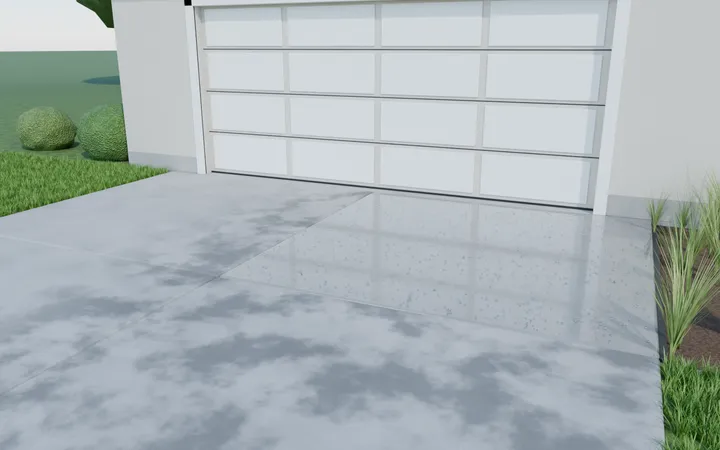
- 4Compare the spots. Fine in the corner but soaking in under the tires means the sealer has worn off where traffic hits, which is normal.
Do this every late summer and you'll know whether this is a sealing year.
When to Seal in Northeast Wisconsin
Late August through September is the sweet spot. In Green Bay, September averages highs in the low 70s and lows around 50 (1991–2020 normals). October averages highs in the upper 50s and lows near 40. November highs average in the low 40s. An Upper Midwest ready-mix supplier's maintenance guide recommends getting exterior sealing done before October 1.
Check the temperature window on the label. The penetrating sealer labels we checked set a minimum somewhere around 40–50°F and a maximum around 90°F, for both the air and the concrete surface. Avoid hot, direct midday sun too.
The concrete has to be clean and dry. Salt residue, oil, and dirt need to come off first, or you're sealing them in. After washing or rain, allow at least 24 hours of drying. Some guides call for 72. Then pick a stretch with no rain or heavy dew expected for at least 12 hours. Our concrete cleaning guide covers the cleaning side.
New concrete has to cure first. About 28 days is the common rule, though a few silane labels allow 7–14 days. If your slab was poured in October, give it a sand-only first winter and seal it next late summer.
If the concrete also needs lifting or caulking, sealing goes last. The order is: clean it, let it dry, lift, patch the drill holes, caulk the joints, and seal after the caulk has cured. One silane maker's data sheet spells it out: get joint sealants in and cured before the water repellent goes on, and test adhesion if you do it the other way around.