
In this article (6 sections)
You've got a sunken slab, and you've probably already gotten one number that made you wince. Maybe it was a replacement quote. Maybe it was a national average that didn't look anything like your job.
The honest answer to "what does it cost?" depends on what's wrong with the concrete, what you want to do about it, and what it costs you that never shows up on the quote.
This guide covers all three: what lifting costs by area, how the three main fixes compare, and when paying more for new concrete is the smarter move. For how our other work is priced, see our price overview.
Just want our prices? Our price sheet by job, the minimum and the per-square-foot rule of thumb are on concrete leveling cost in Green Bay, and the concrete leveling cost calculator shows a range for your job in about 30 seconds. This article is the comparison: lifting next to mudjacking and replacement.
What Lifting Costs, Area by Area
These are our typical foam lifting ranges. Where you land in a range depends mostly on how much empty space is under the slab, which is why two jobs the same size can price differently. A badly washed-out area can run above these ranges, and we'll tell you that from the photos.
| Area | Typical size | Our typical range | What pushes it toward the top |
|---|---|---|---|
| AC or heat pump pad | 10–20 sq ft | $300–$600 | Refrigerant lines that need an HVAC check first |
| Single sidewalk or walkway panel | 16–25 sq ft | $300–$600 | A deep drop, or a panel that rocks |
| Small front stoop | One slab, one step | $300–$600 | Sitting on loose backfill against the foundation |
| Front walk, 3–5 panels | 50–125 sq ft | $300–$1,250 | Panels at different heights that all need to meet |
| Garage apron or one driveway section | About 100 sq ft | $400–$1,000 | A big void from a downspout or sump line |
| Patio, one or two slabs | About 150 sq ft | $600–$1,500 | Distance from the driveway, decks or posts in the way |
| Two to three driveway sections | 200–300 sq ft | $800–$3,000 | Washed-out soil along the edges |
| Several areas in one visit | 300–400 sq ft | $1,200–$4,000 | Number of separate setups |
| Joint and crack caulking | Add-on, per linear foot | $5–$10 per foot, no separate minimum with a lift | Wide or deep joints, old caulk or rotted wood strips to dig out |
Lifting jobs have a $300 minimum. We charge by the foam the job takes, and on average that works out to $4–$10 per square foot. Void size, lift height, access, and the number of separate areas are what move a job up or down within its range.
Foam vs. Mudjacking vs. Replacement
There are three common ways to deal with sunken concrete. Here's how they stack up. The first row is the Green Bay picture: our own price, and our estimate of the local range for tear-out and repour, from Green Bay contractor pricing we checked in November 2026. The second row is national ranges from published cost guides. Guides and quotes use different names for the same jobs: polyjacking cost means foam, slab jacking cost usually means mudjacking, and concrete raising cost can mean either.
| Foam lifting | Mudjacking | Tear out and replace | |
|---|---|---|---|
| Cost per sq ft around Green Bay | $4–$10 on average (our price), $300 minimum | We don't mudjack, so we have no local price | $9–$20 for a driveway, tear-out included (local estimate, not a quote) |
| Published national cost per sq ft | Roughly $5–$25 | Roughly $3–$9 | About $7–$21 with removal; sidewalks often $10–$25 |
| Holes | Dime-sized, 5/8" | Much larger | None. The whole slab goes. |
| Weight of the fill | A few pounds per cubic foot | In the neighborhood of 100 pounds per cubic foot | New slab on the old base |
| Back in use | Walk right away, drive the same day | Cost guides say 1–3 days to fully dry | About 1 day to walk, about 7 days to drive |
| Water resistance | Waterproof once cured, won't wash out | Cement slurry can erode if water keeps running underneath | Depends on the base and drainage |
| Typical lifespan | Cost guides rank it among the longest-lasting lifting methods | Commonly quoted at 5–10 years | 20–30 years for a well-built driveway |
| Fixes broken or crumbling concrete? | No | No | Yes |
A few honest notes on that table:
- Mudjacking can be the lower bid. If the only thing you care about is today's number, it may come in under foam. The trade-off is bigger holes, a lot more weight sitting on soil that already failed once, and fill that can wash out.
- Per-foot numbers swing on small jobs. A $300 minimum on a 20-square-foot AC pad works out to $15 a square foot. On average, our jobs land at $4–$10 per square foot.
- Replacement is the only one that gives you new concrete. If the slab itself is shot, lifting just raises a bad slab.
For the two lifting methods head to head, see foam vs. mudjacking. If you came here looking for a mudjacking price, mudjacking in Green Bay explains what we do instead.


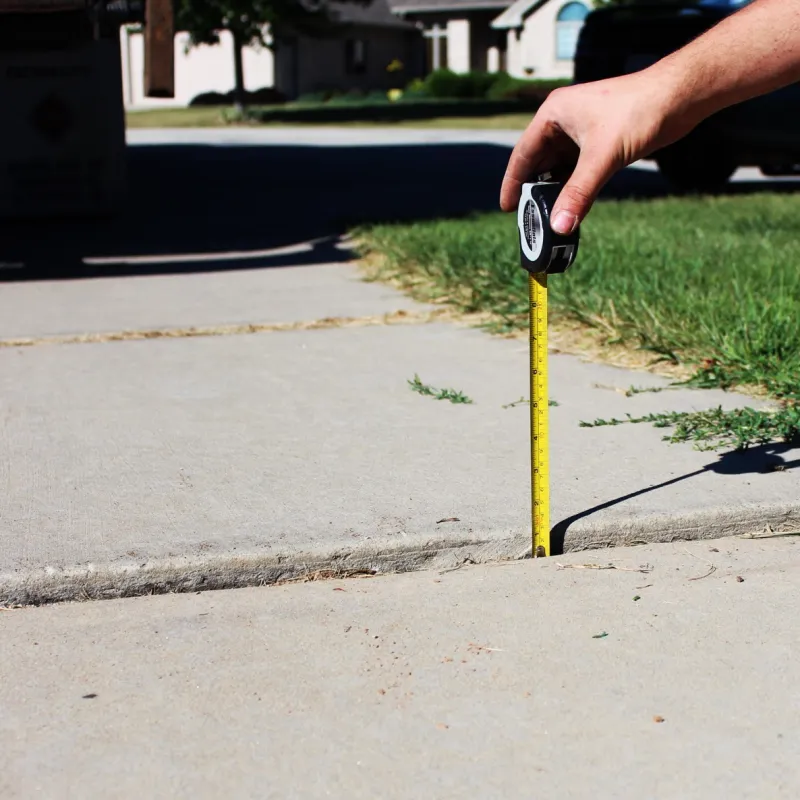
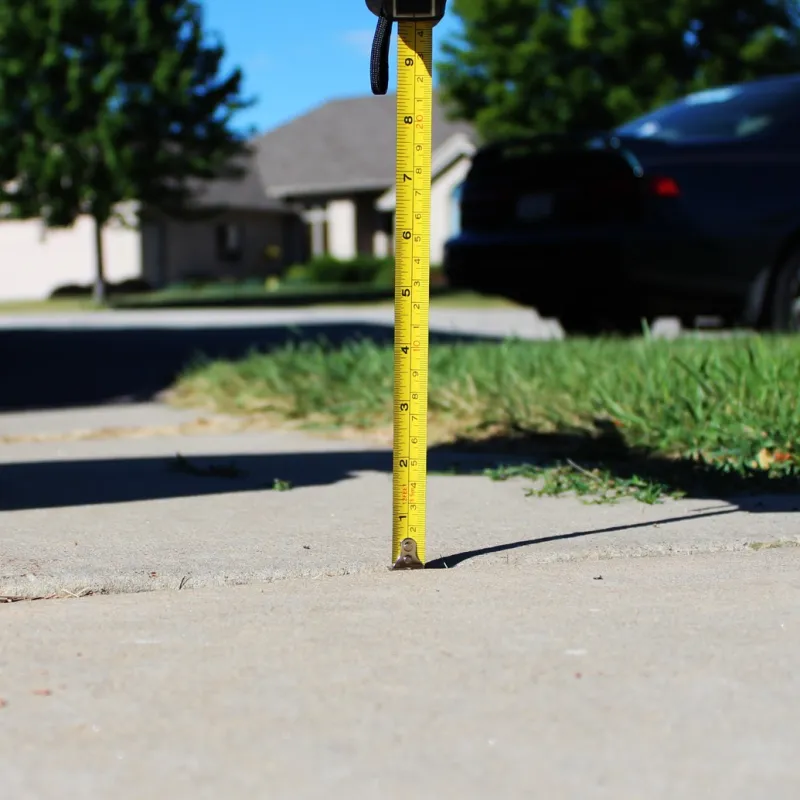
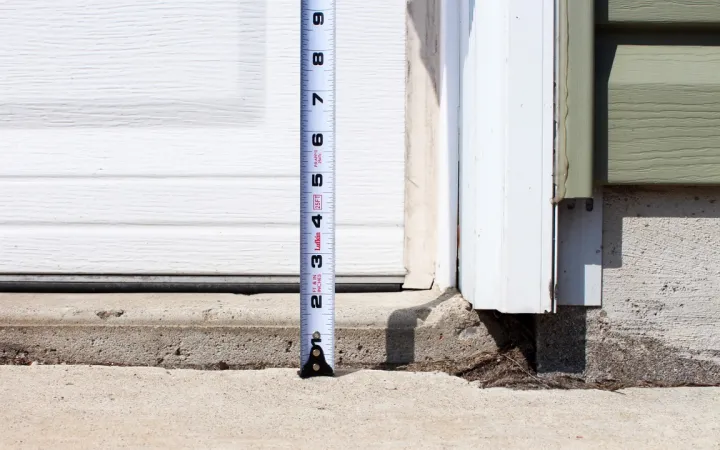
Example lifts. Photos from our own local jobs get added as we finish them.
One Job, Priced Three Ways
Here's a common mix: two driveway sections at the garage, four walk panels, and a small back patio. About 300 square feet in three separate areas.
| Fix | Estimated cost | Done in |
|---|---|---|
| Foam lifting (our range, 300 sq ft at $4–$10) | $1,200–$3,000 | A few hours. Drive on it the same day. |
| Mudjacking (published rates) | About $900–$2,700 | A few hours on site, then 1–3 days before full use |
| Tear out and replace (local estimate, 300 sq ft at $9–$20) | About $2,700–$6,000, more if the walk is priced at sidewalk rates | Tear-out, forming, and pouring, then about a week before you park on the driveway |
The foam and mudjacking ranges overlap. So do lifting and replacing: the low end of replacing, $2,700, is under the top of our lifting range, $3,000, so a lift at the top of our range can cost as much as a low-end replacement. On average, lifting costs about half. The replacement figure includes tear-out and is our estimate of the local range for tear-out and repour, from Green Bay contractor pricing we checked in November 2026; not a quote for your job. It also leaves out everything below.
What a Replacement Quote Usually Leaves Out
A replacement quote covers the new concrete and the labor, and sometimes the tear-out. These are the costs that tend to land on you anyway:
- Tear-out and disposal. Published national guides put removal at roughly $1–$6 per square foot. The $9–$20 local estimate above already includes it, so make sure it's actually in your quote too.
- Yard and landscaping repair. Forms need room along the edges. Expect torn-up sod, disturbed edging, and plants to replant along every side of the new slab.
- Days without your driveway. Industry guidance says to wait about a week before parking a car on new concrete and about four weeks before heavier vehicles like RVs or large trucks. Where does the car go for a week?
- A careful first winter. Concrete industry guidance says to keep deicers off new concrete for its first year. In Wisconsin, that's a winter of sand and extra shoveling.
- Moving what's in the way. An AC unit has to be disconnected and reset by an HVAC tech. Railings, mailbox posts, and downspout extensions come off and go back on.
- Permits at the street. Some cities, Green Bay among them, require a licensed contractor and a permit to build or rebuild driveway aprons and public sidewalks. Our Green Bay concrete leveling cost guide has the local details.
- A color mismatch. One new panel next to 20-year-old concrete will look new for years.
- The same soil. A new slab poured over the same soft or washed-out base, with the same downspout dumping next to it, can sink again.
None of these are reasons to never replace concrete. They're reasons to compare the full cost, not just the number on the quote.
When Paying More for Replacement Is the Smarter Call
We don't pour or replace concrete, so we have no reason to talk you into it. Here's when we'd still tell you to replace:
- 1The slab is broken into several piecesFoam can lift a cracked slab that's still in one piece. A slab that's turned into rubble needs to go.
- 2The surface is falling apartHeavy flaking, pitting, and crumbling, often from years of salt and freeze-thaw, is a surface failure. Lifting it just raises a bad surface.
- 3Tree roots pushed it upFoam only raises concrete, so it can't bring a high slab down. (A slab pushed up by frost is different: we look at lifting the slabs around it to meet it.)
- 4Most of the driveway is badSome cost guides suggest thinking about replacement once a driveway is more than about 20 years old or around a quarter damaged.
- 5You're changing it anywayWidening the driveway, rerouting the walk, or fixing a grade that never drained right is a pour, not a lift.
- 6It's one small, beat-up slabOn a single small section priced at our $300 minimum, lifting and replacing can land closer than people expect. If that slab is also cracked and worn, put the money into new concrete.
If your concrete is sunk but still sound, lifting usually wins on cost, time, and mess. If it's broken or crumbling, replacement is the better spend, and we'll say so from the photos.
Does Waiting Make It More Expensive?
Usually, yes. The void under a sunken slab tends to grow as water keeps getting underneath, and a bigger void takes more foam. Meanwhile, the trip edge keeps getting taller, water keeps running toward the house, and every freeze-thaw cycle works the slab a little more. If a slab cracks while it's sinking, a cheap lift can turn into an expensive pour.
Sealing open joints and fixing downspouts is the cheapest way to slow it down.