
In this article (6 sections)
This is the walk-around: what to look at on each piece of concrete, what each sign means, and which ones to fix this season. For the timing, month by month from March to June, see spring concrete maintenance in Wisconsin.
Look early, judge after the thaw
Frost can stay in Wisconsin soil into early May. A slab riding high on frozen ground in March may settle back, and one that looks fine may drop once the soil under it thaws and drains. So walk the concrete early and take photos, but hold the big decisions until the ground has thawed and dried out. Then compare what you see against the early photos.
Bring your phone, a tape measure and a level. Start at the house and work outward.
Walk it with this list
Driveway and garage apron
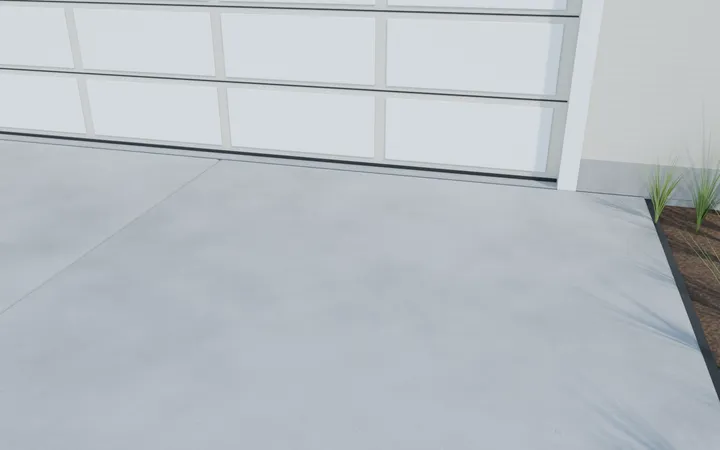
- A lip at the garage door. The apron sits on backfill from the basement dig, which settles for years, so this is where a lot of driveways drop first.
- Standing water a few hours after rain, especially near the garage door or the foundation. It marks a section that sank or tipped.
- Slabs that rock when you step on a corner. That points to an empty space under one side.
- Chipped edges where the plow or shovel catches. If it keeps catching the same raised edge, the slab next to it has usually sunk.
Walks, patio and steps
- New lips at joints. Anything you can catch a toe on is a trip hazard and a sign a slab moved. Measure it with the tape.
- Slabs tipping toward the house. Put a level on the patio and the walks next to the foundation. The ground beside a house should fall at least 6 inches in the first 10 feet, and a slab that tips the other way sends rain and snowmelt at the basement.
- A gap at the stoop where it meets the house, or a stoop leaning outward. Check the bottom step too: if the walk in front of it dropped, the first step is taller than the rest.
- A humped slab near a big tree. That's usually roots, not winter, and lifting can't lower it.
Joints, cracks and the gap at the house
- Open joints with dirt or weeds growing in them, and old sealant that's torn or pulled loose. Every open joint lets meltwater straight under the slab.
- Cracks with one side higher than the other. A hairline crack that's flat on both sides is something to seal and watch; a crack with a step in it means part of the slab moved.
- The joint where concrete meets the foundation. If it's open, water runs down the wall and under the slab.
Garage floor
- Salt and brine damage: flaking, pitting or a floor that sheds dust. Road salt rides in on the tires all winter and soaks into bare concrete.
- A low spot that holds meltwater, or a floor that has dropped away from the wall.
Downspouts and sump discharge
- Downspouts that end on or next to a slab. This is the most common single cause of a sunken corner.
- Extensions knocked loose by the snowblower or the plow, and splash blocks that sank or tipped back toward the house.
- A sump line that discharges onto the driveway or walk, or right beside a slab.
Fix now vs. watch
| What you see | What to do |
|---|---|
| Trip lip over 1/4 inch | Fix now; it's a fall risk and usually still growing |
| Patio or walk tipping toward the house | Fix now; it sends water at the foundation |
| Slab rocks when you step on a corner | Fix this season; there's an empty space under it, and foam fills it as it lifts |
| Open or failed joints | Seal this season, before the next winter |
| Downspout or sump line emptying at a slab | Move it now; water dumped at a slab edge is what sinks it |
| Hairline cracks with no height change | Seal and watch |
| Slab rose over the winter and came back down | Frost heave. Fix the drainage and seal the joints so less water gets under it |
| Slab is high and stays high near a tree | Roots. Lifting only goes up, so this one is grinding or replacement |
| Salt-damaged garage floor | Plan a coating before the next winter |
What the common fixes cost
| Fix | Price |
|---|---|
| Lifting: single sidewalk panel, AC pad or small stoop | $300–$600 |
| Lifting: garage apron, approach or one driveway section (about 100 sq ft) | $400–$1,000 |
| Lifting: larger jobs | About $4–$10 per sq ft, $300 minimum |
| Joint and crack caulking | $5–$10 per linear foot; $275 minimum on its own, none alongside a lift |
| Penetrating sealer | $0.40–$0.90 per sq ft on clean concrete |
| Garage floor coating | $6–$9 per sq ft installed, $2,000 minimum |
Several spots lifted in one visit cost less per spot than the same spots spread over separate trips, so it's worth finishing the walk before you ask for a price.
The order to do it in
- 1Move the waterReattach downspout extensions and point the sump line toward the yard, well away from the concrete. This one doesn't wait for warm weather.
- 2CleanRinse the salt off on the first days above freezing. A deep clean comes later, before any caulk or sealer, so they bond to clean concrete.
- 3Lift what sankLifting season starts once the frost is out of the ground. Caulking a sunken slab seals it in the wrong position, so the lift comes before the caulk.
- 4Caulk the jointsOn clean, dry, frost-free concrete at 40°F or warmer.
- 5SealOnce the caulk has cured and temperatures fit the sealer's label, which around Green Bay usually means mid-May or later.
What you can do yourself
Most of this list doesn't need a contractor: rinsing salt, sweeping up winter sand, fixing downspouts, filling washouts along slab edges and running a few tubes of caulk on slabs that are still level. Call when a slab has sunk, when the joint footage is more than you want to take on, or when the whole driveway needs a clean and seal.
Found something? Send photos and get a price by text or email. How to measure sunken concrete shows the three shots to take while you're out there.